

Los productos base de sublimación que realmente se venden
El proveedor de productos base ofrece un descuento por volumen. Son doscientas unidades, el precio por artículo es casi insignificante y, según las cuentas que haces mentalmente, esta es claramente la mejor opción.
Seis meses después, hay ciento setenta debajo de la cama auxiliar, porque resulta que lo que los hacía baratos era que a nadie le interesaban demasiado.
Elegir productos base es comprar inventario, y comprar inventario es una habilidad distinta de hacer el prensado. La buena noticia es que los productos base que vale la pena almacenar comparten algunos rasgos, y cuando puedes identificarlos dejas de dejarte convencer para comprar tarimas de posavasos.
Qué hace que valga la pena abastecerse de un producto base
Antes de cualquier lista de productos, estas son las preguntas que realmente deciden la compra.
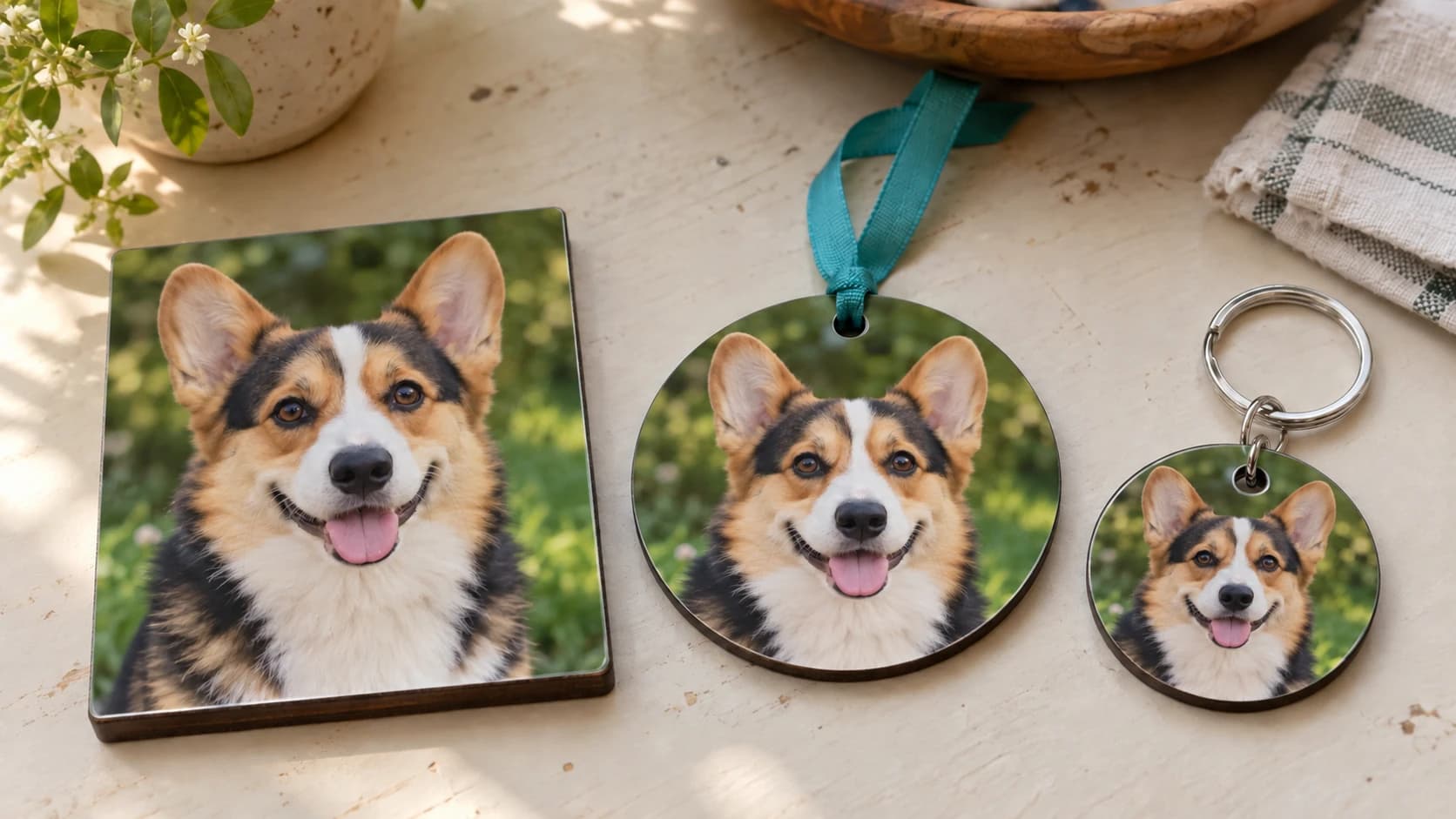
¿La impresión aporta valor real? Un panel fotográfico sin personalizar vale muy poco. El mismo panel con el perro de alguien vale mucho más para esa persona en particular. Cuanto mayor sea esa diferencia, mejor será el producto.
¿Se fotografía bien? Vendes desde una miniatura. Los productos que se entienden claramente en tamaño pequeño, con el diseño llenando el encuadre, se venden mejor que aquellos donde el diseño es un elemento pequeño sobre un objeto grande.
¿Se puede personalizar? La personalización saca un artículo de la comparación de precios por completo. Nadie compara precios para comprar una pieza que lleva el nombre de su propio hijo.
¿Cuánto tarda una unidad? El tiempo de prensado es el costo real en una operación pequeña. Un artículo que ocupa tu prensa durante cinco minutos tiene que generar considerablemente más que uno que tarda noventa segundos.
¿Resistirá el envío? La cerámica se rompe. Reemplazar tazas rotas y pagar el embalaje que evita que se rompan sale directamente del margen.
¿Cuánto espacio ocupa? Cien adornos caben en una caja de zapatos. Cien bolsas de tela, no.
IMPRIME. CORTA. TALLA.
- Varios formatos (SVG, DXF, PNG)
- Diseños probados en máquinas
- Licencias comerciales
Patrocinado por PrintCutCarve.com
Comparación de los productos base
Esta tabla es un resumen editorial para debatir, no datos medidos. Los rangos de precio son relativos, no absolutos; la competencia es una impresión general y no una medición a nivel de consulta; y los tiempos de prensado varían según el producto base y el equipo. Consulta los datos actuales del mercado para tu propio nicho antes de comprometer dinero.
| Producto base | Costo del material | Tiempo de prensado | Riesgo de envío | Rango de precio | Competencia |
|---|---|---|---|---|---|
| Adornos de cartón duro recubierto | Muy bajo | Corto | Muy bajo | Bajo | Alta, estacional |
| Llaveros | Muy bajo | Corto | Muy bajo | Bajo | Alta |
| Posavasos | Bajo | Corto | Bajo | Bajo | Alta |
| Tazas de cerámica | Bajo | Largo | Alto | Bajo a medio | Muy alta |
| Azulejos y paneles fotográficos | Medio | Medio | Medio | Medio a alto | Media |
| Pizarra recubierta | Medio | Medio | Medio | Medio a alto | Media |
| Vasos térmicos de acero inoxidable | Medio a alto | Largo | Bajo | Medio a alto | Alta |
| Bolsas de tela de poliéster | Bajo | Corto | Muy bajo | Bajo a medio | Media |
| Prendas deportivas | Medio | Corto | Bajo | Medio | Muy alta |
| Paneles fotográficos metálicos | Alto | Medio | Medio | Alto | Baja |
Nada de lo que aparece en esa tabla es una recomendación por sí solo. Un producto con mucha competencia que tenga un diseño realmente distintivo aún se vende, y un producto con poca competencia que nadie quiere sigue sin venderse.
Los que merecen verdadera atención
Azulejos, paneles y pizarra fotográficos. Aprovechan las fortalezas de la sublimación mejor que casi cualquier otro producto: reproducen fotografías a todo color, fusionadas con el recubrimiento en lugar de quedar sobre él. Suelen percibirse como un regalo terminado y no como un objeto decorado, lo que permite un precio más alto, y el tiempo de prensado se compensa con el rango de precio en el que se venden.
Adornos de cartón duro recubierto. Cuestan muy poco y se prensan rápidamente, así que puedes probar una docena de diseños por el precio de un solo vaso térmico. Son abiertamente estacionales, y esa es una ventaja: se venden mucho durante un periodo definido, lo que te permite planear la producción en lugar de adivinar.
Paneles fotográficos metálicos. Son el artículo con la sensación más premium de la lista y tienen menos competencia que los productos baratos, en gran medida porque los productos base cuestan más y los principiantes tienden a evitarlos. Si puedes prensar de manera uniforme y la preparación de tus imágenes es sólida, vale la pena probarlos antes de que el mercado se llene.
Vasos térmicos de acero inoxidable. Se venden bien y sobreviven al envío, lo que elimina el problema de roturas que afecta a la cerámica. El rango de precio también es saludable. Cuestan más por unidad y ocupan la prensa durante más tiempo, así que recompensan el volumen en lugar de la experimentación. Nuestra guía de tazas y vasos térmicos explica cómo prensarlos.
Bolsas de tela de poliéster. Los productos base cuestan poco y el panel plano grande es sencillo de prensar de manera uniforme. Es un buen lugar para aprender cómo se ve un diseño a tamaño completo, y se fotografían bien porque el diseño llena el encuadre.
Los que castigan a los principiantes
Prendas de vestir. Parecen el producto obvio, pero son los más difíciles para empezar. Tienes que manejar tallas, colores y ajuste; por lo general, las prendas tienen tasas de devolución más altas que los productos rígidos; y la migración del tinte en el poliéster de color es un problema real que puede aparecer de inmediato o varios días después del prensado. Excelente producto, pero no es el producto inicial adecuado.
Tazas, como negocio y no como primer proyecto. Son excelentes para aprender, pero una pesadilla para competir. Tienen mucha competencia, tiempos de prensado largos y roturas durante el transporte que te obligan a pagar reemplazos o embalaje. Véndelas, por supuesto, pero no construyas el negocio sobre ellas.
Cualquier cosa sobredimensionada. Los productos base grandes necesitan una prensa grande, cuestan más de enviar y consumen espacio de almacenamiento. Las cuentas rara vez funcionan al principio.
Vidrio. Se ve excelente y se rompe fácilmente; además, no perdona una presión desigual. Déjalo para más adelante.
Advertencia
Compra una muestra antes de comprar una caja. La calidad del recubrimiento varía entre proveedores y, a veces, entre lotes de producción del mismo proveedor; además, no se garantiza que un producto base que se prensa muy bien en octubre se comporte igual en febrero. Una tarima de productos base mal recubiertos es una forma costosa de aprenderlo.
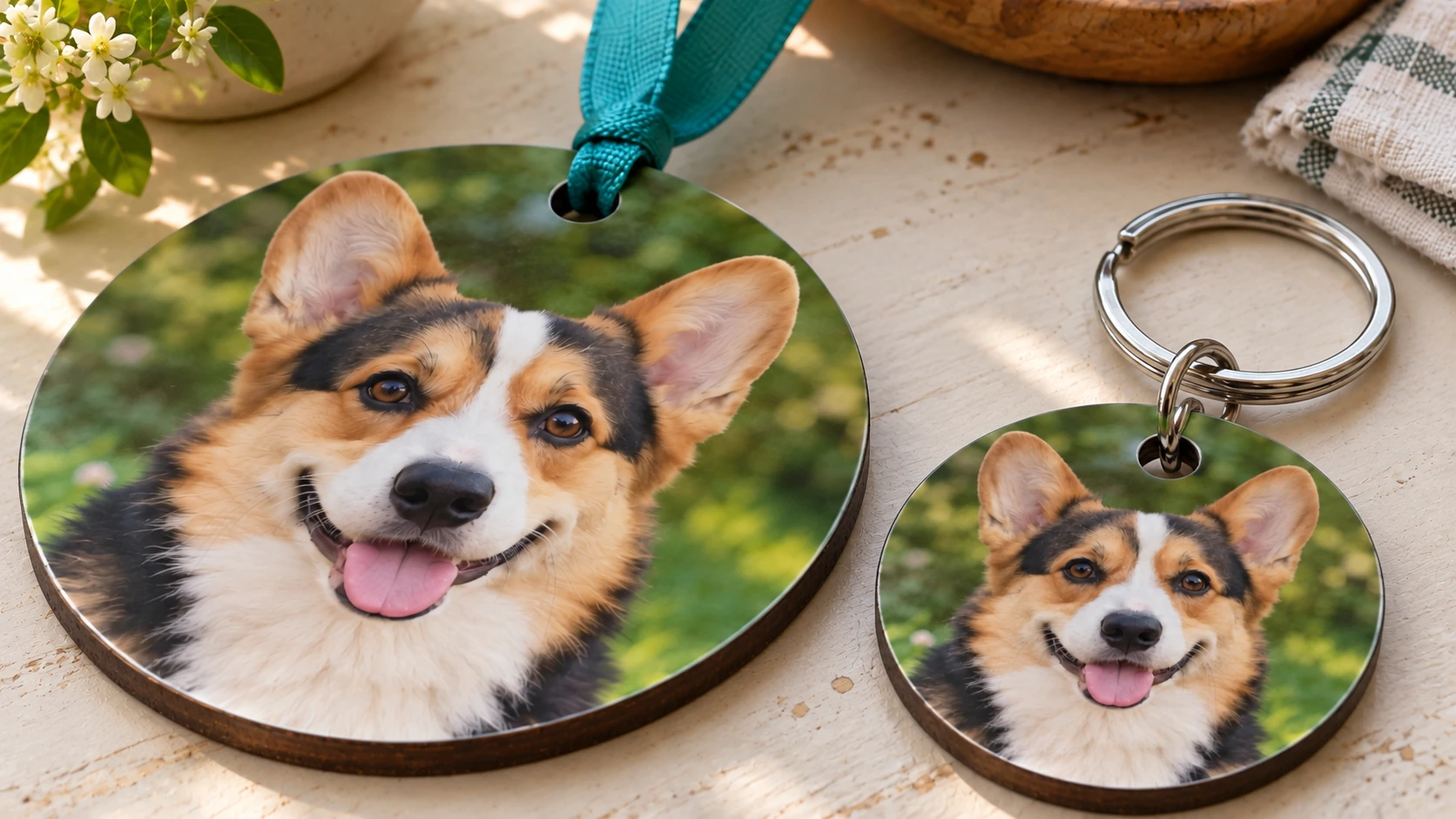
El mismo adorno y llavero vistos de cerca. Incluye los herrajes, los orificios de sujeción y los bordes expuestos en la inspección de tu muestra.
La personalización es el multiplicador
Lo más potente que puedes hacer con cualquiera de los productos base de esa lista es convertirlo en algo relacionado con una persona específica.
Un nombre, una fecha, una mascota, un conjunto de coordenadas o el dibujo de un niño. Hace tres cosas al mismo tiempo: te aleja de la comparación de precios, convierte un producto en un regalo y hace que el anuncio aparezca en búsquedas con las que nadie más compite.
También cambia qué productos base tienen sentido. Un posavasos sencillo es un producto genérico. Un posavasos con el apellido de una familia es un recuerdo para boda, y los recuerdos para boda se encargan en cantidades de ochenta.
Consejo
Las fotos proporcionadas por los clientes son el punto donde suelen salir mal los pedidos personalizados. La imagen llega demasiado pequeña para imprimirla al tamaño necesario, a menudo oscura y con un fondo desordenado, y se reproduce exactamente así. Pásala por PixelPrep para quitar el fondo y ampliarla antes de imprimirla, y consulta nuestra guía de preparación de imágenes para conocer las cuentas de resolución.
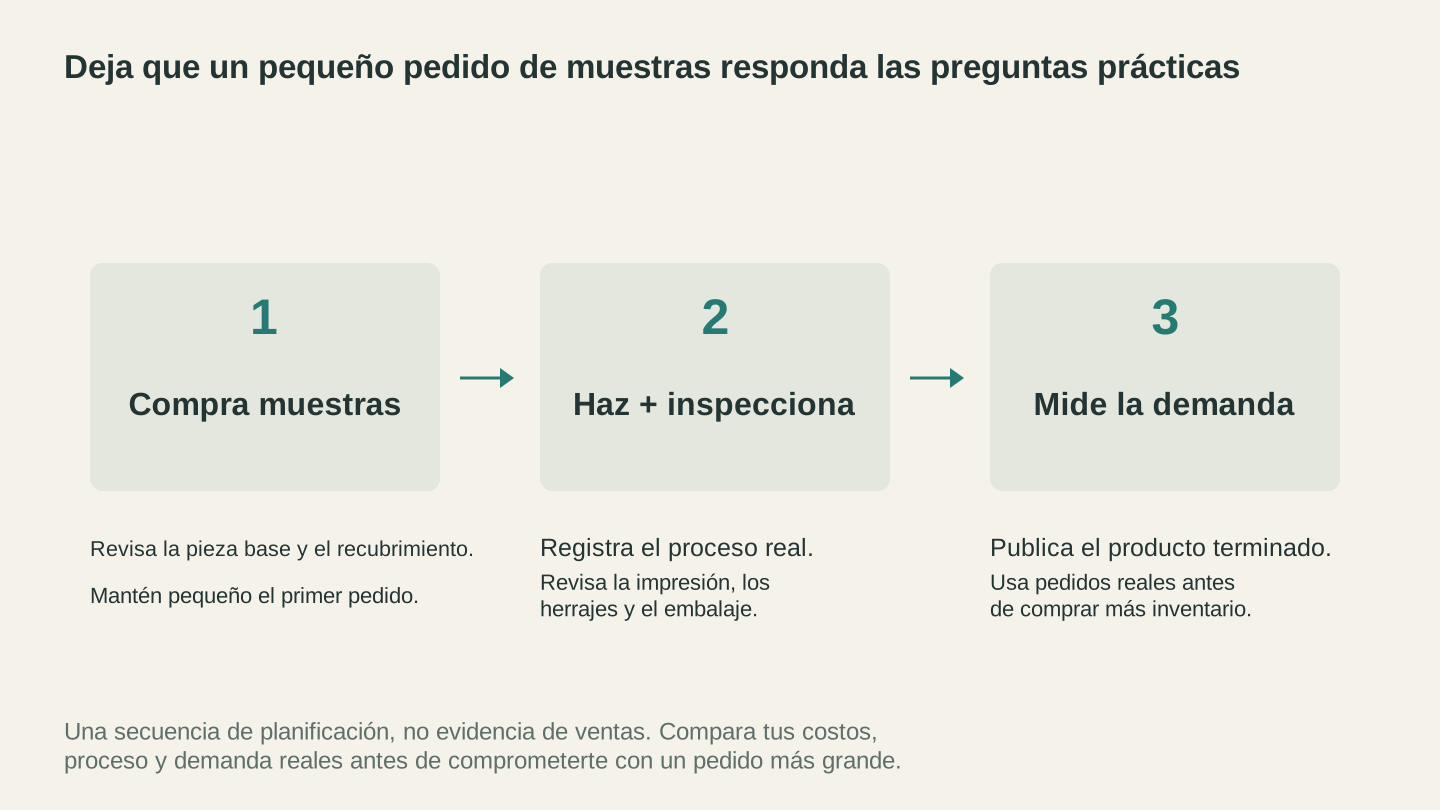
Usa una muestra pequeña terminada para revisar el sustrato y el proceso antes de comprometerte con un pedido más grande. Deja que la demanda real de los clientes guíe la próxima compra.
Planifica según el calendario
La sublimación está muy relacionada con los regalos, por lo que es estacional, la planifiques o no.
Espera que los adornos y llaveros se concentren fuertemente alrededor de las fiestas de invierno. Los paneles fotográficos, la pizarra y los artículos para bebidas suelen seguir las ocasiones de regalo del calendario durante todo el año, desde graduaciones hasta regalos para maestros, así que observa en qué ocasiones se agrupan realmente tus propios pedidos en lugar de asumir que el patrón general también es el tuyo.
En la práctica, eso significa tener inventario y anuncios listos mucho antes de la temporada, no durante ella. Un anuncio nuevo no tiene historial de interacción, y su posición en las búsquedas se consolida a medida que acumula clics y ventas, así que un anuncio publicado la semana en que llega el tráfico empieza desde cero. Nuestra guía de preparación para el cuarto trimestre explica el calendario.
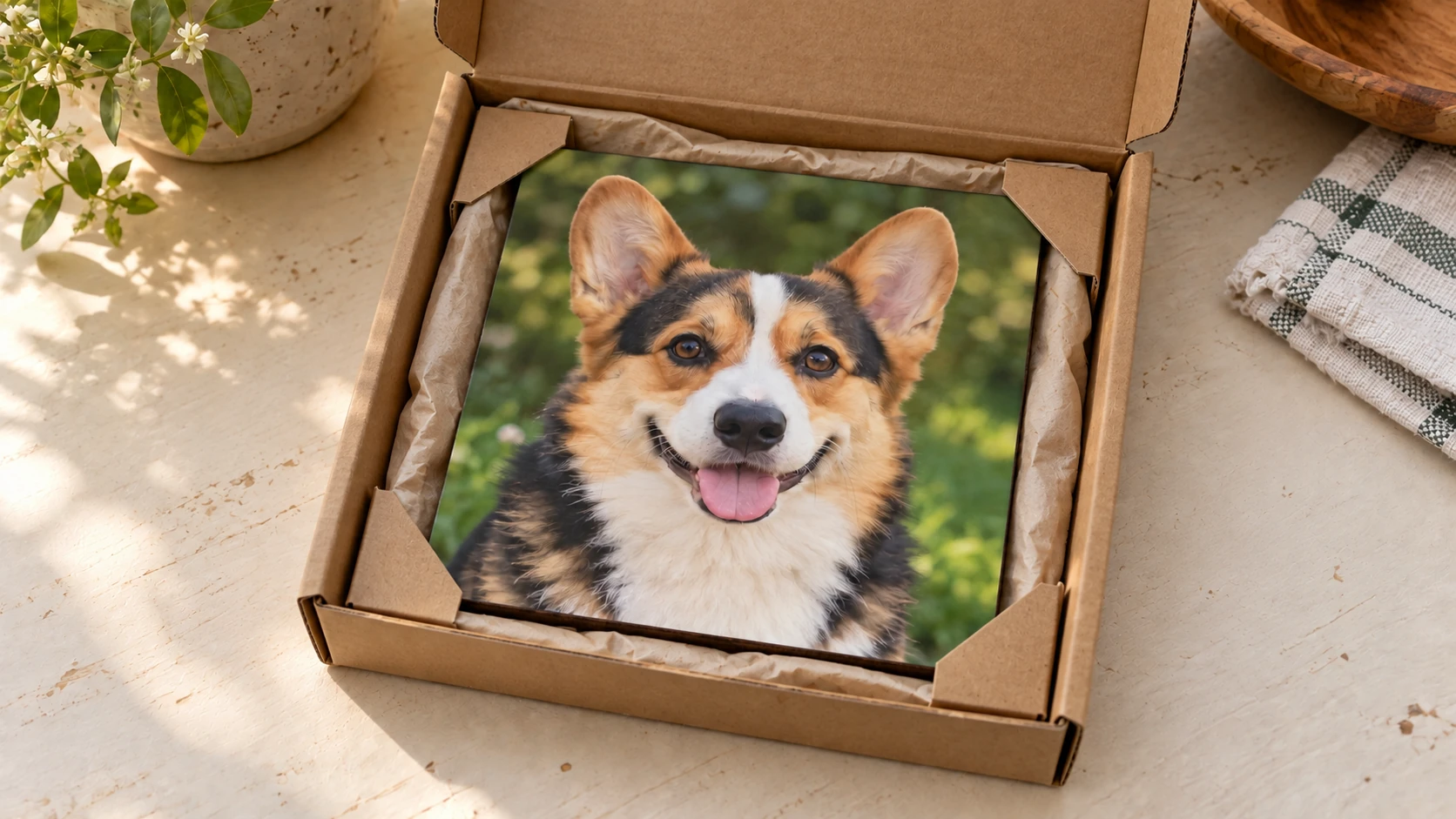
El mismo panel fotográfico con protección en las esquinas y material acolchado. El empaque agrega costo de materiales y tiempo de manipulación a cada pedido.
Después, publícalos correctamente
Un producto base bueno con un anuncio malo no se vende. Esta categoría está suficientemente saturada como para que el anuncio trabaje tanto como el producto.
ListingLab redacta títulos, descripciones y palabras clave a partir de una foto del artículo terminado, que es la forma más rápida de crear un anuncio al menos competentemente optimizado. A partir de ahí, nuestras guías sobre cómo escribir anuncios de Etsy que posicionen y cómo fijar precios para productos hechos a mano cubren el resto.
Un hábito que vale la pena desarrollar: además de una foto limpia del producto, fotografía el artículo terminado en uso. Una taza sobre un escritorio junto a una laptop ayuda a que el comprador se imagine teniéndola, algo que una taza flotando en el vacío no logra; por lo general, los mercados también recomiendan tener ambas imágenes.
Preguntas frecuentes
¿Cuál es el producto de sublimación más rentable?
Los artículos con un alto valor percibido en relación con el costo del producto base y el tiempo de prensado, lo que normalmente significa paneles fotográficos, pizarra e impresiones metálicas en lugar de tazas. Las tazas son populares, pero tienen mucha competencia y tardan en prensarse.
¿Qué productos base de sublimación se venden mejor para principiantes?
Adornos, llaveros, posavasos y bolsas de tela de poliéster. Cuestan lo bastante poco como para hacer pruebas y se prensan rápido. Arruinar algunos mientras aprendes no te perjudicará.
¿Debería empezar con camisetas de sublimación?
Probablemente no como primera opción. Las prendas implican manejar tallas y colores, una tasa de devolución más alta y problemas de migración del tinte en el poliéster de color. Es un buen producto para agregar cuando tu proceso sea confiable.
¿Cómo dejo de perder dinero por las tazas rotas?
Empácalas correctamente e incluye el costo del embalaje en el precio, o elige productos base que no se rompan, como vasos térmicos, cartón duro y metal. Tanto las roturas como el embalaje que las evita salen del mismo margen.
¿Necesito comprar productos base al por mayor para ganar dinero?
No, y comprar al por mayor antes de saber si un producto se vende es la forma más común de inmovilizar efectivo. Primero compra muestras, comprueba que el diseño se vende y después aumenta la cantidad.
¿Cómo sé si un producto base está listo para sublimación?
En los productos rígidos, el anuncio debe decir que está listo para sublimación o que tiene un recubrimiento de polímero; si no lo dice, asume que no lo está. La tela es la excepción: los textiles de poliéster reciben el tinte directamente, sin recubrimiento.
Elige tres, no treinta
Compra pequeñas cantidades de tres productos base de distintas filas de esa tabla: uno barato y rápido, uno de precio medio y uno de mayor valor que te intimide un poco.
Prensa el mismo diseño en los tres, publícalos y observa cuál compra realmente la gente. Dos meses de ese proceso te dirán más sobre tu propio mercado que cualquier lista, incluida esta, y cuesta menos que un solo pedido al por mayor de algo que termine debajo de la cama auxiliar.
Cuando uno de los tres empiece a venderse, publícalo correctamente: ListingLab redactará el título, la descripción y las palabras clave a partir de una foto de la pieza terminada.
Herramientas relacionadas
ListingLab
Crea textos para anuncios y fotos de producto ambientadas a partir de una imagen del producto.
Los textos usan el cupo de chat; las fotos usan créditos
PixelPrep
Elimina fondos o amplía imágenes con los ajustes de ampliación disponibles.
Eliminar fondos requiere un plan; ampliar imágenes usa créditos
¿Listo para probar estas herramientas?
Regístrate gratis, no necesitas tarjeta de crédito. Las herramientas gratuitas están disponibles de inmediato.
Comenzar gratis