

Klusprojecten van resthout die de moeite waard zijn (en welke resten je beter weggooit)
Elke houtbewerker heeft dezelfde bak. Hij staat onder de werkbank of naast de verstekzaag, vol stukken die te kort zijn om te gebruiken en te mooi om weg te gooien. Na elk project voeg je er iets aan toe. Er komt bijna nooit iets uit. Een keer per jaar kijk je ernaar, voel je je vaag schuldig en maak je er een deksel voor.
Het probleem is niet een gebrek aan ideeën. Het is dat de meeste lijstjes met projecten van resthout zijn opgevuld met dingen die niemand wil: het vogelhuisje van zes niet bij elkaar passende houtsoorten, het "rustieke" bord, de wiebelige kandelaar. De bak blijft vol omdat de suggesties erger zijn dan het schuldgevoel.
Dus pakken we het anders aan. Sorteer de stapel op wat het werkelijk is, want een stuk walnoot van een snijplank en een strook constructiemultiplex zijn niet dezelfde grondstof, en de goede projecten voor elk ervan zijn totaal verschillend. Wees daarna — en dat is het deel dat de meeste lijstjes overslaan — eerlijk over het onderste derde van de bak. Sommige resten zijn geen grondstof. Het is brandhout met grootheidswaanzin.
De regel: één keer sorteren
Leeg de bak vóór elk project en maak drie stapels: stukken hardhout, stroken plaatmateriaal en al het overige. Tien minuten, zonder gereedschap.
Het sorteren is belangrijk omdat projecten met restmateriaal om één reden mislukken: je probeert het verkeerde stuk resthout in de verkeerde klus te dwingen. Multiplex maakt slechte onderzetters en prachtige mallen. Een stuk walnoot van 4 inch maakt een slechte mal en een prachtige onderzetter. Het restmateriaal aan het project koppelen is de hele vaardigheid.
| Type restmateriaal | Beste projecten | Laat deze liggen |
|---|---|---|
| Stukken hardhout | Onderzetters, onderzetters voor hete pannen, kleine dozen, kinderblokken | Alles wat constructief is |
| Stroken multiplex | Franse ophanglatten, mallen, schuurblokken, duwstokken | Alles wat je afwerkt en tentoonstelt |
| Pallethout | Ruwe buitenprojecten, plantenstekers | Alles voor voedsel, kinderen of binnen |
| Kromme, gescheurde of rotte stukken | Niets. Laat ze gaan | Alles |
Pas tijdens het sorteren één test toe op elk stuk: kun je nu benoemen bij welk project het hoort? Niet "ooit handig". Een specifiek project. Zo niet, dan gaat het op de misschien-stapel, en aan die stapel zit een maximum. Daarover aan het einde meer.
PRINT. SNIJD. GRAVEER.

- Meerdere indelingen (SVG, DXF, PNG)
- Door machines geteste ontwerpen
- Commerciële licenties
Gesponsord door PrintCutCarve.com
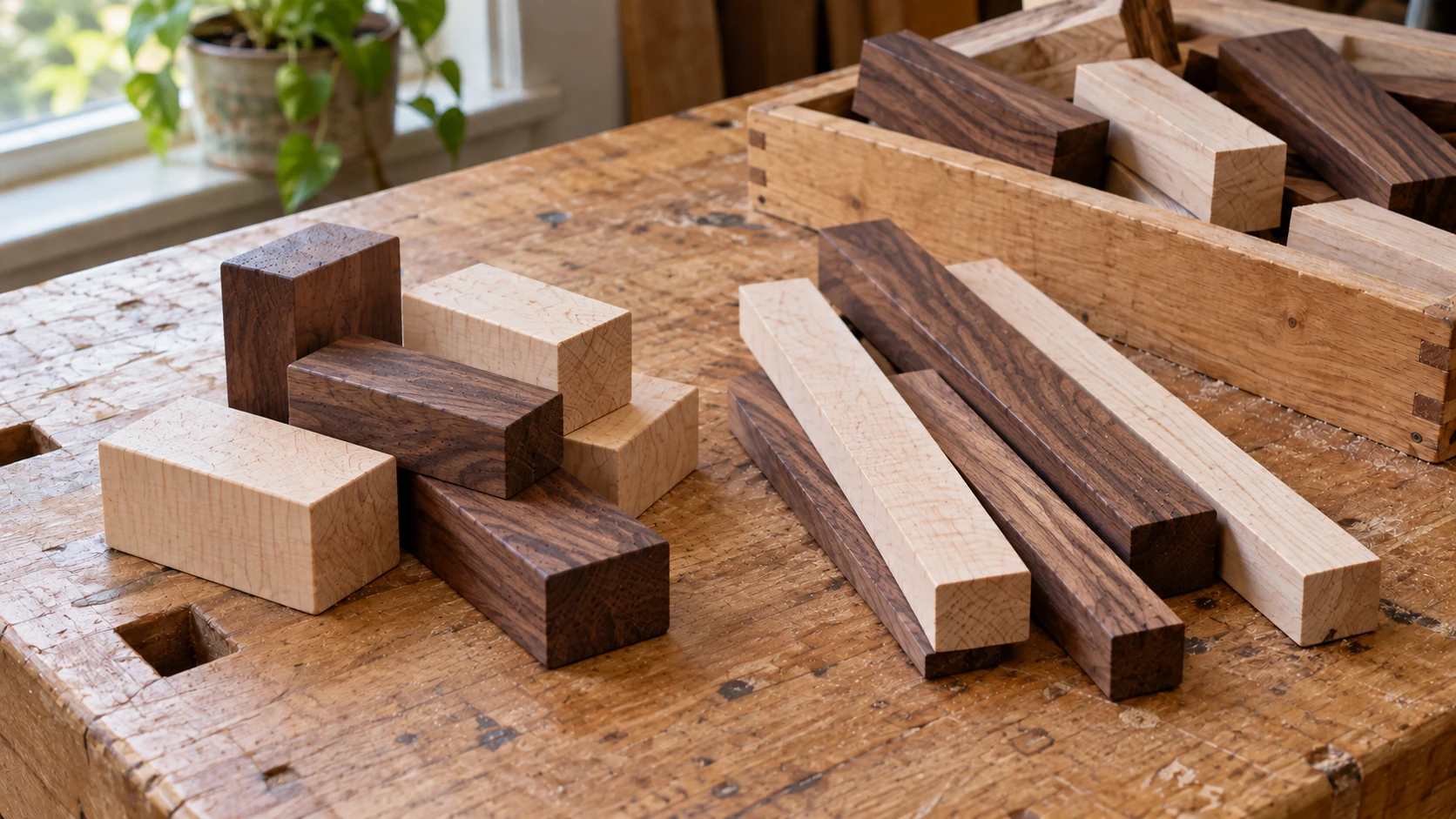
Sorteer zowel op bruikbare vorm als op houtsoort. Korte blokken en lange stroken wijzen op verschillende projecten, en door snel te sorteren zijn beide gemakkelijker te vinden.
Stukken hardhout: het goede spul
Dit zijn de uiteinden van snijplanken, het reststuk van een tafelpoot, de strook esdoorn die 2 inch te kort was. Dit is echt geld dat in een bak ligt. Walnoot is niet goedkoop en je hebt er al voor betaald.
Onderzetters van uiteinden van snijplanken
Als je snijplanken verlijmt, zijn de uiteinden die je afkort al onderzetters. Het zijn vlakke, gelamineerde blanks van voedselveilige houtsoorten. Zaag ze op 4 inch af, rond de hoeken af, maak de randen schuin, schuur ze en werk ze af. Een plank die één cadeau opleverde, heeft er nu vijf opgeleverd.
Dit levert van de hele stapel restmateriaal het meeste op: een uur werk verandert afkortstukken in iets dat mensen echt gebruiken. Het zijn bovendien enkele van de betrouwbaarste handgemaakte cadeaus die er zijn, en onze verzameling eenvoudige cadeaus van hout legt uit waarom klein en nuttig elke keer wint van groot en ambitieus.
Kopshouten onderzetters
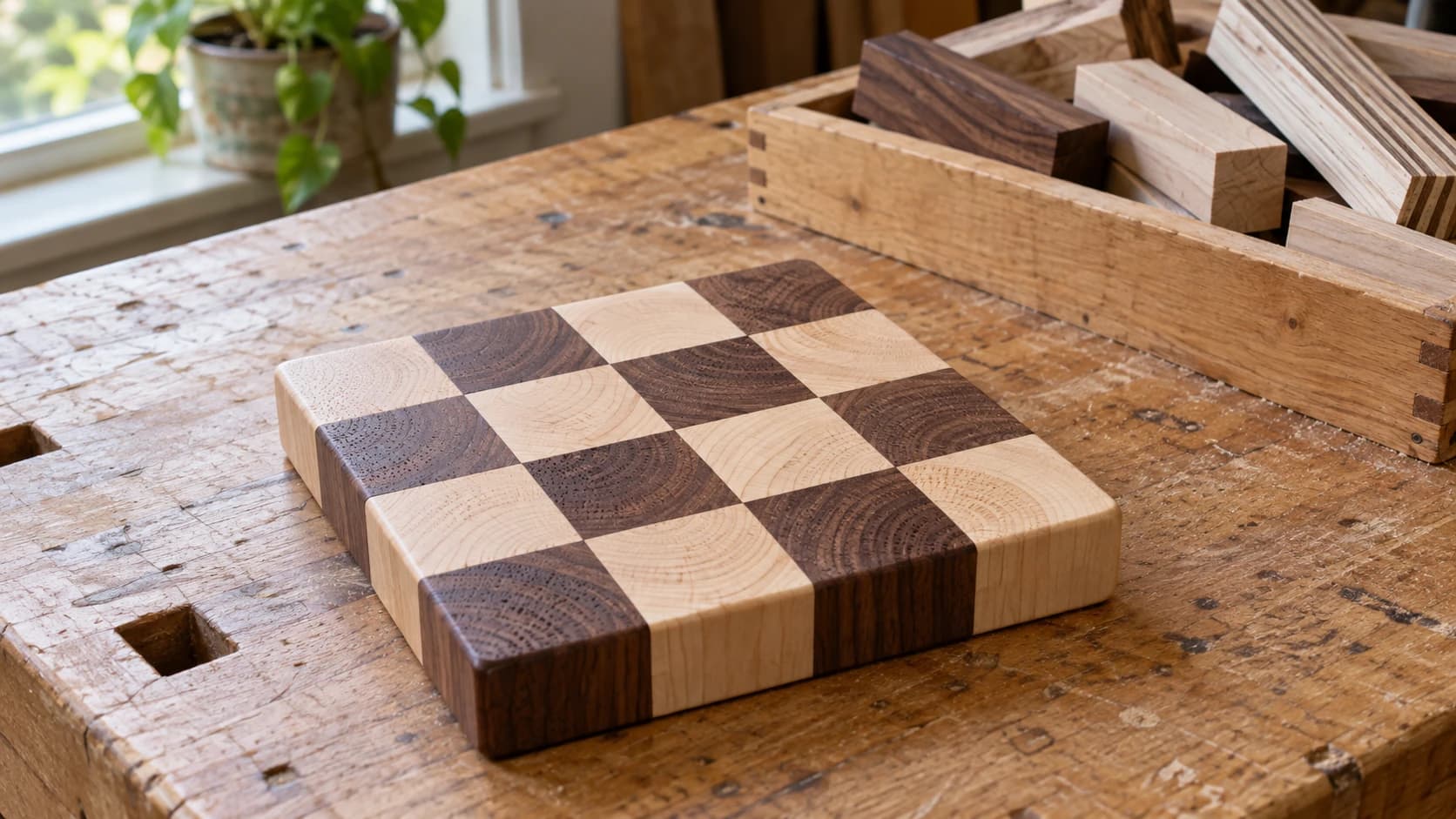
Neem je dikste stukken hardhout, zaag ze in vierkante latten, lijm de latten tot een paneel, zaag het paneel daarna in stukken en draai die om zodat de kopse kanten boven komen te liggen voor een tweede lijmbeurt. Je krijgt een dambordpatroon van kopshout, met dezelfde constructie als een slagersblok, en het verdraagt deuken en butsen veel beter dan langshout. Zorg voor voldoende dikte en sla filmvormende afwerkingen over, want een hete pan zal alles wat je erop aanbrengt op de proef stellen.
Tip
Kopshouten lijmverbindingen drinken lijm. Gebruik bij PVA-houtlijm eerst het kopshout: breng een verdunde laag aan, laat die een minuut of twee intrekken en breng daarna vóór het klemmen een laag op volle sterkte aan (controleer de instructies van je lijmfabrikant voor de exacte methode). Een uitgehongerde kopshoutverbinding is degene die losspringt wanneer de hete pan erop landt.
Eén eerlijke waarschuwing: een onderzetter voor hete pannen is een miniatuur-snijplank van kopshout en vraagt dezelfde geduldige aanpak bij vlak maken en schuren. Trek meer tijd uit voor de afwerking dan voor het zagen. Als je nog nooit kopshout hebt afgewerkt, behandelt onze gids voor het afwerken van laser- en CNC-projecten olie- en oliewasafwerkingen die net zo goed werken op handgemaakte stukken.
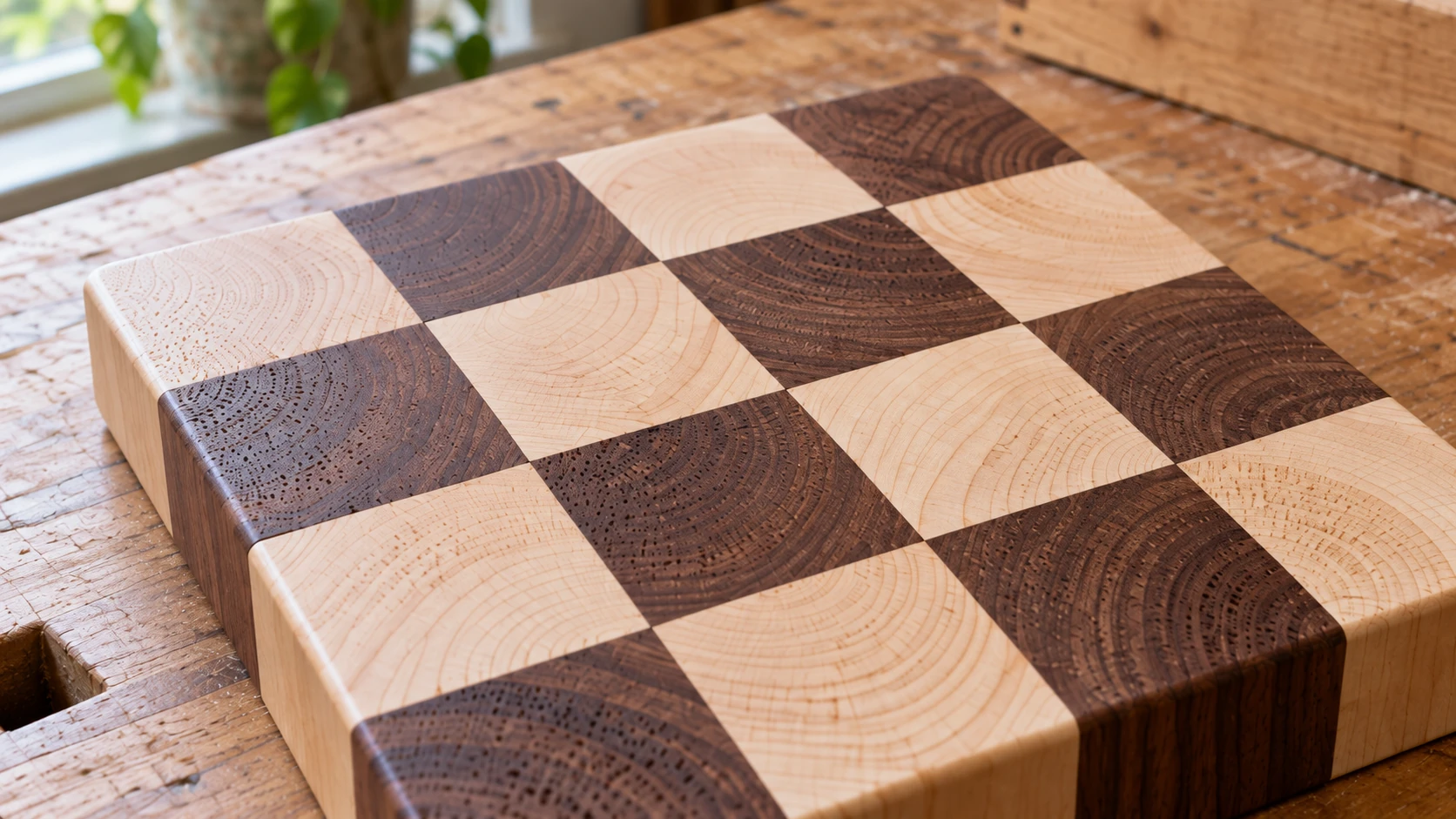
Bovenaan zie je de gezaagde uiteinden van de blokken, met jaarringen en poriën die over het oppervlak zichtbaar zijn. Een consistente blokdikte en vlakke lijmnaden zijn belangrijker dan een ingewikkeld patroon.
Kleine dozen
Voor een bewaardoos heb je misschien twee board feet nodig, en dat is precies wat er in de stapel restmateriaal ligt. Kleine dozen zijn ook de beste oefening in verbindingen die je kunt krijgen: verstekken, sponningen of vingerlassen op een schaal waarop fouten je een reststuk kosten, geen project.
Als je verbindingen nog niet helemaal goed zitten, begin dan met de eenvoudige versie met sponningen in onze lijst met weekendprojecten voor beginners en bouw van daaruit verder.
Kinderblokken
Reststukken, haaks gezaagd, met elke rand afgerond en elk vlak glad geschuurd. Helemaal geen afwerking is de veiligste keuze, want blokken gaan rechtstreeks in monden. Als je er een wilt gebruiken, controleer dan de richtlijnen van de fabrikant voor speelgoedgebruik, volg de aanbreng- en uithardingsinstructies nauwgezet en denk twee keer na over oliën van noten als er allergieën in huis zijn. Als je van plan bent de blokken te verkopen in plaats van cadeau te doen, gelden voor kinderproducten echte wettelijke eisen, dus doe eerst je huiswerk. Vermijd filmvormende afwerkingen en elk reststuk dat je niet kunt identificeren. Dit project is uitsluitend voor bekend, schoon hardhout.
Stroken multiplex: infrastructuur voor de werkplaats
Multiplexrestjes mogen de werkplaats nooit verlaten, en dat is geen belediging. Binnen de werkplaats is het het nuttigste materiaal dat je bezit. Leegtevrij multiplex blijft vlak en stabiel, precies wat elke werkplaatsvoorziening nodig heeft.
Franse ophanglatten
Zaag stroken onder 45 graden, schroef de ene helft aan de muur en de bijpassende helft aan alles wat je wilt ophangen. Elke multiplexstrook die breder is dan 3 inch is een toekomstige ophanglat, en een wand met ophanglatten groeit reststuk voor reststuk. Het is een zeldzaam werkplaatsproject dat de rommel blijvend vermindert in plaats van toevoegt.
Duwstokken en duwblokken
De duwstok waar je in zaagt, doet zijn werk goed, dus je wilt er een stapel van hebben, geen kostbaar exemplaar. Trek je favoriete vorm over op een reststuk multiplex, zaag een partij van vijf en aarzel niet langer bij de tafelzaag omdat je je enige stok niet wilt opeten.
Schuurblokken
Een restblok dat zo groot is dat een kwart of een derde vel schuurpapier er precies omheen valt, met een zaagsnede of klem om het papier vast te houden. Maak er één per korrel en label ze. Totale kosten: niets. Verbetering ten opzichte van schuren met papier dat in je handpalm is opgekruld: enorm.
Mallen, aanslagen en vulplaatjes
Lopers voor een afkortslede, werkbankhaken, hoek-klemklossen, aanslagblokken, inzetstukken met nulspeling. Bewaar ook een koffieblik met dunne wiggen van restmateriaal als vulplaatjes, want de dag waarop je een kast waterpas zet met een vulplaatje dat je van het eigen reststuk van die kast hebt gemaakt, is stilletjes een geweldige werkplaatsdag.
Pallethout: lees dit voordat je zaagt
Gratis hout per vrachtwagen klinkt als het antwoord op alles. Even rustig aan.
Waarschuwing
Gebruik alleen pallets met de stempel HT (hittebehandeld). Een pallet met de stempel MB is gegast met methylbromide, een giftig bestrijdingsmiddel. Laat die liggen en voer hem af volgens de plaatselijke afvalregels, niet in je werkplaats. Een pallet zonder stempel is een mysterie, en zelfs een HT-stempel vertelt alleen iets over de behandelmethode, niet wat de pallet heeft vervoerd of wat er vanaf de magazijnvloer in is getrokken. Gebruik nooit pallethout voor snijplanken, kinderprojecten of iets dat met voedsel in aanraking komt.
Zelfs schone HT-pallets werken je tegen. De planken zijn ruw en vuil, met volop interne spanning die erop wacht om een zaagblad vast te klemmen. Afgebroken stukjes bevestigingsmateriaal verbergen zich in de nerf, dus ga met een metaaldetector over elke plank voordat die een zaagblad raakt dat je belangrijk vindt.
Pallethout komt het best tot zijn recht bij ruw buitenwerk: zijkanten van compostbakken, plantenstekers, plantenbakken in kratstijl waarin een plastic pot staat in plaats van aarde. Projecten waarbij "gratis en ruw" de uitstraling is en het juist de bedoeling is dat het hout buiten leeft.
Het deel dat niemand zegt: een deel is gewoon afval
Dit is de eerlijke conclusie die lijstjes met projecten van resthout nooit vermelden. Een derde van je bak is de lijm die nodig zou zijn om het te gebruiken niet waard.
Het gedraaide stuk blijft ook in je project gedraaid. Het gescheurde uiteinde blijft verder scheuren. Het zachte grijze stuk dat te lang op de vloer heeft gelegen schuurt als karton en werkt af als een spons. Drie trieste reststukken tot één triest paneel lijmen kost echte lijm, echte klemtijd en een echte avond, en levert iets op waar je in stilte een hekel aan zult hebben.
Stel dus een regel op en handhaaf die. Eén bak, met een deksel dat sluit. Wanneer het deksel niet meer dicht kan, worden de stukken zonder benoemd project verwijderd. Droog, onbehandeld massief hout kan in de vuurkorf of houtkachel waar plaatselijke regels stoken toestaan. Multiplex, MDF en alles wat geverfd of onder druk behandeld is, gaat volgens de plaatselijke afvalregels weg, nooit in het vuur, want de lijmen en behandelingen horen niet in je vlammen of longen.
Hout weggooien voelt ongeveer een dag verkeerd. Een bak waarin je daadwerkelijk dingen kunt vinden voelt voor altijd goed.
Weet je niet waarvoor een reststuk geschikt is? Vraag het
De helft van de twijfel over restmateriaal komt door onzekerheid. Is dit stuk voedselveilig? Houdt kopshout een schroef vast? Kan ik pallethout schaven zonder mijn messen te ruïneren? Welke afwerking gebruik je voor kinderblokken?
Daar is Craft Chat precies voor. Het is de AI-assistent voor makers van Craftgineer, gratis te gebruiken met maandelijkse berichtlimieten, en hij is juist goed in dit soort kleine, specifieke werkplaatsvragen: houtsoort herkennen aan de hand van een beschrijving, voedselveilige afwerkingsopties, keuzes voor verbindingen in kleine dozen, en of een bepaald project met restmateriaal je zaterdag waard is. Maak een foto van de onbekende plank en vraag het.
Leeg daarna de bak, maak je drie stapels en bouw eerst de onderzetters. Ze zijn de snelste winst in de houtbewerking en lagen al die tijd onder je werkbank.
Klaar om deze tools uit te proberen?
Meld je gratis aan, zonder creditcard. Gratis tools zijn direct beschikbaar.
Gratis beginnen