

Les fraises CNC expliquées : quelle fraise pour quel travail
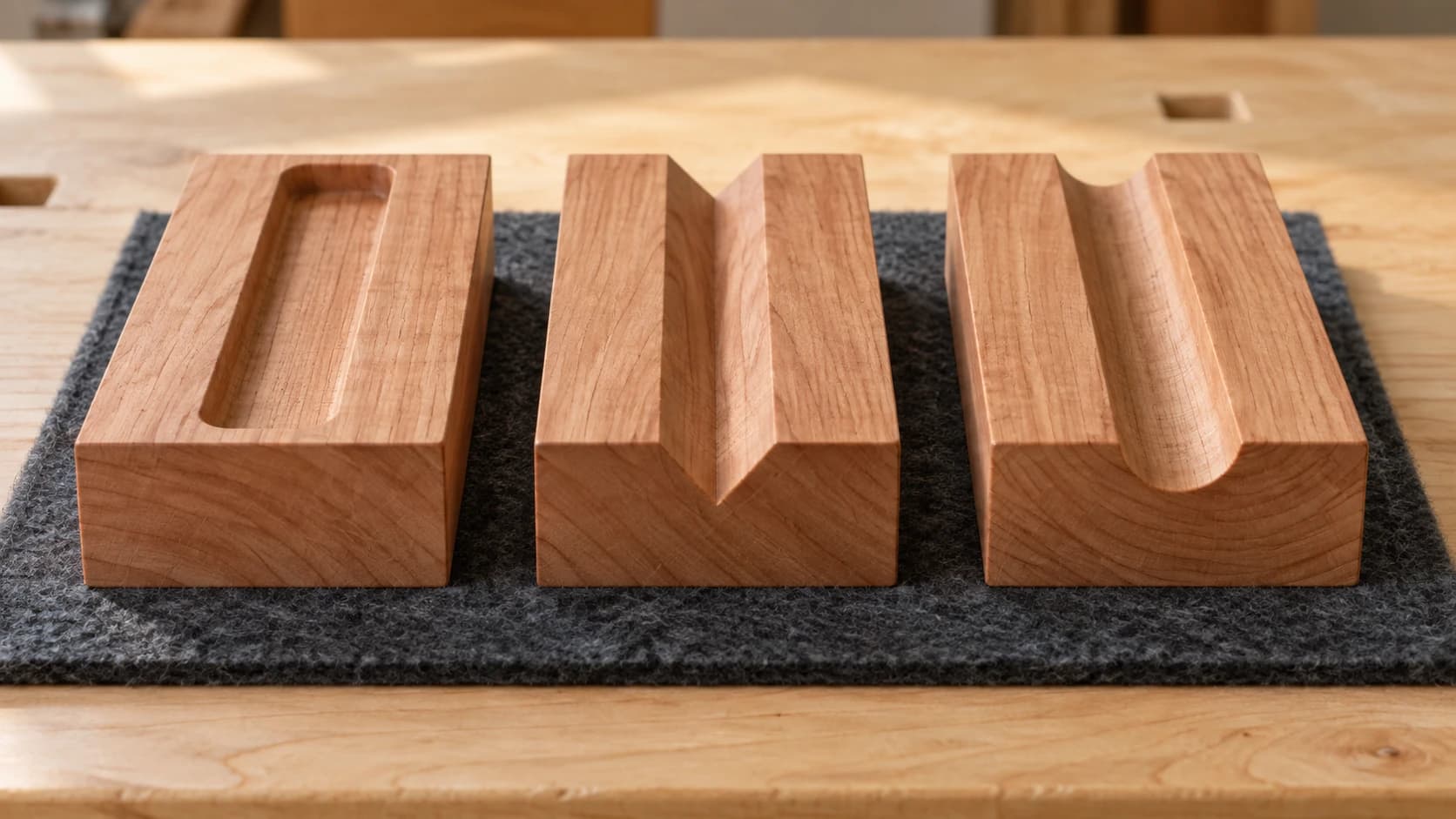
La machine était livrée avec deux fraises. L’une d’elles est restée dans la pince depuis le jour où vous l’avez installée, et elle a servi pour tous les projets depuis, parce qu’elle fonctionne.
Puis vous gravez une enseigne détaillée et les parties fines sortent pâteuses. Ou vous découpez une pièce en contreplaqué et la face supérieure s’effrite le long de chaque bord. Ou vous essayez l’aluminium et la fraise se soude à la pièce.
La fraise n’était pas la mauvaise. Elle répondait simplement à une question que personne n’avait posée.
Conseil
Réponse courte : une fraise à coupe ascendante évacue les copeaux et laisse un bord inférieur propre, une fraise à coupe descendante maintient le matériau vers le bas et laisse un bord supérieur propre, tandis qu’une fraise de compression fait les deux faces du contreplaqué. Utilisez une V-bit pour les lettres gravées et la décoration, une fraise hémisphérique pour les contours 3D et adaptez le diamètre de la fraise au plus petit détail de votre conception.
Le vocabulaire
Cinq mesures décrivent n’importe quelle fraise, et les fiches produit supposent que vous les connaissez toutes.
Le diamètre de la queue correspond à la partie qui s’insère dans la pince, généralement 1/4 inch ou 1/8 inch sur les machines de loisir. Votre pince détermine ce que vous pouvez utiliser ; des adaptateurs existent, mais ils réduisent la rigidité.
Le diamètre de coupe correspond à la largeur de la coupe elle-même. Il est souvent identique à celui de la queue, mais ce n’est fréquemment pas le cas.
Le nombre de dents correspond au nombre d’arêtes de coupe qui s’enroulent autour de la fraise.
La longueur de coupe correspond à la profondeur de coupe possible. Une fraise dont les dents sont plus courtes que votre matériau ne peut pas le traverser en une seule passe, quelle que soit la profondeur réglée.
La longueur totale est importante pour la rigidité. Les longues fraises fléchissent, et cette flexion se traduit par des parois coniques et des pièces imprécises.
Le nombre de dents change tout
Un plus grand nombre de dents signifie que davantage d’arêtes de coupe touchent la pièce, ce qui semble préférable, mais ne l’est pas automatiquement.
| Dents | Idéal pour | Pourquoi |
|---|---|---|
| 1 | Plastiques, aluminium, matériaux tendres | Un espace maximal permet aux copeaux de s’échapper avant de fondre ou de s’accumuler |
| 2 | Bois, MDF, contreplaqué, travaux courants | Le choix raisonnable par défaut pour presque toutes les CNC de loisir |
| 3 à 4 | Matériaux plus durs, passes de finition | Finition plus fine, moins de place pour les copeaux |
Le compromis concerne l’évacuation des copeaux. Chaque dent constitue aussi un canal par lequel les déchets sortent de la coupe. Moins de dents signifie des canaux plus grands, exactement ce dont les matériaux tendres et collants ont besoin pour éviter l’accumulation et la fusion. Plus de dents donne une finition plus lisse, tant que le matériau produit de petits copeaux.
Les plastiques, en particulier, préfèrent une seule dent. Usiner de l’acrylique avec une fraise à quatre dents est une manière fiable d’obtenir un amas soudé.
IMPRIMEZ. DÉCOUPEZ. GRAVEZ.

- Plusieurs formats (SVG, DXF, PNG)
- Créations testées sur machine
- Licences commerciales
Sponsorisé par PrintCutCarve.com
Coupe ascendante, descendante, compression
C’est la distinction qui résout le problème des bords effrités, et elle concerne la direction dans laquelle la spirale projette les copeaux.
La coupe ascendante fait remonter les déchets hors de la coupe. L’évacuation des copeaux est excellente, ce qui signifie moins de chaleur et de brûlure, et elle laisse un bord inférieur propre. En contrepartie, elle soulève la matière pendant la coupe : la surface supérieure peut pelucher ou s’effriter, et les pièces fines ou mal maintenues peuvent être arrachées du plateau.
La coupe descendante fait descendre les déchets. Elle plaque le matériau contre le plateau, maintient les petites pièces en place et laisse un bord supérieur parfaitement propre. En contrepartie, les copeaux ne peuvent aller nulle part ailleurs que dans la coupe ; ils s’y accumulent et font monter la chaleur, ce qui provoque des brûlures lors des coupes profondes.
La compression combine les deux : une géométrie à coupe ascendante à l’extrémité, puis une coupe descendante au-dessus. Les deux faces restent propres, ce qui est exactement ce qu’il faut pour le contreplaqué plaqué. Le point à retenir est qu’elle ne fonctionne correctement que lorsque la coupe est suffisamment profonde pour engager les deux sections ; c’est donc un outil destiné aux coupes pleine profondeur plutôt qu’aux passes peu profondes.
| Fraise | Face supérieure propre | Face inférieure propre | Maintient la pièce | Évacuation des copeaux |
|---|---|---|---|---|
| Coupe ascendante | Non | Oui | Non, elle soulève | Excellente |
| Coupe descendante | Oui | Non | Oui | Faible |
| Compression | Oui | Oui | En grande partie | Bonne |
Pour la plupart des travaux de loisir dans le bois massif et le MDF, une fraise à coupe ascendante à deux dents est le bon choix par défaut. Passez à une coupe descendante lorsque la face supérieure est visible et que la pièce est bien maintenue. Choisissez la compression lorsque vous découpez du contreplaqué dont le placage de surface compte pour vous.
Des fraises adaptées aux travaux adaptés
Les V-bits se terminent en pointe selon un angle donné, généralement 60 ou 90 degrés. À mesure que la machine plonge, la coupe s’élargit, ce qui permet à une gravure en V de produire des lignes de largeur variable. Un angle plus étroit donne des détails plus fins à la même profondeur ; un angle plus ouvert couvre davantage de largeur avec une plongée moindre. Notre explication de la gravure en V explique le fonctionnement réel du parcours d’outil.
Les fraises hémisphériques ont une extrémité arrondie, idéale pour les contours 3D et la gravure en relief. Elles laissent une surface festonnée, dont la visibilité dépend du recouvrement latéral : des passes plus rapprochées donnent un résultat plus lisse et prennent beaucoup plus de temps. C’est la fraise qui transforme une carte de profondeur en relief sculpté, ce que génère ReliefMaker.
Les fraises hémisphériques coniques offrent une petite pointe pour les détails fins sur un corps plus épais et plus rigide. Elles constituent le choix standard pour les travaux 3D détaillés, lorsqu’une fraise droite de petit diamètre risquerait de fléchir ou de casser.
Les fraises à goujure droite ne sont pas hélicoïdales. Moins agressives que l’une ou l’autre direction de coupe en spirale, elles se situent entre les deux pour la qualité des bords comme pour l’évacuation des copeaux.
Les fraises de surfaçage sont larges et plates, conçues pour aplanir un martyr ou une dalle plutôt que pour découper des pièces.
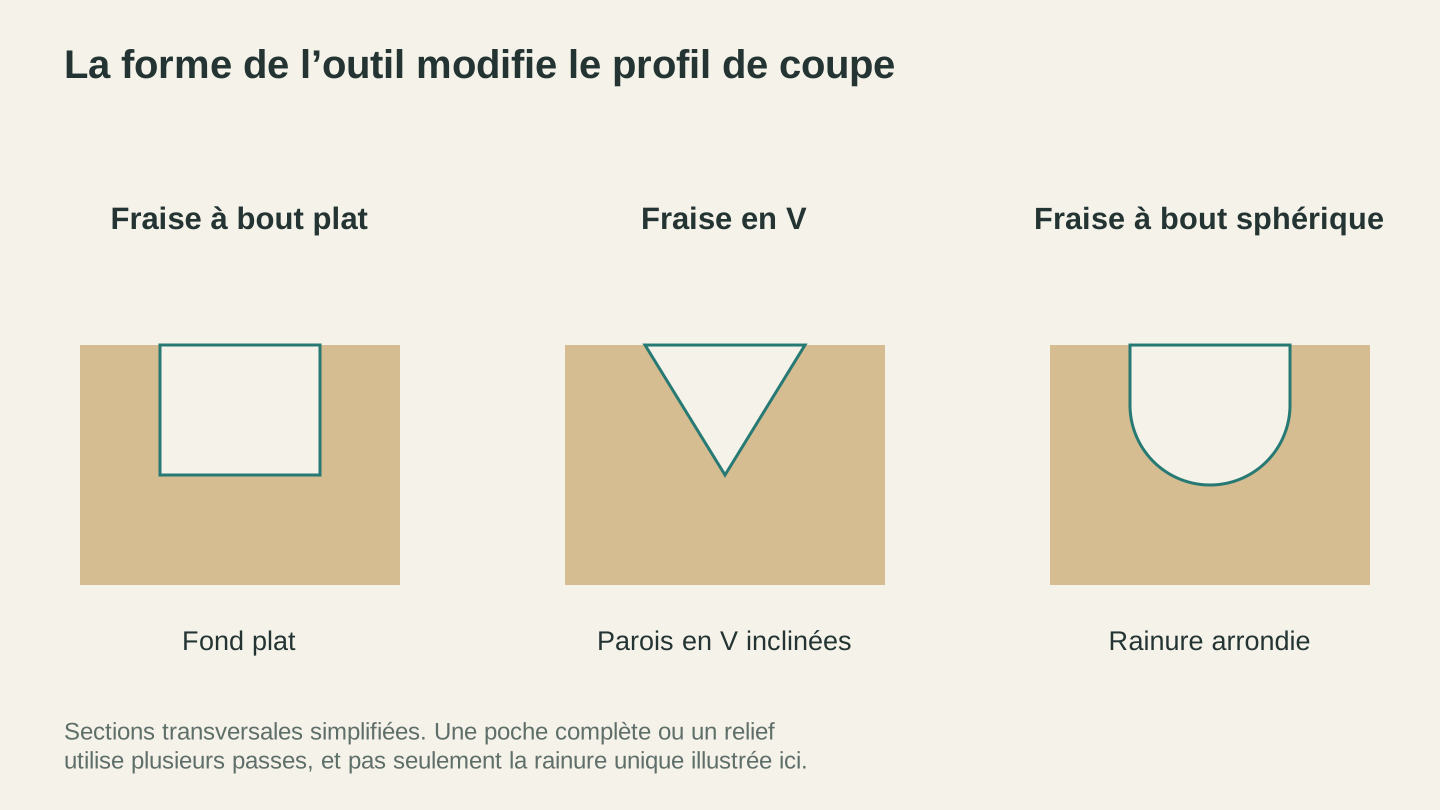
La pointe de l’outil influence le profil de coupe. Plusieurs passes peuvent combiner ces profils pour former une poche, une enseigne ou une surface sculptée.
Le diamètre de la fraise est une contrainte de conception
C’est ce qui piège les personnes qui conçoivent d’abord et découpent ensuite.
Une fraise ronde ne peut pas réaliser un angle intérieur vif. Le rayon minimal de l’angle intérieur réalisable est égal à la moitié du diamètre de votre fraise. Concevez une rainure aux angles intérieurs carrés avec une fraise de 1/4 inch, et vous obtiendrez des angles d’un rayon de 1/8 inch, que vous le vouliez ou non.
Deux conséquences importantes à connaître :
L’assemblage nécessite des dégagements. Si un tenon doit s’insérer complètement dans une rainure, celle-ci doit comporter des découpes de dégagement dans les angles, généralement en forme d’os de chien ou de T, afin que le rayon restant ne bloque pas le tenon. Les découpes au laser ne présentent pas ce problème, raison pour laquelle un fichier qui se découpe parfaitement au laser peut échouer sur une défonceuse.
Les détails fins nécessitent une petite fraise, et les petites fraises sont fragiles. Une fraise de 1/16 inch atteindra des détails qu’une fraise de 1/4 inch ne peut pas atteindre, mais elle cassera aussi si vous l’avancez comme la plus grosse. C’est une question de vitesses d’avance et de rotation, couverte par notre guide des vitesses d’avance et de rotation.
Avertissement
Le diamètre de coupe signifie également que vos pièces seront sous-dimensionnées si vous ignorez la compensation. Découper directement sur la ligne retire la moitié du diamètre de la fraise de chaque côté d’un profil extérieur. Votre logiciel de FAO gère cela avec un décalage intérieur ou extérieur, et choisir le mauvais côté est une manière classique de produire toute une plaque de pièces légèrement erronées.
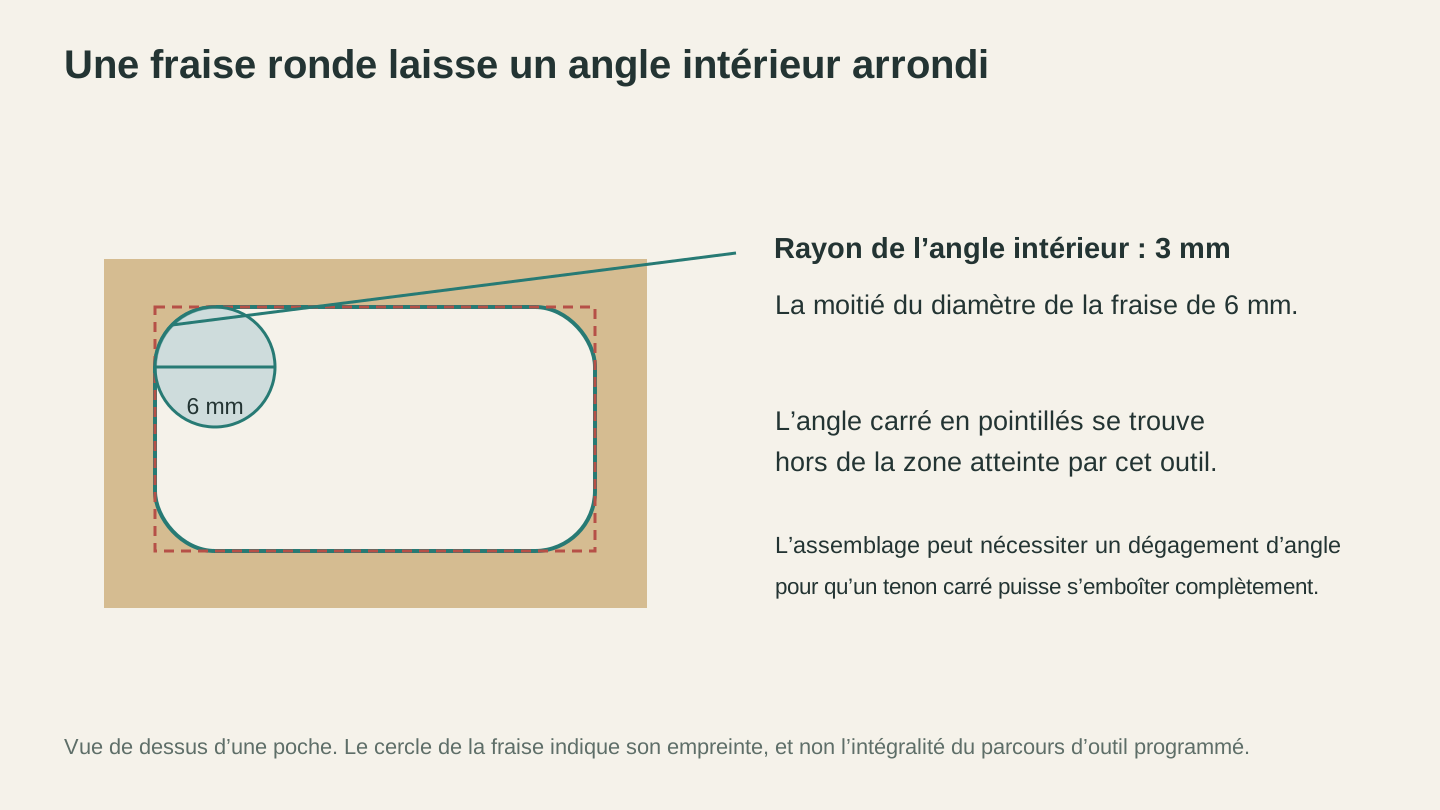
Une fraise ronde laisse un rayon dans un angle intérieur. Tenez compte de cette géométrie lorsque vous concevez une rainure destinée à une languette à bout carré.
Choisir selon le travail
| Travail | Choisissez | Remarque |
|---|---|---|
| Découper des pièces dans du bois massif ou du MDF | Fraise ascendante à 2 dents | Le choix courant par défaut |
| Découper du contreplaqué plaqué | Compression | Les deux faces restent propres à pleine profondeur |
| Découper de petites pièces susceptibles de se soulever | Coupe descendante | Les maintient contre le plateau |
| Lettres et décorations gravées | V-bit, 60 ou 90 degrés | L’angle détermine le compromis détail-largeur |
| Gravure en relief 3D | Fraise hémisphérique, conique pour les détails | Le recouvrement latéral détermine la finition |
| Poches à fond plat | Fraise en bout plate | Une fraise hémisphérique laisse un fond arrondi |
| Acrylique et plastiques | Fraise ascendante à 1 dent | L’évacuation des copeaux empêche la fusion |
| Aplanir une dalle ou un martyr | Fraise de surfaçage | Large et peu profonde |
Les faire durer
Les fraises sont des consommables, et la plupart meurent prématurément pour des raisons évitables.
Une fraise émoussée brûle au lieu de couper. Si des coupes autrefois propres sont maintenant brunes et sentent le brûlé, suspectez la fraise avant les réglages.
L’accumulation de résine produit le même effet qu’un émoussement. Le tanin et les résidus de colle recouvrent les dents et les empêchent de couper. Les nettoyer peut redonner vie à une fraise qui semblait hors d’usage.
Ne laissez jamais les fraises se toucher. Dans un tiroir, les arêtes en carbure s’ébrèchent les unes contre les autres. Conservez-les dans leurs tubes ou dans un bloc.
Les coupes pleine profondeur tuent les fraises. Plusieurs passes moins profondes prennent plus de temps et coûtent moins cher en outillage, tout en produisant de meilleurs bords.
Insérez correctement la queue dans la pince, sans aller si profondément que les dents soient enfouies. Une fraise mal serrée peut sortir en pleine coupe, ce qui ruine la pièce et souvent la fraise.
Notre article sur les erreurs courantes en CNC couvre le reste des premières leçons, et le guide sur le maintien de la pièce pour débutants explique comment garder le matériau à sa place pendant tout ce processus.
Foire aux questions
Quelle est la différence entre une fraise ascendante et une fraise descendante ?
La fraise ascendante évacue les copeaux vers le haut et l’extérieur, offrant une bonne évacuation et un bord inférieur propre, mais elle peut soulever la pièce et faire pelucher la face supérieure. La fraise descendante pousse les copeaux vers le bas, maintient le matériau et laisse un bord supérieur propre, au prix d’une accumulation des copeaux dans la coupe.
Quand dois-je utiliser une fraise de compression ?
Pour le contreplaqué et les autres panneaux plaqués dont les deux faces doivent rester propres. Elle nécessite une profondeur suffisante pour engager les sections ascendante et descendante ; elle convient donc aux coupes pleine profondeur plutôt qu’aux passes peu profondes.
Combien de dents me faut-il pour le bois ?
Deux dents constituent la réponse polyvalente pour le bois, le MDF et le contreplaqué. Utilisez une seule dent pour les plastiques et l’aluminium, où l’évacuation des copeaux est primordiale.
Quelle fraise utiliser pour graver des lettres ?
Une V-bit, généralement à 60 ou 90 degrés. L’angle plus étroit donne des détails plus fins ; l’angle plus ouvert couvre davantage de largeur à profondeur égale.
Pourquoi mes angles intérieurs sont-ils arrondis ?
Parce qu’une fraise ronde ne peut pas réaliser un angle intérieur vif. Le plus petit rayon possible est égal à la moitié du diamètre de la fraise, raison pour laquelle les assemblages nécessitent des découpes de dégagement dans les angles.
Pourquoi ma fraise s’est-elle cassée ?
Généralement parce que l’avance était trop rapide pour son diamètre, que la coupe était trop profonde en une seule passe ou qu’une petite fraise fonctionnait avec des réglages prévus pour une plus grosse. La flexion et la chaleur détruisent les fraises bien avant l’usure.
Achetez-en trois, pas douze
Si vous débutez, vous n’avez pas besoin d’un coffret de trente fraises. Une fraise ascendante à deux dents de 1/4 inch, une V-bit à 60 ou 90 degrés et une petite fraise hémisphérique couvriront ensemble les pièces, les lettres et le travail 3D.
Ajoutez une fraise de compression lorsque vous commencerez à découper du beau contreplaqué, et une fraise à une dent lors de votre première découpe d’acrylique. Tout le reste peut attendre qu’un travail précis le rende nécessaire.
Lorsque vous serez prêt à créer quelque chose pour ces fraises, Vector Studio génère des conceptions SVG prêtes pour la machine, et ReliefMaker transforme une photo ou une invite en carte de profondeur qu’une fraise hémisphérique peut sculpter. Si vous ne savez pas quelle fraise convient à un travail donné, Craft Chat est gratuit avec votre compte et se fera un plaisir de répondre à votre question.
Outils associés
Vector Studio
Générez des illustrations SVG à partir d'une description écrite et du style choisi.
ReliefMaker
Créez des cartes de profondeur à partir d'images ou par IA, puis des maillages en relief pour la sculpture ou l'impression.
Les téléchargements nécessitent un abonnement ou le déblocage du motif
Prêt à essayer ces outils ?
Inscrivez-vous gratuitement, sans carte bancaire. Les outils gratuits sont disponibles immédiatement.
Commencer gratuitement