

Air assist en rookafzuiging: zo stel je een laser in waar je mee kunt leven
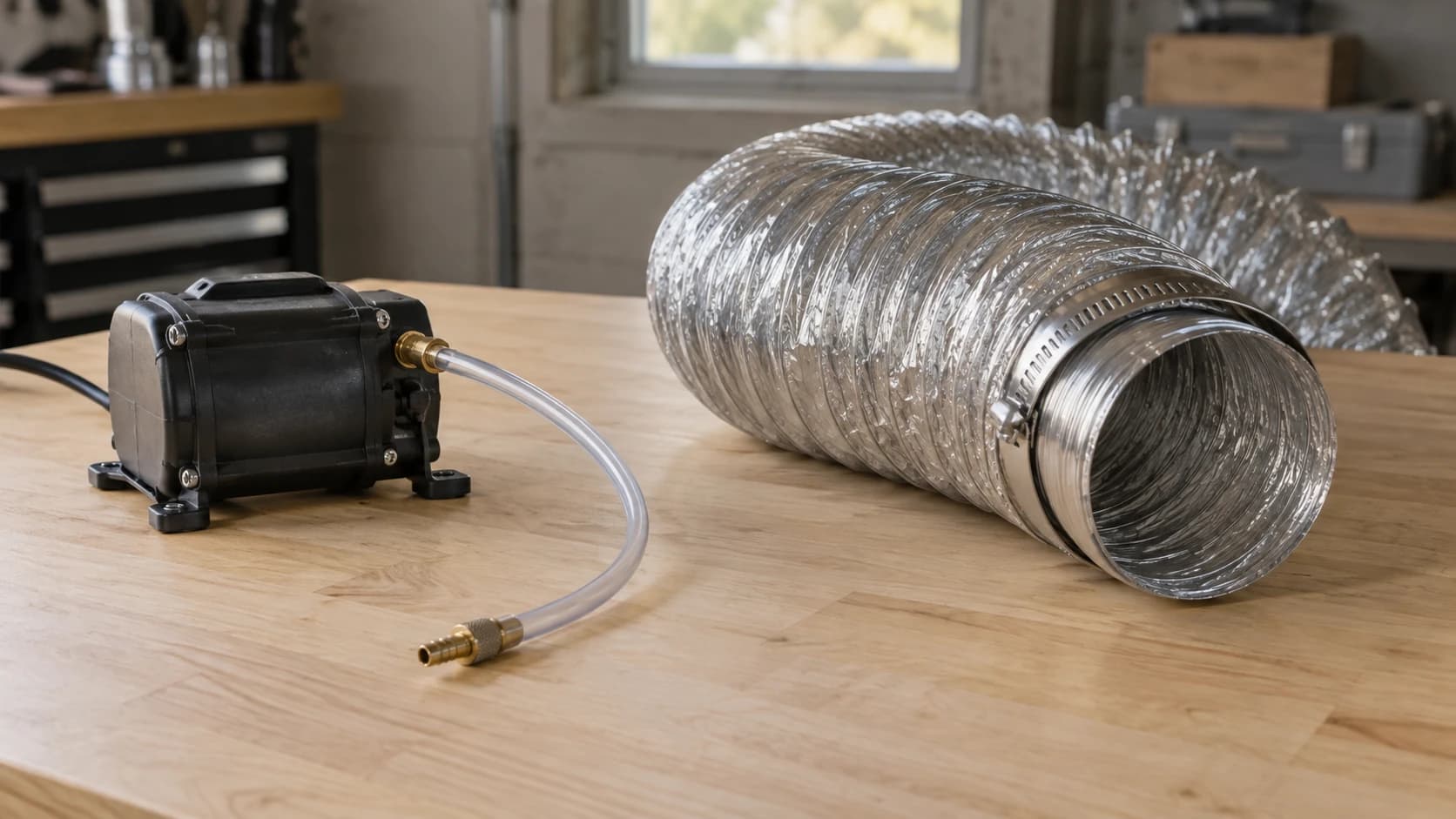
De laser komt binnen, je zet hem op het lege bureau en de eerste gravure is echt magisch. De tweede is nog steeds best goed. Bij de vierde ruikt de kamer naar een kampvuur, hangt er op hoofdhoogte een waas en vraagt iemand elders in huis wat je daarboven precies aan het doen bent.
Dus zet je een raam open en ga je verder, want de machine werkt prima.
De machine werkt prima. Dat is het probleem. Twee systemen die niet in de doos zaten doen niets, en een daarvan gaat over je longen in plaats van over je gravure.
Tip
Kort antwoord: air assist is een luchtstraal bij de snede die rook uit de weg ruimt, zodat de straal hout bereikt in plaats van rook. Afzuiging is een ventilator die die rook uit de kamer verplaatst. Ze lossen verschillende problemen op en je wilt beide. Air assist verbetert je sneden; afzuiging is een kwestie van gezondheid en comfort.
Twee systemen die voortdurend door elkaar worden gehaald
Mensen gebruiken "air assist" en "ventilatie" alsof het dezelfde functie is. Ze bevinden zich niet eens op dezelfde plek.
Air assist werkt op het punt van de snede, op millimeters van de straal. Een kleine nozzle blaast rechtstreeks lucht in de snijgroef.
Afzuiging werkt op de schaal van de kamer. Een ventilator trekt de rook uit de machine of behuizing en stuurt die ergens anders naartoe.
Air assist zonder afzuiging geeft je schonere sneden in een rokerige kamer. Afzuiging zonder air assist geeft je een ademende kamer en matige sneden. Het ene vervangt het andere niet.
PRINT. SNIJD. GRAVEER.



- Meerdere indelingen (SVG, DXF, PNG)
- Door machines geteste ontwerpen
- Commerciële licenties
Gesponsord door PrintCutCarve.com
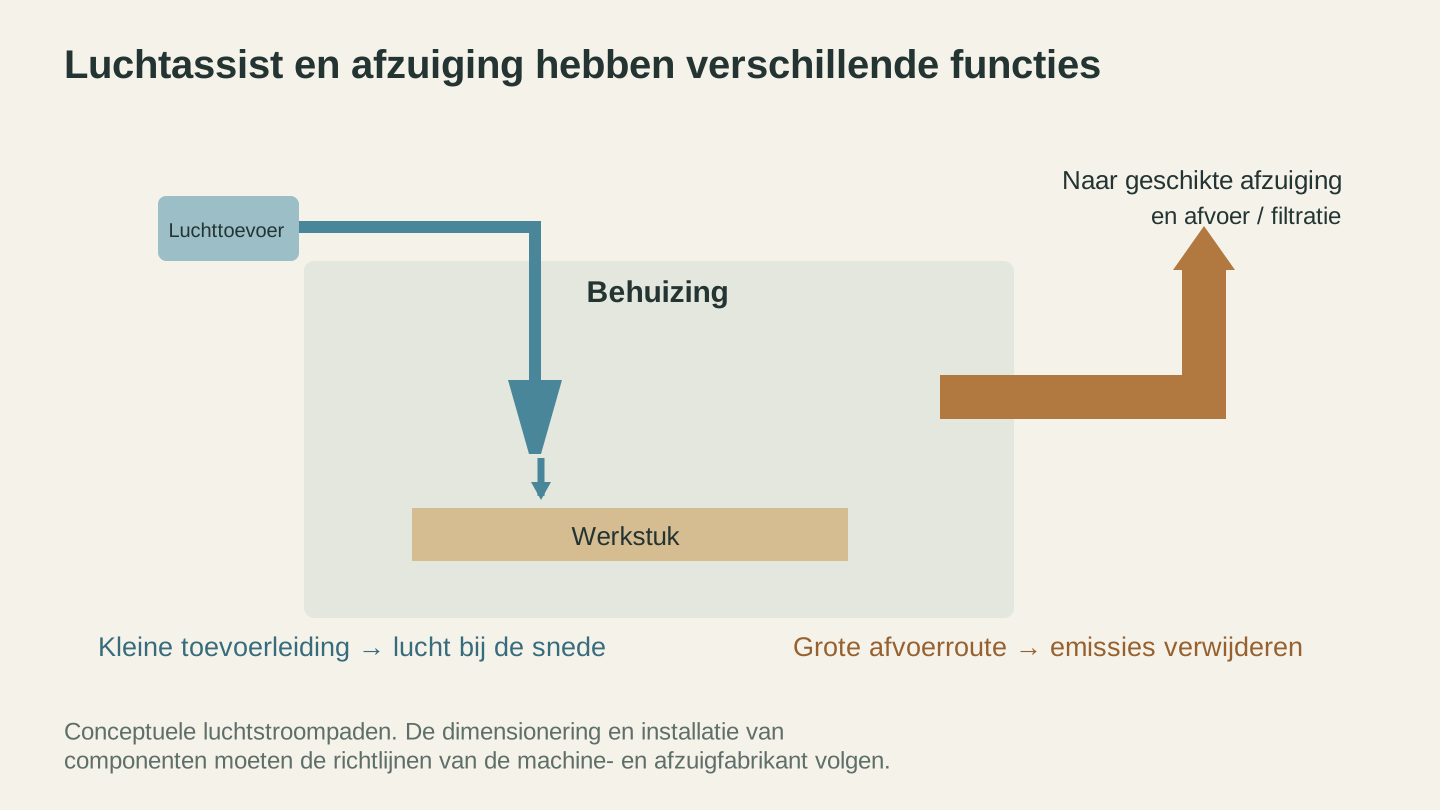
Luchtassistentie voert lucht aan bij de snede; afzuiging verwijdert emissies uit de behuizing. Ze hebben verschillende routes, onderdelen en doelen.
Wat air assist daadwerkelijk doet
Drie dingen, en slechts één daarvan ligt voor de hand.
Het ruimt de snijgroef op. Rook die in de snede blijft zitten absorbeert energie die voor het hout bedoeld was. Blaas de rook weg en elke passage bereikt vers materiaal. Daarom snijdt een laser met air assist bij dezelfde instellingen merkbaar dieper.
Het vermindert vlamvorming en verkoling. Een vlamfront dat in de snede blijft zitten veroorzaakt de brede bruine kring rond je randen. Bewegende lucht voorkomt dat die zich daar vastzet.
Het beschermt de lens. Puin dat anders omhoog zou drijven en op je optiek zou landen, wordt in plaats daarvan weggeblazen. Een vuile lens verliest geleidelijk vermogen, en de meeste mensen geven de diode de schuld lang voordat ze het glas controleren.
Dat derde punt bespaart ongemerkt geld. Lenzen zijn verbruiksartikelen als je ze ook zo behandelt.
Pomp of compressor
| Optie | Luchtstroom | Geluid | Opmerkingen |
|---|---|---|---|
| Aquariumluchtpomp | Laag | Zachte brom | De goedkoopste manier om iets te hebben in plaats van niets |
| Membraanpomp | Gemiddeld | Duidelijk hoorbaar | De gebruikelijke upgrade, meestal voldoende voor een hobbydiodelaser |
| Kleine compressor | Hoog, instelbaar | Luid in korte stoten | Meest stabiele toevoer, heeft een regelaar en vochtfilter nodig |
Wat je ook gebruikt, blijf binnen de druk- en nozzle-richtlijnen die je laserfabrikant publiceert. Meer lucht is niet automatisch beter: te veel lucht bij de verkeerde nozzle kan een vlam aanwakkeren in plaats van onderdrukken, en een compressor zonder vochtfilter blaast uiteindelijk waterdruppels op je werk.
Tip
Controleer de nozzle, niet alleen de pomp. Een nozzle die gedeeltelijk verstopt zit met hars en vuil voelt aan als een pomp die het begeeft, terwijl dit met ruime voorsprong het vaker voorkomende probleem is. Als je sneden slechter zijn geworden en er niets is veranderd, kijk dan eerst daar.
Afzuiging is wat voor jou telt
Snijden en graveren produceren verbrandingsproducten, en jij staat ernaast. Dat is het hele argument. Zelfs bij gewoon hout brengt een uur graveren in een afgesloten kamer veel fijnstof in de lucht die je inademt.
Er zijn drie gebruikelijke opstellingen.
Voer de afzuiging naar buiten via een raam. Een buisventilator zuigt lucht uit de machine of behuizing en blaast die naar buiten. Goedkoop, effectief en de optie waar de meeste hobbyisten op uitkomen. Het nadeel is dat je ergens naartoe ventileert, dus houd rekening met je buren en je eigen open ramen.
Behuizing plus blower. Een behuizing houdt de rook vast, zodat de ventilator iets heeft om uit af te zuigen in plaats van te proberen rook uit de open lucht op te vangen. Dit is een grote stap vooruit qua effectiviteit en het houdt ook rondzwervend licht tegen.
Een filtratie-eenheid. Zelfstandig, geen raam nodig, aanzienlijk duurder, en de filters zijn verbruiksartikelen met echte gebruikskosten. De moeite waard wanneer afvoer naar buiten echt geen optie is.
Kort over kanalen
Bij elke bocht en elk lek gaat luchtstroom verloren, en de meeste teleurstellende afzuigopstellingen zijn teleurstellend om saaie leidingtechnische redenen:
- Houd het traject kort en recht. Elke bocht kost je luchtstroom.
- Dicht de verbindingen af. Folietape, geen hoop.
- Plet het flexibele kanaal niet achter de werkbank; daar mislukken de helft van dit soort opstellingen ongemerkt.
- Zorg voor toevoerlucht. In een afgesloten kamer vecht de ventilator tegen een vacuüm. Zet aan de andere kant van de kamer een raam op een kier, zodat vervangende lucht ergens vandaan kan komen.
Een snelle manier om het resultaat te beoordelen: maak een snede en bekijk de behuizing. Als je rook rond het deksel ziet ontsnappen of hem op een meter afstand ruikt, verliest de ventilator van de lekken.
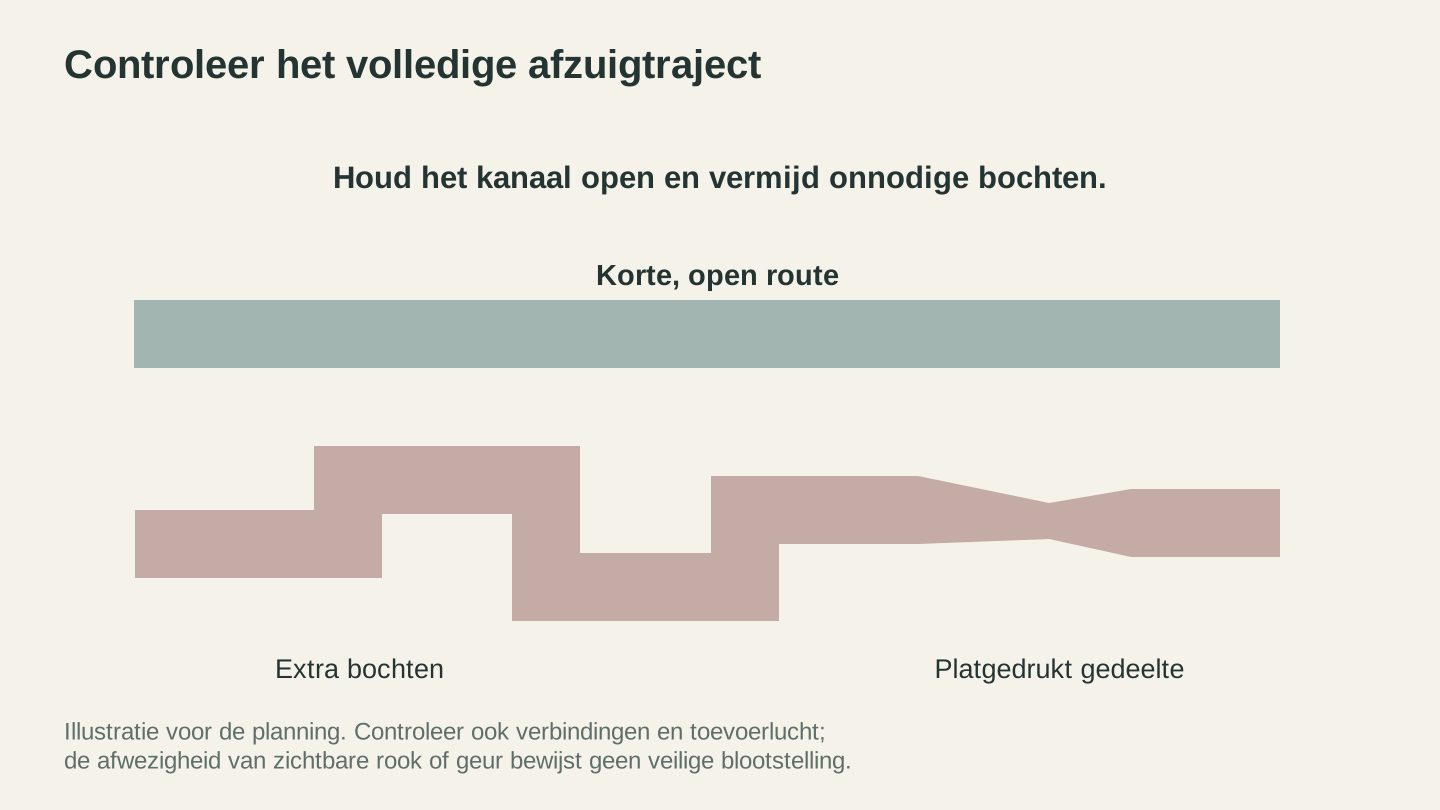
Inspecteer de volledige afvoerroute op vernauwingen en lekken. Zichtbare rook en geur kunnen problemen aan het licht brengen, maar het ontbreken daarvan bewijst niet dat blootstelling veilig is.
Sommige materialen zijn geen ventilatieprobleem
Dit is het deel waarin afzuiging niet langer het antwoord is.
Snijd nooit PVC of vinyl. Bij verbranding komt waterstofchloridegas vrij, dat schadelijk is voor jou en bijtend voor de metalen onderdelen van je machine. Een goed geventileerde kamer maakt het niet acceptabel.
Snijd nooit onbekende kunststoffen of onbekende coatings. Als de verkoper niet kan vertellen wat het is, behandel het dan als een nee.
Wees voorzichtig met behandeld of afgewerkt plaatmateriaal. Alles wat erop is aangebracht komt in de lucht terecht. Vraag om schriftelijke bevestiging dat het laserveilig is voordat het de machine in gaat.
Verwacht dat MDF rokerig is. Het snijdt voorspelbaar, maar produceert veel rook en een sterke geur. Het is een materiaal waarbij je afzuiging daadwerkelijk moet werken.
Waarschuwing
Als je twijfelt over een materiaal, vraag het dan voordat je het snijdt, niet erna. Craft Chat vertelt je wat een bepaald materiaal produceert wanneer het brandt en of het in de buurt van een laser thuishoort. Het is gratis bij je Craftgineer-account. Onze laserveiligheidsgids behandelt de rest van het werkplaatsplaatje.
Zo ziet een goed resultaat eruit
Je hebt geen instrumenten nodig om te weten of dit werkt.
Je snijranden zijn een dunne donkere lijn, geen brede bruine kring die zich over het oppervlak van het werkstuk verspreidt. Aanhoudende kringen betekenen dat air assist te zwak is of dat het werkstuk plat op een massief bed ligt zonder uitweg voor de rook.
De kamer ruikt niet tijdens het snijden. Niet erna, tijdens het snijden. Als je het ruikt terwijl de ventilator draait, ontsnapt de rook voordat die het kanaal bereikt.
Je lens blijft langer schoon. Als je de optiek om de paar uur schoonmaakt, wordt vuil niet goed bij de lens vandaan bewogen.
Sneden zijn herhaalbaar. Instellingen die vorige week werkten, werken deze week nog steeds. Geleidelijk afglijden naar "nu heb ik nog een passage nodig" wijst meestal op een vuile lens, en dat is meestal een luchtstroomverhaal.
Een korte onderhoudsroutine
- Controleer de nozzle op verstopping telkens wanneer de snijkwaliteit afneemt.
- Maak de lens schoon volgens een schema, in plaats van pas wanneer het misgaat.
- Leeg het vochtfilter als je een compressor gebruikt.
- Bekijk het kanaaltraject af en toe. Dingen worden verplaatst, geplet en losgekoppeld.
- Vervang filters in een filtratie-eenheid voordat ze zichtbaar versleten zijn. Een verzadigd filter filtert niet.
Ons artikel over veelgemaakte laserfouten behandelt de andere gewoonten die je vroeg moet aanleren, en dik hout snijden gaat dieper in op air assist als snijtechniek in plaats van als bevestiging.
Veelgestelde vragen
Heb ik echt air assist nodig op een diodelaser?
Voor graveren kun je zonder. Voor het snijden van welk materiaal dan ook maakt het een groot en direct verschil in diepte, verkoling en hoe schoon de randen uitkomen.
Is een aquariumluchtpomp goed genoeg voor air assist?
Het is duidelijk beter dan niets en een redelijk eerste experiment. Een membraanpomp of kleine compressor verplaatst aanzienlijk meer lucht, binnen de grenzen die de fabrikant van je machine aangeeft.
Kan ik gewoon een raam openzetten in plaats van afzuiging te gebruiken?
Een open raam is geen afzuiging, omdat niets de rook er actief naartoe verplaatst. Je wilt een ventilator die de lucht via een kanaal naar buiten trekt.
Werken filterunits net zo goed als afvoer naar buiten?
Ze kunnen goed werken en zijn het juiste antwoord wanneer afvoer naar buiten onmogelijk is. Ze kosten meer en de filters zijn verbruiksartikelen die volgens een schema moeten worden vervangen, niet pas wanneer ze er vuil uitzien.
Waarom ruikt mijn laser nog steeds terwijl er een ventilator draait?
Bijna altijd door lekken. Controleer de afdichtingen van de behuizing, de kanaalverbindingen en of het flexibele kanaal ergens achter de werkbank geplet is. Zorg ook dat de kamer toevoerlucht krijgt, zodat de ventilator niet tegen een vacuüm vecht.
Welke materialen mogen nooit in een laser?
PVC en vinyl, alles met een onbekende coating en elke niet-geïdentificeerde kunststof. Vooral PVC geeft waterstofchloride af, wat zowel jou als de machine schaadt.
Los eerst het goedkope probleem op
Als je deze week maar één ding doet, regel dan de afzuiging. Air assist maakt je werk beter; afzuiging gaat over wat je inademt terwijl je het maakt.
Maak er vervolgens bij het kiezen van materialen een gewoonte van om vóór de snede te controleren in plaats van na de geur. Vraag Craft Chat wat het materiaal in je hand doet wanneer het brandt. Het is gratis bij je account, het kost een paar seconden en het is een veel beter systeem dan aannemen dat die mysterieuze plaat uit de opruimbak waarschijnlijk wel goed zit.
Klaar om deze tools uit te proberen?
Meld je gratis aan, zonder creditcard. Gratis tools zijn direct beschikbaar.
Gratis beginnen