

Begynderprojekter i resin, der sælger (og den ærlige matematik bag dem)
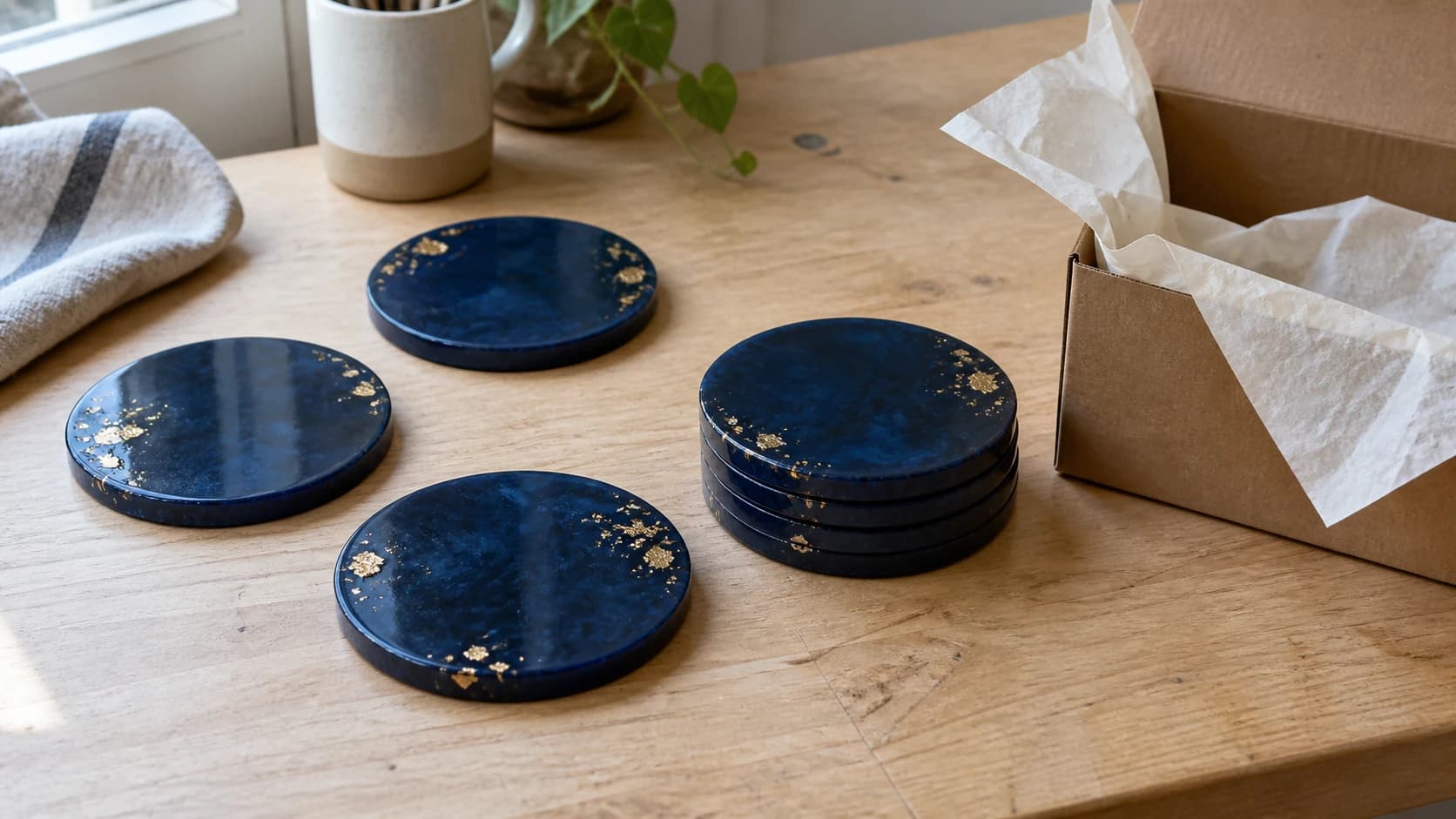
Resin har en af de billigste indgangspriser blandt hobbyer, der giver et rigtigt produkt, som kan sælges. Et startsæt, nogle få silikoneforme, lidt pigment, og du fremstiller ting inden weekenden er omme. Det er præcis problemet. Alle andre har også opdaget det, og markedspladserne for håndlavede produkter er fyldt med resinprodukter, hvoraf mange er flotte, men de fleste sælger ikke.
Forskellen mellem at lave flotte resinting og at sælge resinting handler ikke om talent. Den handler om produktvalg. Nogle resinprodukter sælger stabilt hele året på den mest kedelige måde, man kan forestille sig. Andre får hjerter og gemninger, men ingen ordrer. Dette indlæg er den ærlige version af den første liste: hvad der sælger, hvad det faktisk koster at fremstille, hvorfor hærdetiden, ikke motivationen, begrænser din produktion, og hvordan du undgår at drukne i en kategori med enormt udbud.
Hvad gør et resinprodukt salgbart?
Før listen kommer filteret. Et begyndervenligt resinprodukt, der sælger, skal bestå tre tests:
- Folk søger allerede efter det. Du vil have produkter, som købere skriver i et søgefelt, ikke produkter, der skal forklares. "Resin-glasbrikker" er en søgning. "Abstrakt vægskulptur i resin" er et håb.
- Du kan lave det ens to gange. Det er i sæt og genbestillinger, pengene ligger, og begge dele kræver ensartethed. En unik ocean pour er kunst. Fire matchende glasbrikker er et produkt.
- Det er billigt at sende og overlever posten. Små, flade dele vinder her. Resin er tungt, og forsendelsen æder hurtigt dækningsbidraget på alt, der fylder.
Læg mærke til, hvad dette filter sorterer fra: det meste af det dramatiske. Store river-style-produkter, skulpturel kunst og resinmalerier. Det kan sælge, men det sælger på omdømme, og omdømme er netop det, en begynder endnu ikke har. Funktionelle produkter hjælper dig, mens du opbygger det.
PRINT. SKÆR. FRÆS.
- Flere formater (SVG, DXF, PNG)
- Maskintestede designs
- Kommercielle licenser
Sponsoreret af PrintCutCarve.com
Kortliste med reelle tal
Her er begynderkortlisten, der består alle tre tests, med omtrentlige materialeomkostninger og typiske udbudspriser. To ærlige bemærkninger til tabellen. Materialeomkostningerne er illustrative estimater baseret på et stikprøvetjek af resinpriserne, da dette indlæg blev skrevet: Gallonsæt med epoxy-støberesin kostede fra omtrent fyrre dollars i budgetenden til langt over hundrede for premium-navne, hvilket svarer til et sted mellem tredive cent og en dollar pr. fluid ounce, og udsalg kan flytte det yderligere. Dine tal vil variere med brand, pigmenter og udsalg. Priskolonnen viser typiske udbudspriser hos små sælgere af håndlavede produkter på de store markedspladser på skrivetidspunktet, ikke et løfte om, hvad du får.
| Produkt | Resin pr. stykke | Materialeomkostning (ca.) | Typisk udbudspris | Egnethed til batchproduktion |
|---|---|---|---|---|
| Sæt med 4 glasbrikker | 12 til 16 oz i alt | $8 til $12 med pigment og emballage | $25 til $45 pr. sæt | Fremragende |
| Smykkebakke / opsamlingsbakke | 6 til 10 oz | $4 til $8 | $20 til $40 | Meget god |
| Nøgleringe | Under 1 oz + beslag | $1 til $2 | $8 til $15 | Fremragende |
| Bogmærker | 1 til 2 oz | $1 til $3 | $8 til $18 | Fremragende |
| Terningebakke / spiltilbehør | 8 til 14 oz | $5 til $10 | $30 til $70 | God |
Sæt med glasbrikker
Det almindelige resinprodukt af en grund. Alle har et bord, glasbrikker købes som gaver hele året, og et godt indpakket sæt er omtrent så tæt på uopslideligt i posten, som håndlavede varer kan blive. Det er også den mest mættede resinkategori, der findes, så en almindelig glitterglasbrik er usynlig. Glasbrikker fungerer kun med en tydelig vinkel, som vi kommer til nedenfor.
Smykkebakker og opsamlingsbakker
Små bakker til ringe, nøgler og øreringe. Lidt mindre konkurrence end for glasbrikker, samme arbejdsgang med forme og støbning, og de kan sælges smukt i bundter: en bakke plus matchende glasbrikker er et gavesæt, der hæver din gennemsnitlige ordre uden meget ekstra arbejde. Det er også den smarte måde at nærme sig smykkemarkedet som begynder. Bakker, der rummer smykker, er et enklere produkt end selve smykkerne, som er sin egen hobby med sin egen læringskurve.
Nøgleringe
Volumenproduktet. Meget lidt resin, hurtig afformning, lavt prisniveau, som folk køber spontant og i flere eksemplarer. Dækningsgraden ser fantastisk ud, men beløbet pr. salg er lille, så nøgleringe fungerer bedre som tilføjelsesprodukt og impulskøb på markeder end som selvstændig forretning. Personlige versioner, med initialer, navne eller fødselsblomster, er det, der løfter dem fra to dollars i materiale til et produkt, der sælger igen og igen.
Bogmærker
Stille og roligt et af de bedste begynderprodukter. Bogmærker med pressede blomster har især en stabil efterspørgsel som gave og bruger næsten ingen resin, og et slankt, godt emballeret bogmærke kan kvalificere til brevporto i nogle postsystemer. Reglerne for stivhed og tykkelse varierer, så tjek dit eget. Vinklen med pressede planter giver også en indbygget differentiering, fordi dine blomster bogstaveligt talt ikke er andres blomster.
Tilbehør til bordrollespil
Terningebakker, terningehvælvinger, kortæsker og tokens. Bordrollespilsentusiaster bruger rigtige penge på deres hobby og foretrækker aktivt håndlavede dele med karakter. Bemærk det produkt, der ikke står på denne linje: terninger med skarpe kanter. Håndlavede terninger sælges til imponerende priser, og de er virkelig svære at fremstille, med polerings- og indfarvningstrin, der kan tage livet af begyndere. Start med bakken, som terningerne ruller i. Gå videre til terninger senere, hvis nichen fanger dig.
Advarsel
Vær forsigtig med påstande om, at noget er "fødevaresikkert". Egnethed til fødevarekontakt varierer fra produkt til produkt, og mange hobbyepoxyprodukter har slet ingen certificering til det. Et sjusket blandingsforhold kan undergrave selv resin, der ellers er egnet. Glasbrikker og smykkebakker omgår det meste af dette, fordi de ikke er beregnet til fødevarekontakt. Markedsfør ikke serveringsbrætter eller kopper, medmindre netop din resin er dokumenteret fødevaresikker, og du har fulgt producentens krav til hærdning nøjagtigt.
Matematikken, som ingen tager med i vejledningen
Indhold om resin viser gerne støbningen og springer regnearket over. Så her kommer regnearksdelen.
Tag sæt med glasbrikker. Sæt resin, pigment og emballage til ti dollars. Sælg til femogtredive. Femogtyve dollars brutto før gebyrer, før forsendelsesmaterialer og før det tal, der afgør alt: din tid. Hvis sættet tog halvfems minutters aktivt arbejde fordelt på støbning, afformning, slibning af kanter og pakning, tjente du omtrent seksten dollars i timen. Fint. Hvis det tog tre timer, fordi du brændte bobler væk i evigheder og sleb en klistret kant om, er det omkring otte dollars i timen før gebyrer, under mindstelønnen mange steder, for at stå i dampe.
To ting trækker tallet i din favør. Batchproduktion, som fordeler den faste tid, blanding, opsætning og oprydning, på flere dele. Og prissætning som en virksomhed i stedet for at sætte prisen så lavt, at du føler dig beskeden. Vores guide til prissætning af håndlavede produkter gennemgår hele formlen, inklusive den del, næsten alle nye resinsælgere springer over: at betale dig selv for slibningstiden.
Budgettér også med omkostninger, der ikke viser sig pr. stykke. Silikoneforme slides op, og hvor hurtigt det sker, afhænger af silikonen, formen og hvor meget varme dine støbninger udvikler. En meget brugt form bliver uklar eller går i stykker langt tidligere, end du kunne håbe. Handsker, blandebægre, brændstof til gasbrænderen og de dele, du kasserer, kommer også fra dit dækningsbidrag. I begyndelsen må du regne med at kassere noget. Det gør alle.
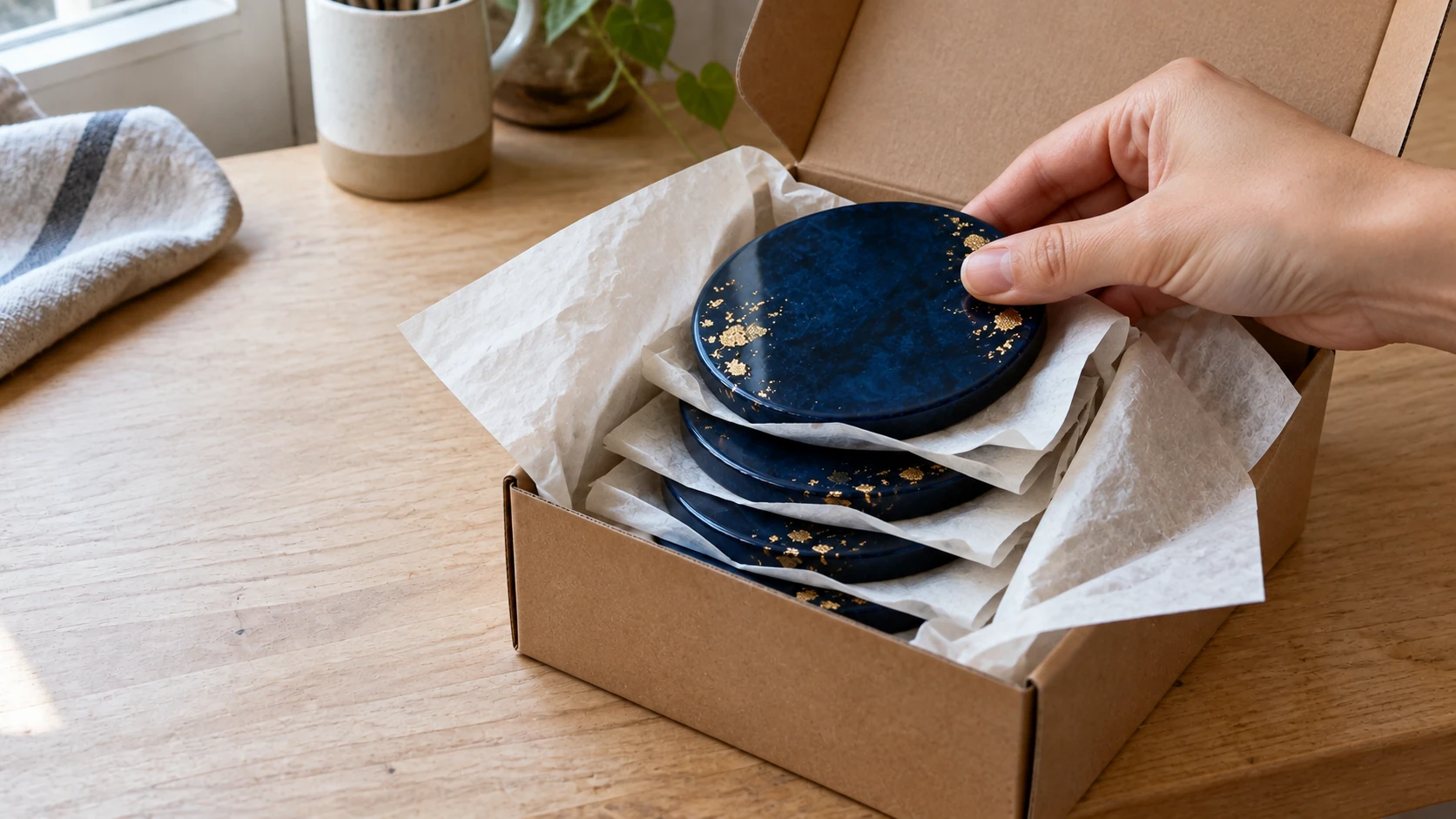
Adskil de færdige overflader under pakningen, så de ikke gnider mod hinanden. Brug dette som den indvendige gavepræsentation, og vælg derefter beskyttelse til forsendelsen af hele pakken.
Hærdetiden er din reelle produktionsgrænse
Her er det, ingen begynder planlægger efter: Du bestemmer ikke selv din produktion. Det gør dine forme og resinens hærdetidsplan.
Typisk skal epoxy-støberesin bruge omkring 24 timer, før den kan afformes, og flere dage for at opnå fuld hårdhed. De nøjagtige tider afhænger af produktet og rumtemperaturen, så læs databladet for din resin, og stol på det. Som planlægningseksempel giver en form med ét hul, der kan afformes efter 24 timer, omtrent ét stykke om dagen, uanset hvor motiveret du er. Har du fire hulrum til glasbrikker, er dit teoretiske maksimum ét sæt om dagen, og det er før slibning, kuppelformning og pakning.
Det ændrer, hvordan du bør tænke på at få ordrer. Ti ordrer på sæt med glasbrikker på en uge lyder som en drøm, indtil du indser, at det er fyrre glasbrikker gennem fire forme, hvilket er ti dages støbning ved fuld kapacitet, mens nye ordrer fortsætter med at komme ind. Løsningen er ikke glamourøs: Køb flere eksemplarer af formen til alt, du har tænkt dig at sælge seriøst, støb i batches efter en plan, og opbyg færdigt lager, før du åbner for ordrer, i stedet for at støbe efter efterspørgslen.
Tip
Ensartethed er en produktionsfærdighed, ikke et talent. Mål nøjagtigt på den måde, resinproducenten angiver. Nogle forhold er efter volumen, andre efter vægt, og de kan ikke erstatte hinanden. Notér dine pigmentmængder for hver farvevariant, du sælger, og hold arbejdsområdet varmt. De fleste problemer med "hvorfor er denne batch anderledes" kan spores tilbage til mål efter øjemål eller en kold garage. Vores indlæg om almindelige resinfejl gennemgår de fejl, der ødelægger batches, og det betyder dobbelt så meget, når en batch er en betalt ordre.
Mætning er reel. Sådan differentierer du dig
Alle produkterne ovenfor har hård konkurrence. Det er ikke en grund til at springe dem over. Mættede kategorier er mættede, fordi folk køber fra dem. Men det betyder, at en generisk produktannonce forsvinder. Det, der flyder:
- En niche, ikke en stemning. "Blå glasbrikker" konkurrerer med hele verden. Glasbrikker til en bestemt målgruppe, en hunderace, et fandom-relateret tema, som du har rettighederne til, eller en regional identitet, konkurrerer med en håndfuld butikker.
- Inklusioner med en historie. Blomster, du har presset, sand fra en navngiven lokal strand, knust muslingeskal eller ægte bladguld. Materialer med en oprindelse er den billigste differentiering, der findes, fordi oprindelsen ikke kan masseproduceres.
- God finish. Slebne og polerede kanter, flade bunde, ingen klæbrige områder samt kork- eller gummifødder på glasbrikker. De fleste tilfældige sælgere springer finishen over. Køberne bemærker det på billederne, selv når de ikke kan sætte ord på, hvad de ser.
- Sæt og matchende dele. Evnen til at lave otte dele, der matcher, er mere sjælden i resin, end det lyder, og det er faktisk det, gavekøbere og genkøbende kunder ønsker.
- Billeder og annoncetekst, der ser professionel ud. Et imponerende produkt med et mørkt mobilfoto på et lagen taber hver gang til et middelmådigt produkt, der er fotograferet godt.
Hvor du sælger, betyder også noget. De store markedspladser for håndlavede produkter giver trafik og konkurrence i lige mål, og det er en færdighed i sig selv at vinde synlighed i søgningerne. Vores Etsy-guide til makers gennemgår, hvad der faktisk flytter noget i markedspladsens søgninger, før du opretter dit første sæt.
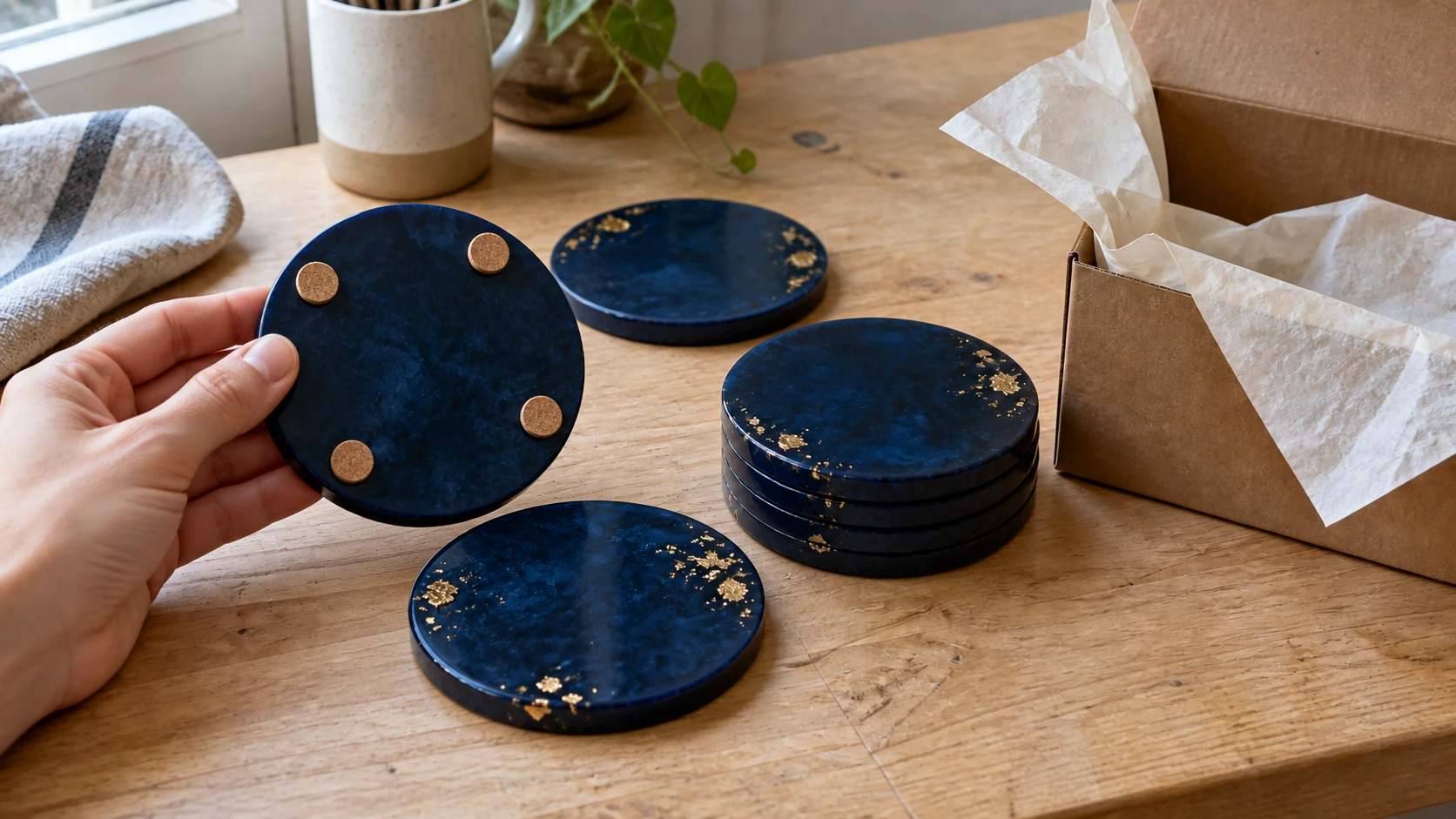
Færdiggørelsen omfatter også undersiden. Små fødder holder resinen fra at skrabe mod et bord og giver dig endnu en detalje, der er værd at vise i en produktannonce.
Fra hærdet del til produktannonce
Produktannoncen er den sidste strækning, og det er her, mange gode resinprodukter stille og roligt dør. To Craftgineer-værktøjer bærer det meste af arbejdet.
ListingLab tager ét foto af dit færdige produkt og udarbejder søgeoptimerede titler, beskrivelser, nøglefunktioner og SEO-søgeord til det. Tekstgenereringen bruger chatbotbeskeder fra dit abonnement i stedet for kreditter, så det koster slet ingen kreditter at justere en produktannonce. Når dit eneste foto er taget på en silikone måtte sprøjtet til med resin, kan ListingLab også generere AI-produktfotos med styling, livsstilsscener og sæsonopsætninger, til 1 kredit pr. foto.
Til alt det, der kommer før produktannoncen, er Craft Chat den altid tilgængelige second opinion: hvorfor en batch hærdede blødt, om et pigment falmer i sollys, og hvordan du pakker glasbrikker, så de overlever en postsorteringsmaskine. Det er gratis at bruge inden for de månedlige beskedgrænser i dit abonnement, hvilket gør det til præcis det, du bør spørge, før en betalt ordre kommer i formen.
Vælg ét produkt fra tabellen. Køb to eller tre af den samme form, ikke ti forskellige. Støb et matchende sæt, færdiggør kanterne ordentligt, fotografer det i dagslys, og lad ListingLab skrive teksten. Resinmarkedet har ikke brug for endnu en maker med fyrre eksperimenter og ingen produktannoncer. Det belønner makeren med en fokuseret produktlinje, som købere kan finde, og som du kan fremstille igen efter behov.
Relaterede værktøjer
Klar til at prøve disse værktøjer?
Tilmeld dig gratis, intet kreditkort kræves. Gratis værktøjer er tilgængelige med det samme.
Kom gratis i gang