

Håndlavede smykker, der sælger: Hvad køberne faktisk betaler for
Smykker har den mest ubarmhjertige kløft inden for alt håndlavet salg. Det er en af de nemmeste kategorier at komme i gang med og en af de sværeste faktisk at sælge i. Materialerne er billige, indlæringskurven er venlig, og alle markedspladser er proppet til randen med mennesker, der opdagede det samme.
Så spørgsmålet er ikke "kan jeg lave smykker?" Det kan du. Spørgsmålet er, hvilke smykker der fortjener tiden ved arbejdsbordet, hvordan avancerne ser ud i virkeligheden, og hvordan du bliver set i en kategori, hvor en søgning på "håndlavede øreringe" giver flere resultater, end nogen vil rulle gennem på et helt liv.
Dette indlæg er den uromantiske version. Hvad der sælger, hvad det koster, hvorfor billedet betyder mere end selve smykket, og hvordan små producenter alligevel skaber sig plads.
De fire slags smykker, der faktisk sælger
Trends kommer og går, men de smykker, du igen og igen ser sælge hos etablerede små producenter, samler sig i fire grupper. Fælles for dem er en grund til at købe hos dig i stedet for på en fabrik.
| Kategori | Hvorfor det sælger | Materialepris pr. smykke | Typisk udbudspris | Konkurrence |
|---|---|---|---|---|
| Personlige smykker | En fabrik kan ikke stemple hendes barns initial inden fredag | Lav til middel | $25 til $60 | Høj, men mulig at vinde |
| Fødselsstenssmykker | Indbygget gave-logik, tolv nicher i én | Lav til middel | $20 til $55 | Høj |
| Minimalistiske hverdagssmykker | Bruges dagligt, købes igen, kombineres i lag | Lav | $15 til $40 | Meget høj |
| Markante øreringe | Købes på følelser, fylder på billeder | Lav | $20 til $50 | Middel |
Priserne ovenfor er illustrative udbudspriser baseret på gennemgang af etablerede håndlavede sælgere på de store markedspladser i midten af 2026. Det er priser, sælgerne beder om, ikke et bevis på, hvad der sælger, og mange annoncer ligger uden for disse intervaller.
Personlige smykker er den stærkeste position, en lille producent har. Initialvedhæng, håndstemplede navneplader, armbånd med koordinater og personlige charms med fødselsblomster. Personalisering fjerner dig fra direkte prissammenligning, fordi køberen ikke længere shopper en kategori. De leder efter den eneste annonce med deres datters initial udformet på den måde, de kunne lide.
Lige efter kommer fødselsstenssmykker, som er personalisering med lidt hjælp. Køberen handler ofte ikke til sig selv, og så bliver gaveindpakning, gavetekst og gavefrister salgsargumenter, du kan styre. Det opdeler også ét overfyldt marked i tolv mindre. Ingen, der søger på "halskæde med september-fødselssten", sammenligner dig med hele øreringeuniverset.
Den stille vækstskaber på listen er minimalistiske hverdagssmykker: tynde hamrede ringe, der kan stables, små guldfyldte hoops og threader-øreringe med en enkelt sten. Avancen pr. smykke er mindre, og konkurrencen er hård, men det er her, de tilbagevendende kunder findes. En person, der køber én ring, der kan stables, køber tre.
Og så er der impulshylden. Markante øreringe sælger på stærke farver og store silhuetter og købes ud fra et billede, næsten før scrollingen stopper. Polymerler, messing, laserskåret akryl og træ samt blandede materialer. Resin dukker også op her, selv om det er sit eget håndværk med sin egen indlæringskurve og fortjener sit eget indlæg. Markante smykker følger trends kraftigt, så de sælger hurtigt og bliver hurtigt daterede. Betragt derfor kollektioner som sæsonvarer, ikke som permanente.
PRINT. SKÆR. FRÆS.
- Flere formater (SVG, DXF, PNG)
- Maskintestede designs
- Kommercielle licenser
Sponsoreret af PrintCutCarve.com
Avancematematikken, ingen skriver om
Smykker ligner en drøm med høj avance, fordi materialerne virker billige. Fundings i uædle metaller koster få øre. Men så snart du går over til materialer, der er værd at sælge, ændrer billedet sig: guldfyldte ørekroge kan koste flere dollars pr. par, og kvalitetssten og kæder løber hurtigt op. Din reelle pris pr. smykke afhænger i høj grad af din leverandør, dit design og hvor meget du køber ad gangen, så lav dine egne beregninger, før du stoler på andres eksempler, også dette.
Og materialerne er alligevel kun den lille halvdel af regnestykket. Lad os gennemgå ét illustrativt eksempel:
- Materialer: guldfyldte ørekroge, tråd, sten, øskener, bagkort og æske, lad os sige $8 i alt for et pænere par, beregnet ud fra dine faktiske leverandørfakturaer og ikke ud fra hukommelsen.
- Tid: 25 minutter til at fremstille dem i et øvet tempo samt fotografering, oprettelse af annonce, pakning og turen til posthuset fordelt over din batch. Regn ærligt med 40 minutter pr. par.
- Gebyrer: på Etsy udgør en amerikansk sælgers annoncegebyr, transaktionsgebyr og betalingsbehandling typisk omkring 10 til 15 procent af ordrens samlede beløb, når forsendelsen er medregnet, og mere når annoncering er involveret. Andre markedspladser og lande lægger gebyrerne sammen på andre måder, så læs din egen gebyroversigt.
- Det resterende: perlefarver, der ikke solgte, låse købt i store mængder og prototyper. Dødt lager er en reel omkostning ved smykker, fordi materialer købes i partier og bruges i smykker.
Ved et salg til $28 efterlader $8 i materialer og et afrundet gebyrbeløb på $4 dig med $16 for 40 minutter af dit liv. Det er en reel løn og et langt bedre billede end i de fleste håndlavede kategorier. Men det holder kun, hvis du prissætter som en virksomhed. Producenten, der tager $12 for de samme øreringe "fordi materialerne var billige", betaler kunderne for at tage hendes arbejde.
Der følger to regler direkte af regnestykket. For det første skal du prissætte ud fra de samlede omkostninger, inklusive dine minutter, og kontrollere det mod engrosregnestykket, hvis en butik en dag vil føre dine varer. Vores guide til prissætning af håndlavede produkter gennemgår hele formlen. For det andet skal du foretrække designs, der egner sig til batchproduktion. Ti par af samme ørering i én omgang ændrer din effektive timeløn mere, end enhver rabat på materialer nogensinde vil.
Advarsel
Pas også på fælden med "billige materialer" i den modsatte retning. Tynd belægning slides igennem ved daglig brug, og et misfarvet smykke betyder refusioner, dårlige anmeldelser og omarbejde. Guldfyldte materialer og sterling koster mere pr. smykke, men holder generelt meget bedre til hverdagsbrug (sterling anløber stadig, men kan pudses blank igen), og købere af hverdagssmykker leder netop efter de ord i annoncer.
Spørgsmål om materialer er dér, hvor mange nye smykkeproducenter går i stå: guldfyldt kontra vermeil kontra belagt, hvilken trådtykkelse der holder en form, og hvad "hypoallergen" juridisk betyder i en annonce. Craft Chat er god til netop den slags spørgsmål, og den er gratis at bruge på alle abonnementer med et månedligt antal beskeder.
Fotografering afgør, om smykker sælger
Alle håndlavede kategorier afhænger af billeder. Smykker afhænger endnu mere af dem, fordi små reflekterende smykker gør det umuligt at bedømme størrelsen fra en skærm.
De tre billeder, der sælger smykker:
- Makroheltebilledet. Skarp fokus på selve smykket, ren baggrund og ingen rod. Det er miniaturebilledet, der vinder eller taber klikket. Uskarpe makrobilleder dræber smykkeannoncer hurtigere end enhver prisfejl.
- Størrelsesbilledet. Smykker fotograferet alene ser enten enorme eller mikroskopiske ud. Vis smykket på kroppen eller ved siden af en velkendt genstand, så køberen ved, om vedhænget er diskret eller på størrelse med en middagstallerken.
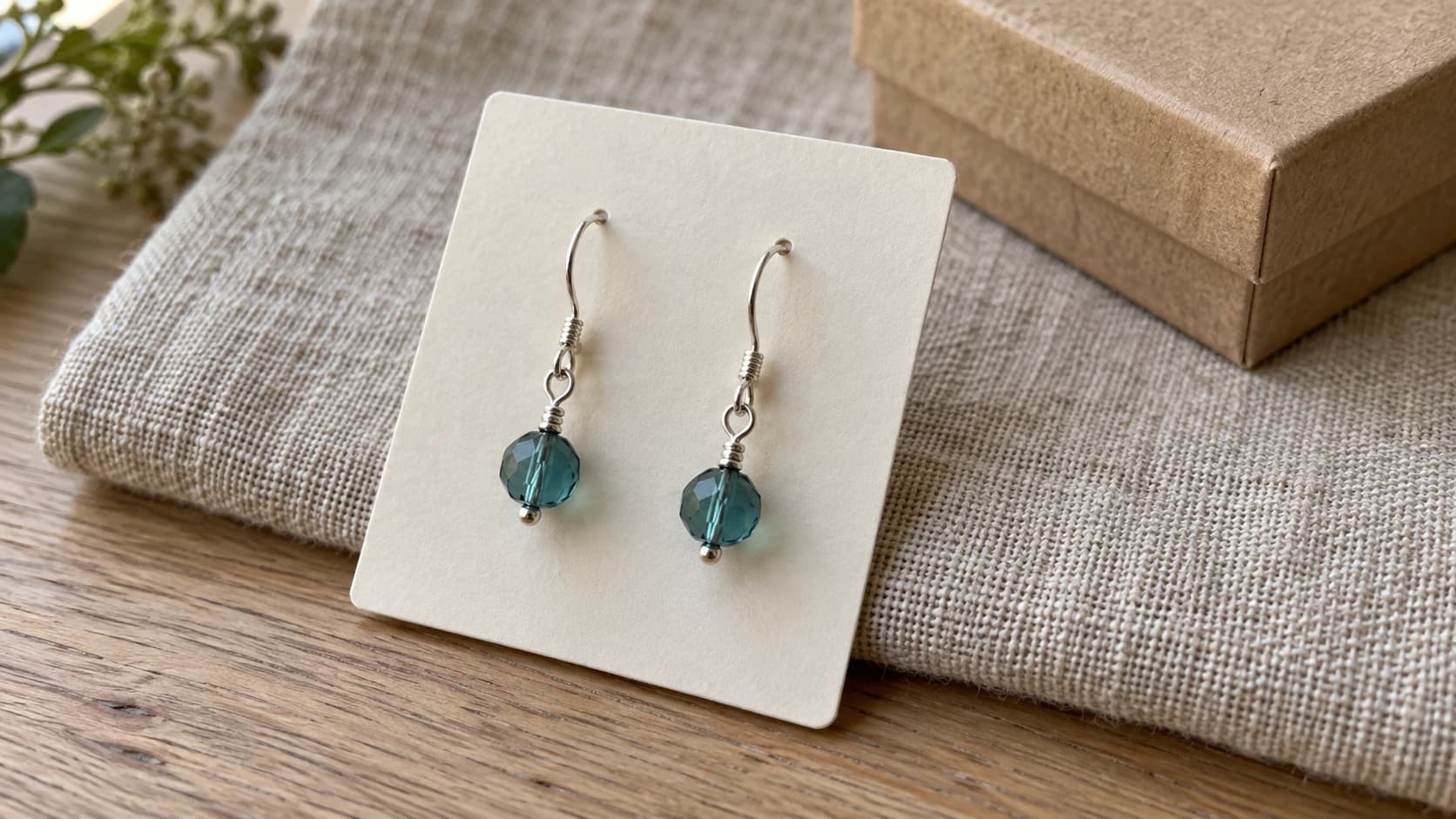
- Situationsbilledet. Smykket stylet som gave: på et displaykort ved siden af æsken. Det er billedet, der får fødselsdags- og jubilæumskøbere til at handle. De udgør en stor del af smykkekøberne.
Naturligt vindueslys slår en billig lightbox til de fleste metaller, fordi diffust dagslys forhindrer polerede overflader i at blive til hvide blændingspletter. Tag flere billeder, end der føles rimeligt, og behold kun de skarpe.
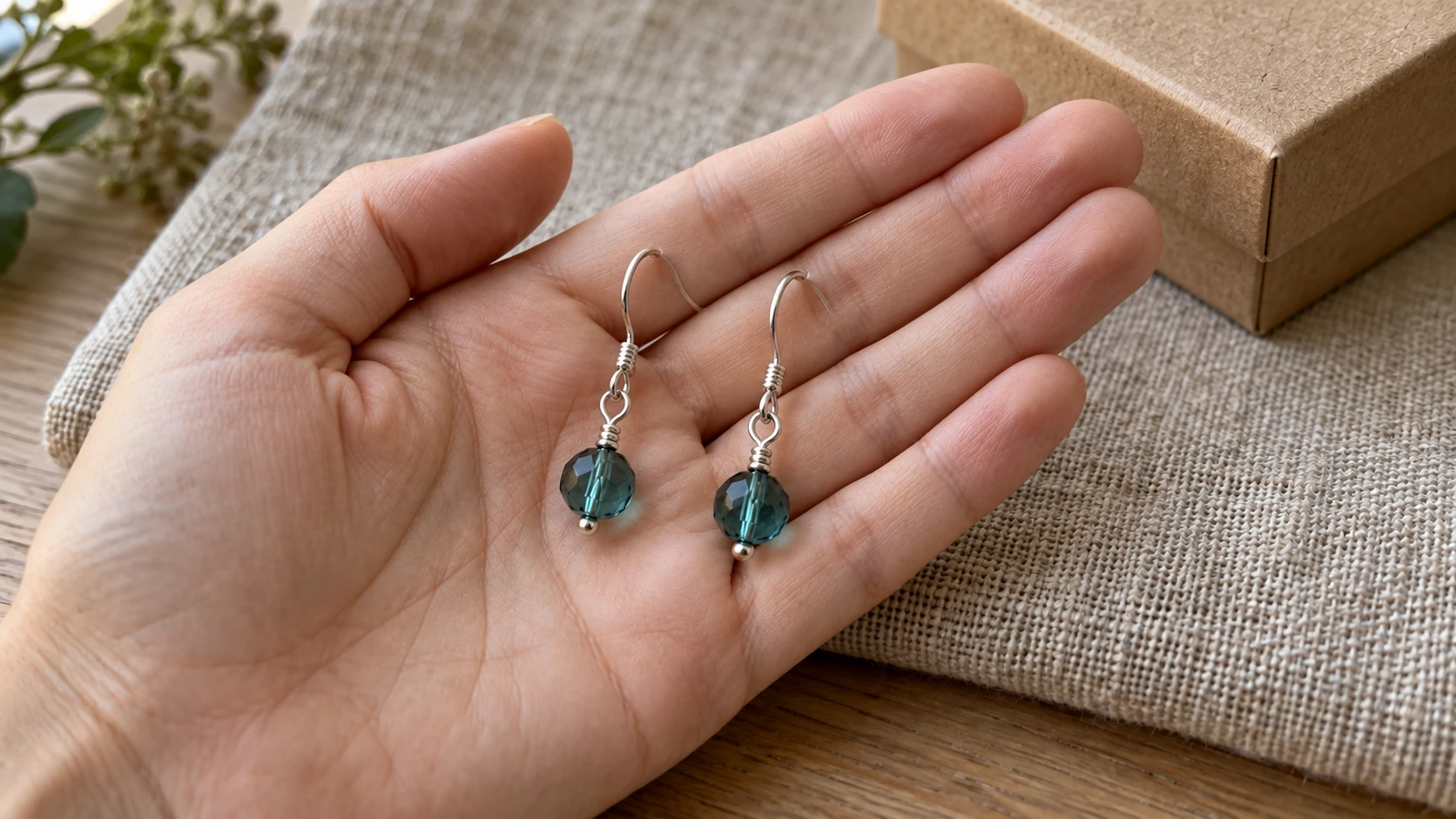
En velkendt størrelsesreference gør det lettere at bedømme en lille del. Medtag også de faktiske mål i annoncen. En hånd giver kontekst, ikke et præcist mål.
Når du har ét godt billede, klarer ListingLab resten af annoncearbejdet. Upload billedet, så udarbejder det titler, beskrivelser, nøglefunktioner og søgeord tilpasset håndlavede markedspladser. Tekstgenerering bruger beskederne i dit abonnements chatbot og ikke credits, så det koster dig ikke ekstra at gentage arbejdet med en annonce. Hvis dit eneste billede er taget på en rodet arbejdsbænk, kan ListingLab også generere stiliserede AI-produktbilleder i dusinvis af scenestilarter til 1 credit pr. billede. Det er en hurtig måde at få situationsbilledet med gavekontekst uden at opbygge et fotosæt.
Tip
Skriv også størrelsen ind i teksten. "Diskret vedhæng på 12mm" og "markant hoop på 65mm" besvarer det spørgsmål, køberne stille stiller, og størrelsesordene fungerer samtidig som søgetermer.
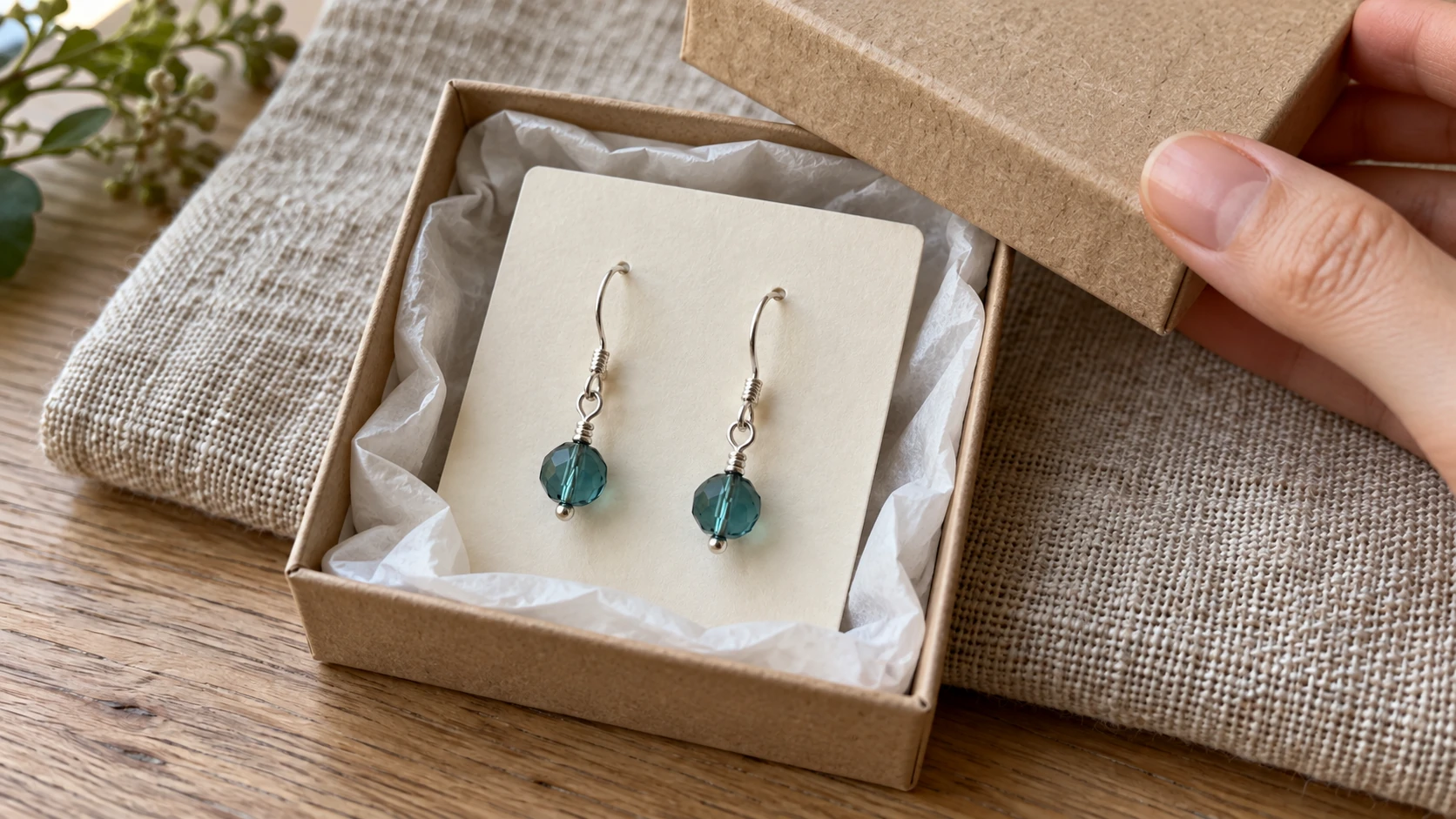
Det samme par, vist klar til at blive givet som gave. Hold produkt, materiale og farve ens på nærbilledet, størrelsesbilledet og gavebillederne.
Mæthedsproblemet, helt ærligt
Smykker er en af de mest overfyldte kategorier på alle større markedspladser for håndlavede varer. Det hjælper ingen at lade som om, det ikke er sådan. En generisk annonce med titlen "håndlavede øreringe" er en besked i en flaske.
Det lyder dystert, men mæthed straffer generiske sælgere, ikke små sælgere. De producenter, der klarer sig godt med smykker, følger alle en version af den samme strategi:
Gør nichen så smal, at det næsten føles for snævert. Ikke "halskæder", men "halskæder med fødselsblomster til nybagte mødre". Ikke "øreringe", men "lette markante øreringe til udspilede eller følsomme ører". En niche, der føles ubehageligt lille for dig, er som regel den første, hvor du faktisk kan rangere i søgninger og blive husket.
Kollektioner slår enkeltstående produkter af samme grund. Fem urelaterede designs ligner en hobby. Tolv smykker i en sammenhængende stil, farvepalet og prisklasse ligner et brand, bliver købt i flere eksemplarer og får selve butikssiden til at konvertere. Kollektioner giver også tidligere købere en grund til at vende tilbage, og tilbagevendende købere er hele den økonomiske motor i minimalistiske smykker.
Dine materialer er også en differentiator, hvis du faktisk fortæller om dem. "Guldfyldt, ikke belagt, så det holder til daglig brug" er en pointe, som en fabriksannonce sjældent gider fremføre. Hvor dine sten kommer fra, hvorfor du valgte sterling-ørekroge, og hvordan smykket er færdiggjort. Detaljer opbygger den tillid, en anonym annonce ikke kan skabe.
Gaver fortjener sin egen strategi, fordi håndlavede smykker så ofte købes til en anden. Gaveklar emballage, mulighed for håndskrevet besked og tydelige forsendelsesfrister før højtider får købere til at handle, mens en pænere, men langsommere annonce mister dem. Vi har en hel liste med gaveidéer til håndlavede smykker organiseret efter anledning, hvis du vil se, hvordan gavevinklen former faktiske produkter.
Og til sidst: kæmp ikke kun online. Salg ansigt til ansigt vender helt op og ned på smykkeligningen: intet fotograferingsproblem, ingen placering i søgeresultater og en prøv-det-på-konvertering, som ingen annonce kan matche. Øreringe og ringe, der kan stables, er klassiske storsælgere på markeder, fordi de har lave omkostninger, lav størrelsesrisiko og er nemme at give som gave. Hvis markedspladser føles som at råbe ud i tomheden, gennemgår vores guide til salg på kunsthåndværkermesser messestanden, og messer sender kunder videre til din onlinebutik via visitkort og gentagne ordrer.
En realistisk første linje, hvis du starter nu
Hvis du vil have én konkret vej i stedet for en menu, er her en fornuftig start:
- Vælg én niche blandt de fire kategorier ovenfor, personlige smykker eller fødselsstenssmykker, hvis du ønsker den nemmeste differentiering.
- Design en lille kollektion på otte til tolv smykker i én sammenhængende stil og prisklasse, baseret på designs, der egner sig til batchproduktion.
- Prissæt hvert smykke ud fra de samlede omkostninger, materialer plus ærligt opgjorte minutter plus gebyrer, og hold tallet op mod engrosregnestykket.
- Tag de tre billeder af hvert smykke: makroheltebillede, størrelse og gavekontekst.
- Skriv annoncerne med reelle størrelser, reelle materialebetegnelser og reelle ord for anledninger i titlerne.
Betragt derefter den første måned som data, ikke som en dom. Hvilket smykke får klik, men intet salg? Det har et pris- eller fotoproblem. Hvilket smykke får ingen af delene? Det har et søgeproblem. Juster og opret annoncen igen. Smykker belønner iteration mere end perfektion på lanceringsdagen.
Ofte stillede spørgsmål
Hvilke håndlavede smykker sælger bedst?
For små producenter er de kategorier, der igen og igen dukker op blandt succesfulde butikker, personlige smykker, fødselsstenssmykker, minimalistiske hverdagssmykker i kvalitetsmetaller og markante øreringe. Personlige smykker og fødselsstenssmykker er det nemmeste sted at skille sig ud, fordi en fabriksannonce ikke kan konkurrere på det.
Hvor meget bør jeg tage for håndlavede smykker?
Prissæt ud fra de samlede omkostninger: materialer, din tid til en reel timeløn, emballage og gebyrer. Sammenhold derefter tallet med, hvad etablerede sælgere tager i din niche. Som en grov illustrativ tommelfingerregel beder mange annoncer for håndlavede øreringe og vedhæng på de store markedspladser om mellem $15 og $60 afhængigt af materialer og personalisering, med mange afvigelser i begge retninger. For lav pris signalerer lav kvalitet i smykker, ikke et godt tilbud.
Hvorfor sælger mine håndlavede smykker ikke online?
De sædvanlige syndere, i rækkefølge: billeder, der ikke er knivskarpe i miniatureformat, ingen størrelsesreference, generiske titler, der ikke kan rangere i en mættet søgning, og en så lav pris, at den signalerer billige materialer. Fiks billederne først. Inden for smykker er billedet produktet, indtil æsken ankommer.
Smykkerne var aldrig din flaskehals. Det er synligheden. Tag dit bedste smykke, tag ét skarpt billede af det, og lad ListingLab omdanne billedet til en komplet annonce: titler, beskrivelse og søgeord via beskederne i dit abonnement samt stiliserede produktbilleder til 1 credit pr. billede, når du har brug for dem. Og når spørgsmålene om materialer hober sig op ved arbejdsbordet, er Craft Chat gratis til rådighed. Lav smykket. Giv det derefter en annonce, der gør sin del af arbejdet.
Relaterede værktøjer
Klar til at prøve disse værktøjer?
Tilmeld dig gratis, intet kreditkort kræves. Gratis værktøjer er tilgængelige med det samme.
Kom gratis i gang