

Så gör du laserskurna örhängen som faktiskt säljer
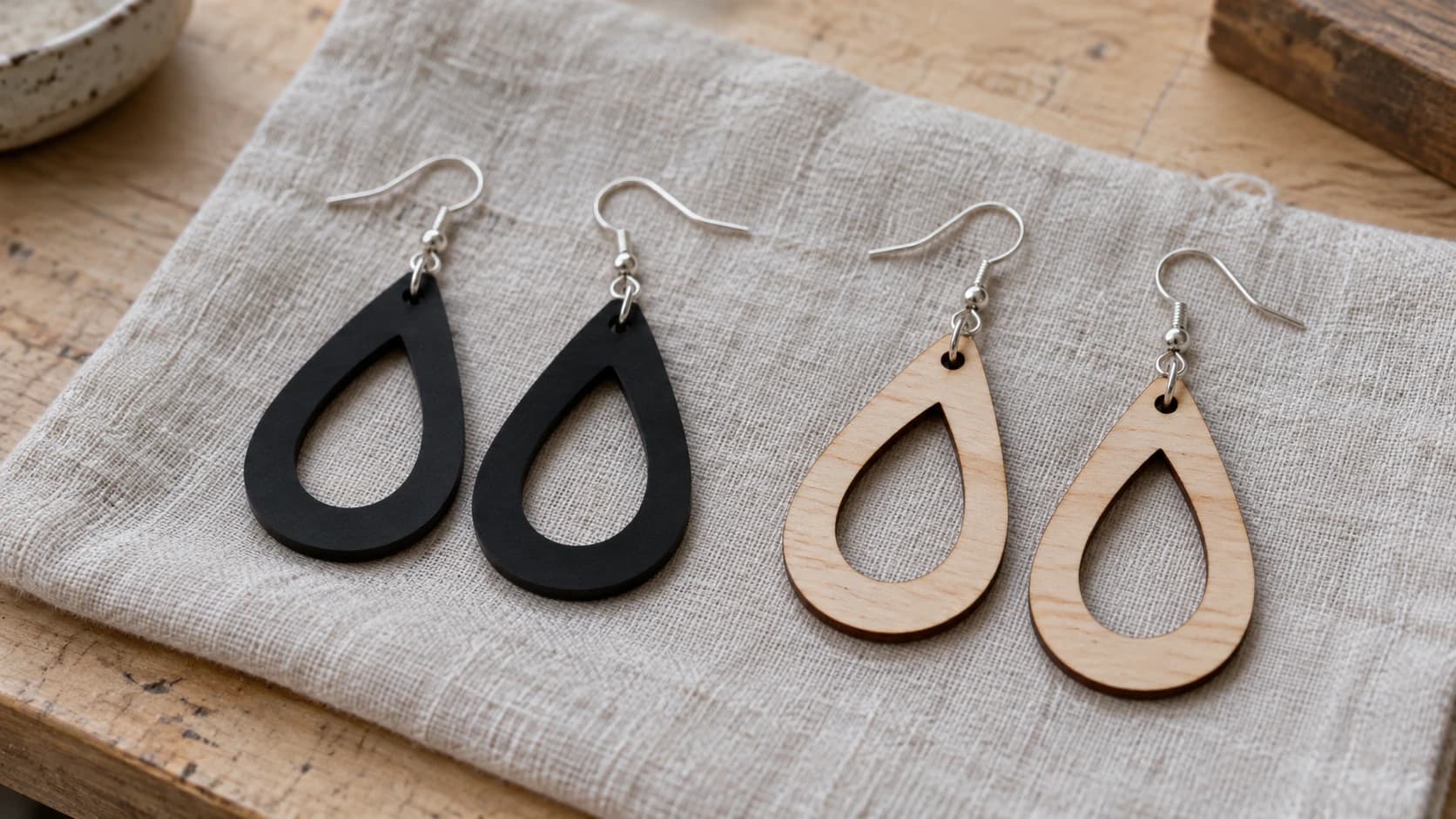
Det första paret ser fantastiskt ut på skärbädden. Skarpa former, perfekta kurvor, precis den typ av sak du vill fotografera direkt.
Sedan plockar du upp ett och upptäcker att hålet för hoppringen är en aning för litet. Du tvingar igenom den, akrylen spricker och du lär dig att ett hål på 1.5mm i filen inte är ett hål på 1.5mm i materialet. Samtidigt har träparet en brun halo runt varje kant, och båda paren är på något sätt så tunga att ingen skulle bära dem en hel kväll.
Örhängen är det mest förlåtande en laser kan tillverka och det enklaste att få subtilt fel. Nästan allt handlar om beslut du fattar före skärningen.
Välj material efter vikten, inte utseendet
Allt med en bärbar del styrs av vikten. En design som ser djärv ut på skärmen blir en öronstretare vid 3mm i fel material.
| Material | Typisk tjocklek | Vikt | Kantfinish | Kommentarer |
|---|---|---|---|---|
| Extruderad akryl | 3mm | Lätt | Glansig direkt från lasern | Arbetshästen för örhängen, där den skurna kanten syns |
| Gjutakryl | 3mm | Lätt | Mindre glansig skäryta, poleras efteråt | Välj den när du graverar framsidan, vilket den klarar mycket bättre |
| Akryl | 2mm | Mycket lätt | Som ovan | Bäst för stora uttrycksfulla former som skulle bli tunga vid 3mm |
| Björkplywood | 3mm | Lätt | Svedd, behöver slipas | Varmt uttryck, men limlinjer kan synas på kanten |
| Lindträ | 2 till 3mm | Mycket lätt | Ren, minimal förkolning | Finare kant än plywood, mjukare och lättare att buckla |
| Läder | 1 till 2mm | Fjäderlätt | Förseglas av skärningen | Mycket bekvämt att bära, stora former förblir bekväma |
| Anodiserad aluminium | 0.5 till 1mm | Lätt men styvt | Beror på hur det skärs | Flera laser kan märka det, men för att skära det behövs ett system för metall eller en mekanisk skärning |
Två tumregler: allt som är bredare än ungefär 50mm bör gå ner till 2mm material, och om du känner att örhänget drar efter tio minuters användning kommer dina kunder att känna det ännu tidigare.
Varning
En diodlaser kan inte skära klar akryl. Ljuset passerar rakt igenom. Färgad och ogenomskinlig gjutakryl kan fungera med vissa diodlasrar, men akryl hör verkligen hemma på CO2-lasrar, och vår guide till akrylskärning förklarar varför. Trä, läder och kork är diodvänliga material för örhängen.
SKRIV UT. SKÄR. FRÄS.
- Flera format (SVG, DXF, PNG)
- Maskintestade motiv
- Kommersiella licenser
Sponsrad av PrintCutCarve.com
Hålproblemet och varför dina hoppringar inte passar
Det här är det vanligaste felet i den första batchen, och det handlar helt enkelt om skärspår.
Lasern tar bort material när den skär. I ett hål försvinner materialet från cirkelns insida, så en cirkel på 1.5mm i filen ger ett hål som är märkbart större än 1.5mm. Om du skär ytterprofilen på samma form blir delen i stället lite mindre än den du ritade. Samma skärspår, motsatta riktningar.
För örhängen spelar detta roll på två sätt:
- Hål för hoppringar måste passa en specifik trådtjocklek. Rita dem för små så sluter de sig; rita dem för stora så rasslar ringen och örhänget hänger snett.
- Staplat sammanlänkade delar slutar passa ihop helt när båda halvorna har förlorat halva skärspåret var.
Lösningen är ett testsnitt, inte en tumregel från internet. Skär en provbit med hål på 1.2, 1.5, 1.8 och 2.0mm och prova sedan dina faktiska hoppringar i varje hål. Skriv vinnaren på provbiten och lägg den i lådan. Vår förklaring av skärspår visar mätmetoden om du vill kompensera ordentligt i stället för att prova dig fram.
Tips
Börja med minst 2mm material mellan hålet och kanten och använd mer på trä, tjockare material och allt som är sprött. Rätt frigång beror på hålets storlek, tjockleken och materialet, så verifiera ditt mått på en provbit. Ett hål nära kanten lämnar en tunn brygga som går av första gången någon fastnar med örhänget i en halsduk, vilket är det fel som blir en återbetalningsbegäran tre veckor efter köpet.
Smyckesdelarna är halva produkten
Metalldelarna är billiga, och det är där ett handgjort örhänge i tysthet blir professionellt.
Krokar och stift. Titan och rostfritt stål är säkra standardval, men det är kvaliteten som faktiskt spelar roll. ”Kirurgiskt stål” är ett marknadsföringsuttryck utan fast sammansättning, så köp smyckesdelar som är certifierade enligt en angiven standard för implantatkvalitet eller nickelfrisättning i stället för att lita på etiketten. En betydande andel av dina kunder reagerar på nickel, och billiga pläterade krokar är det snabbaste sättet att få en dålig recension från någon vars öron blev gröna.
Hoppringar. Köp dem, klipp inte till dem. Öppna dem genom att vrida åt sidan, aldrig genom att dra isär ändarna, eftersom ringen då deformeras och aldrig sluter tätt igen.
Två hoppringar i stället för en. Om du sätter två ringar mellan örhänget och kroken kan delen hänga och snurra fritt. Allt ser dyrare ut när det rör sig som det ska.
Använd samma standard för smyckesdelar i hela sortimentet om du kan. En trådtjocklek för hoppringarna betyder en hålstorlek, vilket innebär att varje design du någonsin ritar använder samma testsnittsmått.
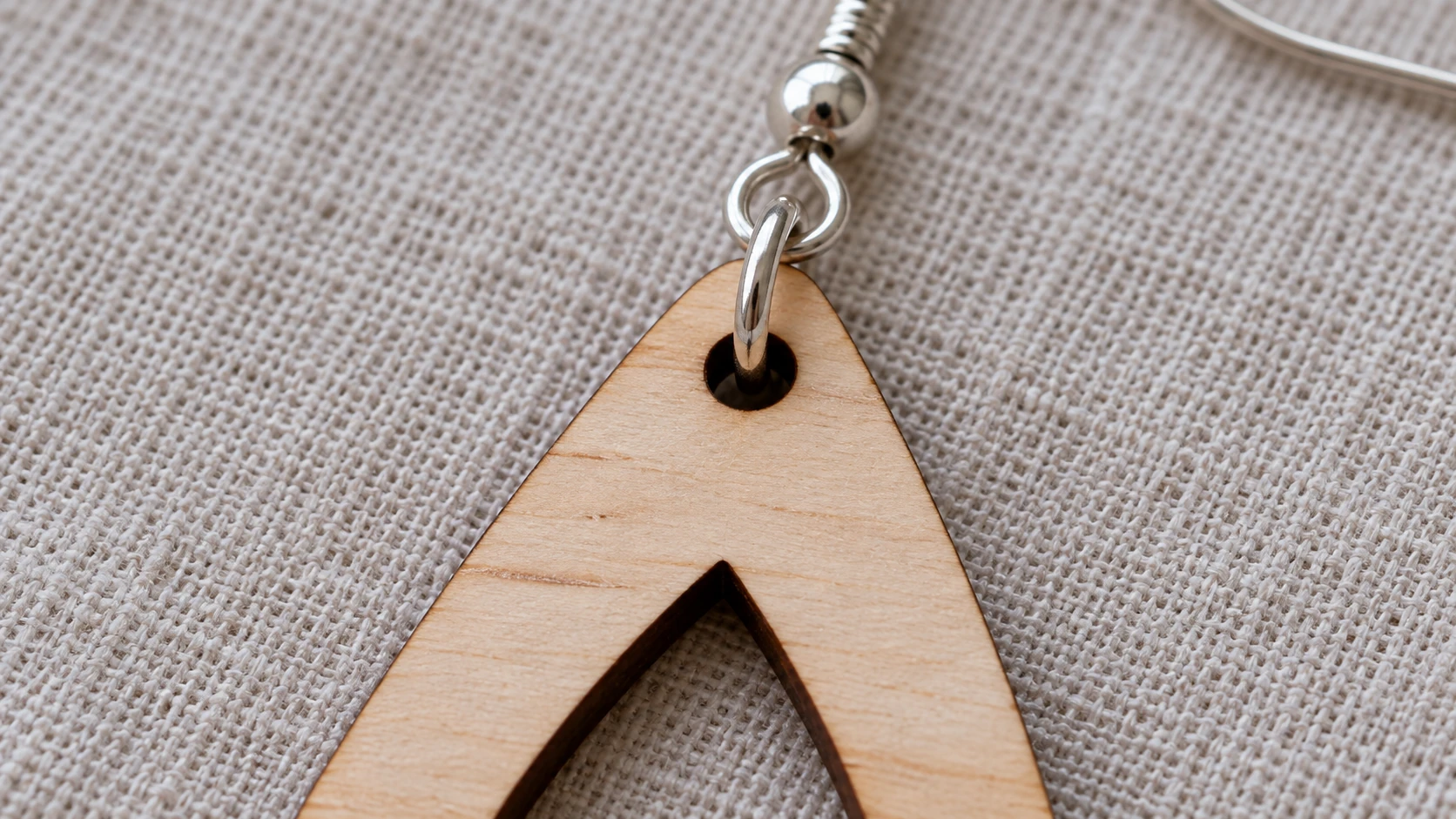
De små detaljerna spelar roll: ett rent hål, tillräckligt med trä runt det och en stängd ring som kan röra sig fritt.
Finishen, där pengarna finns
Skärningen går snabbt. Finishen är det som skiljer ett hantverksmarknadsbord från en butik som människor litar på.
På akryl: dra av skyddsfilmen efter skärningen, inte före. Om kanterna ser frostiga snarare än glansiga ut är det normalt för vissa material, och en mycket snabb behandling med låga eller polermedel tar fram glansen. Arbeta långsamt, eftersom akryl sveds och deformeras på ett ögonblick.
På trä: maskera framsidan med målartejp före skärningen. Rökavlagringar hamnar på tejpen i stället för på arbetsstycket, och du drar av halon tillsammans med den. Den förkolning som finns kvar på kanterna slipas bort lätt, och sedan fördjupar en avtorkning med olja eller en matt försegling färgen och gör att träet inte känns obehandlat.
På läder: värmen från skärningen förseglar redan till stor del kanten. Sot går vanligtvis bort med en knappt fuktig trasa, men läder skiljer sig mycket åt i finish, färg och hur det reagerar på värme, så testa rengöringsmetoden på en provbit innan du bestämmer att en del inte behöver något mer.
Placering: delen som avgör din marginal
Ett enda par örhängen använder nästan inget material. Fyrtio par är en annan sak, och det är här lasersmycken antingen får bra marginaler eller inte.
Små delar utspridda över en skiva med stora mellanrum slösar mycket akryl, och akryl är den dyra delen i en billig produkt. Lägg först ut hela kollektionen på den riktiga skivstorleken: rotera former så att de hakar i varandra, placera små delar i tomrummen i större delar och håll precis så mycket avstånd att värmen från en skärning inte mjukar upp kanten på grannen.
CutPlan gör detta i CNC-läge, där delarna placeras individuellt i stället för att verktyget antar raka skärningar över skivan. Planeringen och layouten på skärmen är gratis, och du får tydligt veta när en layout inte ryms på det material du äger; export av ZIP-filen med SVG- och DXF-filer per skiva kräver ett betalabonnemang. Varje extra par du får plats med på samma skiva är marginal du höll på att kasta bort, och det kostar inget annat än några minuter att hitta dem före skärningen.
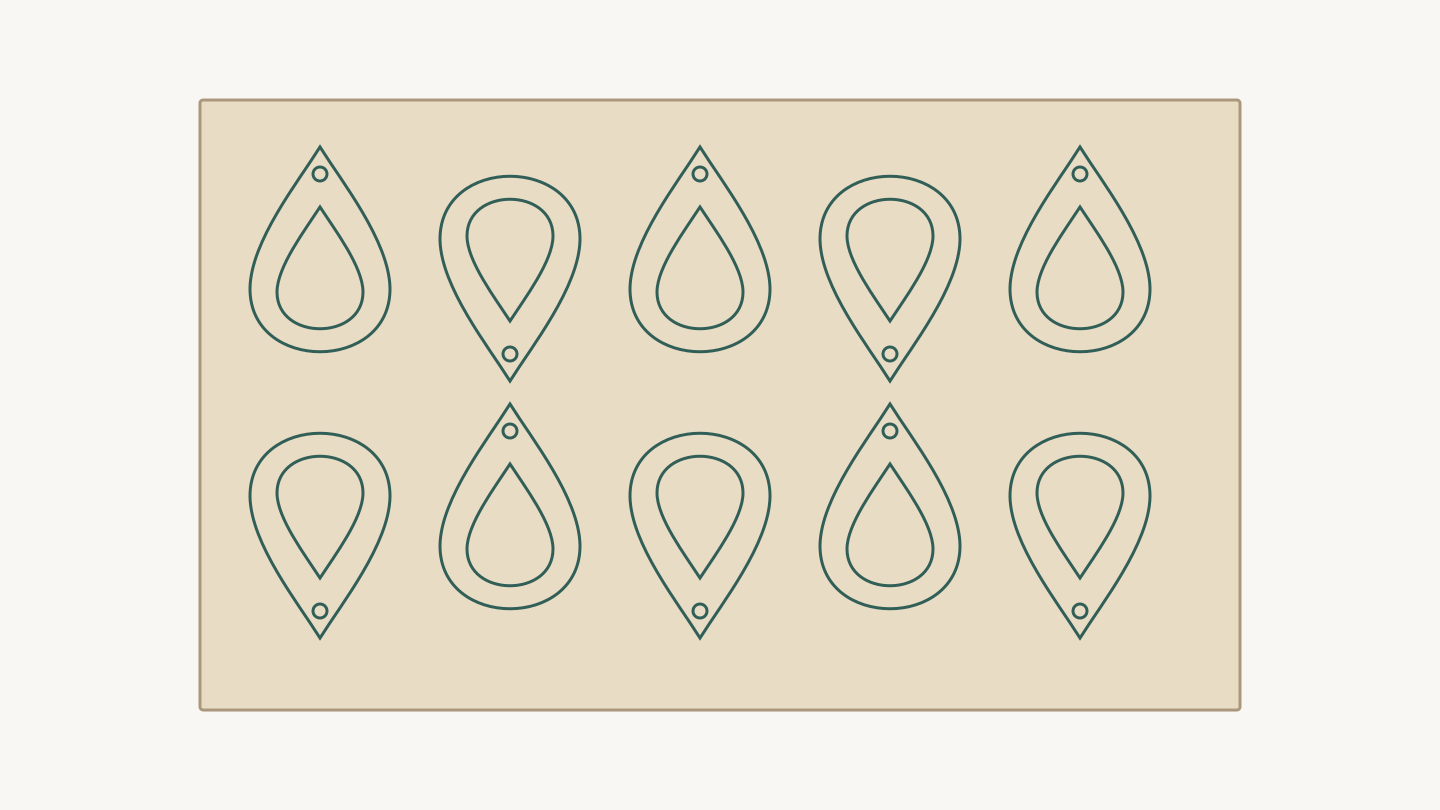
En enkel layoutskiss: håll varje ytterkontur, dekorativ öppning och upphängningshål slutna och lämna utrymme mellan delarna. Ställ in det slutliga mellanrummet efter material och skärare.
Var kommer designerna ifrån?
Du har tre ärliga alternativ, och de flesta säljare använder till slut alla tre.
Rita dem. Enkel geometri säljer verkligen bäst: bågar, droppformer, ringar och former med hårda kanter i en självsäker färg. Du behöver inte kunna illustrera för detta.
Generera dem. Beskriv formen du vill ha i Vector Studio och få tillbaka en maskinfärdig SVG mot en kreditering. Bra för att snabbt utforska en familj av silhuetter när du har fastnat.
Vektorisera dem. Om du har ett konstverk, en skanning eller en handritad skiss omvandlar MonoTrace den gratis till rena vektorer. Handritade original som vektoriseras troget är en verklig särskiljande faktor, eftersom ingen annan har din handstil.
Info
Kontrollera att designen har slutna banor innan du skär. En öppen bana kan visas korrekt på skärmen men får lasern att ritsa en linje i stället för att skära igenom, vilket är så du får en hel skiva med vackert graverade örhängen som fortfarande sitter fast i den.
Vad säljer faktiskt?
Örhängen finns bland impulsköpen. Fotot gör vanligtvis försäljningen innan någon läser ett ord i annonsen, och det formar allt.
Sälj kollektioner, inte enstaka produkter. Värt att testa i din egen butik: att erbjuda tre färgvarianter av en form i stället för tre obesläktade designer gör att besökaren får välja en favorit i stället för att avgöra om hen ska köpa över huvud taget.
Uttrycksfulla former syns tydligast på bild. Stor silhuett, djärv färg och stark kontrast mot bakgrunden. Delikata minimalistiska delar säljer också, men de kräver mycket bättre fotografering för att konkurrera.
Personalisering höjer taket. En initial, en månadsblomma eller ett litet graverat datum. Det flyttar ett par från impulsklassen till presentprissättning med mycket lite extra maskintid, vilket är varför personliga annonser ligger märkbart högre i prisintervallet i den här kategorin.
Säsongskollektioner blir snabbt daterade med flit. Det är helt okej. Skär dem, sälj dem, pensionera dem och ta inte med gammalt lager in i nästa år.
För företagsdelen går våra guider om handgjorda smycken som säljer och prissättning av handgjorda produkter djupare än det här inlägget kan. ListingLab skriver ett första utkast till annonstext och sökord utifrån ett foto av det färdiga paret, vilket spelar större roll än de flesta tillverkare tror i en så här konkurrensutsatt kategori.
Vanliga frågor
Vilken tjocklek på akryl är bäst för örhängen?
3mm för de flesta designer, ned till 2mm för allt som är bredare än ungefär 50mm så att det färdiga paret förblir bekvämt att bära.
Kan en diodlaser skära akryl till örhängen?
Inte klar akryl, eftersom strålen passerar rakt igenom den. Vissa diodlasrar klarar ogenomskinlig och färgad gjutakryl, men akryl är egentligen ett CO2-jobb. Trä, läder och kork är bättre diodmaterial.
Varför passar inte mina hoppringar i hålen jag skar?
Skärspår. Strålen tar bort material från hålets insida, så det skurna hålet skiljer sig från det ritade. Skär en testbit med flera hålstorlekar, prova dina faktiska ringar och använd den storlek som passar.
Hur stoppar jag brännmärken på träörhängen?
Maskera framsidan med målartejp före skärningen och dra av den efteråt. Slipa sedan kanterna lätt och försegla dem med olja eller en matt finish.
Behöver jag försegla laserskurna träörhängen?
Inte av strukturella skäl, men det är värt det. Förseglingen fördjupar färgen, gör att den obehandlade kanten inte känns sträv och hindrar hudfett från att märka träet med tiden.
Hur många par kan jag få ut från en skiva?
Långt fler än du tror om du placerar delarna korrekt. Lägg ut hela kollektionen på den riktiga skivstorleken före skärningen i stället för att köra designerna en i taget.
Skär ett testark
Innan kollektionen skär du en provbit: din form i 2mm och 3mm samt en rad hål för hoppringar på 1.2, 1.5, 1.8 och 2.0mm.
Bär de två tjocklekarna hemma i en timme och prova dina smyckesdelar i varje hål. Du kommer att ha en enda provbit som besvarar alla frågor om material och storlek för varje design du gör därefter.
Lägg sedan ut hela kollektionen i CutPlan och skär den riktiga skivan, med full koll på vad du får.
Relaterade verktyg
Vector Studio
Skapa SVG-grafik från en skriven beskrivning och en vald stil.
MonoTrace
Gör om foton och illustrationer till SVG-konturer gratis, med ett valfritt skissläge.
CutPlan
Planera kapning av skivmaterial med delar, layouter och kapordningar. Exportera rapporter och skivritningar.
Abonnemang krävs för nedladdningar
ListingLab
Skapa annonstexter och stiliserade produktfoton från en produktbild.
Text använder chattkvoten; bilder använder krediter
Redo att prova de här verktygen?
Registrera dig gratis – inget kreditkort krävs. Gratisverktyg är tillgängliga direkt.
Kom igång gratis