

Best Wood for Laser Engraving and Cutting (Species Guide)
Not all wood engraves the same. Some species produce beautiful dark contrast with a clean burn. Others char unevenly, smell terrible, or produce so much smoke you can't see the workpiece halfway through. The difference between a stunning engraved piece and a mediocre one often comes down to the wood you started with, not the settings you used.
This guide covers 12 popular species for laser engraving and cutting. We'll cover what matters: engraving contrast, cutting behavior, smell, cost, and where to source each one.
What Makes Wood Engrave Well?
Three properties determine how well a wood species performs under a laser:
Grain density and consistency. Tight, uniform grain engraves evenly. Woods with large, open pores (like oak) engrave with visible grain texture in the burn, which can be a feature or a flaw depending on the look you want. Woods with tight, fine grain (like maple) engrave cleanly and uniformly.
Natural color. Light-colored woods provide the best contrast. The laser darkens the wood, so starting with a light surface means the engraved areas stand out strongly against the unburned areas. Dark woods like walnut still engrave well, but the contrast is subtler.
Resin and sap content. Resinous woods (pine, cedar) produce more smoke, more flaming, and more residue on the surface. The oils in the wood also affect the smell. Some smell pleasant (cedar is nice), others are unbearable (some tropical hardwoods will clear a room).
PRINT. CUT. CARVE.
- Multiple formats (SVG, DXF, PNG)
- Machine-tested designs
- Commercial licenses
Sponsored by PrintCutCarve.com
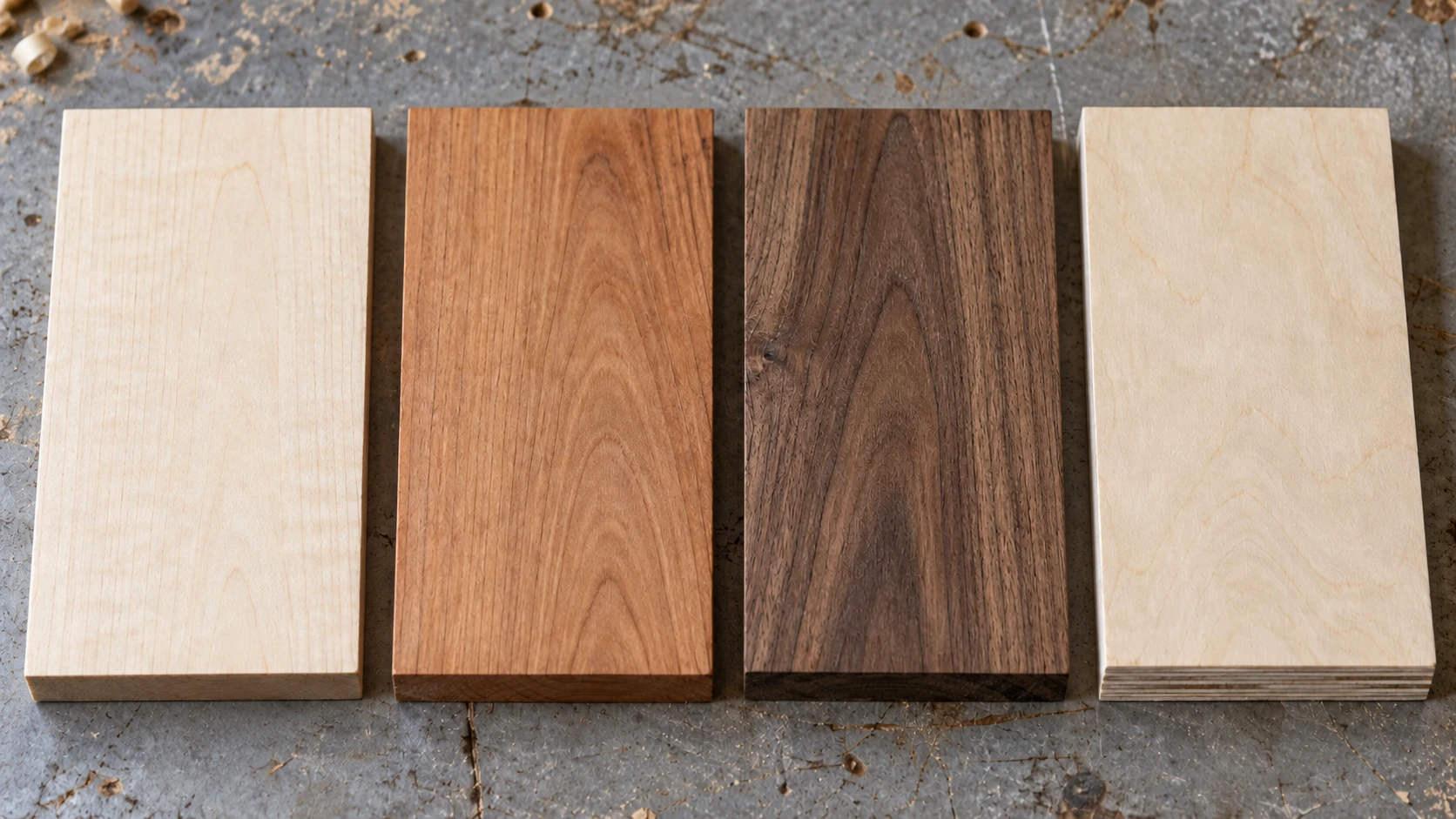
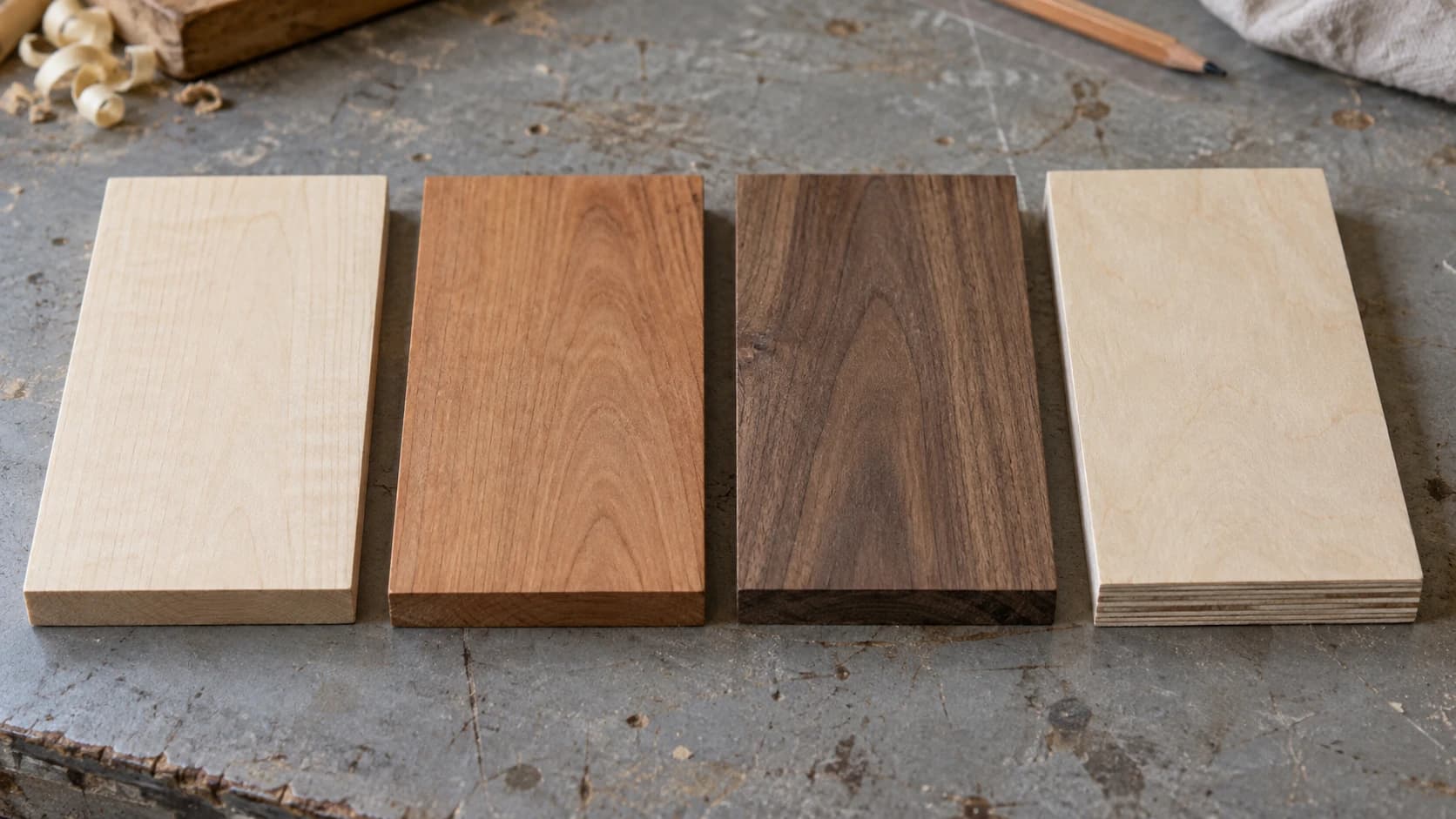
From left: maple, cherry, walnut and birch plywood. Compare the base color and grain before choosing how much detail to put in your design.
The Species
1. Maple (Hard Maple / Sugar Maple)
The gold standard for laser engraving. Maple has tight, fine grain and a light creamy color that produces outstanding dark contrast when engraved. The burn is clean, consistent, and detailed. Fine text at small sizes stays legible. Photos engrave with good tonal range.
Engraving contrast: Excellent. Dark brown engrave on pale cream.
Cutting: Cuts well on CO2 lasers. Diode lasers handle thinner stock (1/8" or less) but struggle with thicker pieces.
Smell: Mild, slightly sweet. Not objectionable.
Cost: Moderate. Easy to find as solid lumber or plywood.
Best for: Anything. Maple is the default choice when you're not sure what to use. Signs, cutting boards, coasters, detailed engravings.
2. Cherry
Cherry produces gorgeous engraving with a warm, reddish-brown tone. The natural color of cherry darkens over time with UV exposure, which is important to know: a fresh cherry piece will look different in six months as the unengraved areas darken and the contrast gradually reduces.
Engraving contrast: Very good on fresh wood. Reduces over time as the wood naturally darkens.
Cutting: Clean cuts. Similar behavior to maple.
Smell: Pleasant, mild fruit-wood scent.
Cost: Moderate to expensive. Widely available at hardwood dealers.
Best for: Gift items, decorative pieces, anything where the warm tone adds character. Especially good for kitchen items and serving boards.
3. Walnut
Dark brown with dramatic grain patterns. Walnut engraves well, but the contrast is reversed compared to maple. The engraved area is lighter (burnt wood against a dark background) rather than darker. Some people love this look. Others find it less readable for text.
Engraving contrast: Moderate. Light engrave on dark background. Works better for images and patterns than small text.
Cutting: Cuts cleanly. The hardness is moderate, so most lasers handle it without issues.
Smell: Mild, slightly nutty. Pleasant.
Cost: Expensive. One of the pricier domestic hardwoods.
Best for: Premium pieces where the dark, rich color is the selling point. Walnut and maple together (two-tone projects or inlays) look incredible.
4. Baltic Birch Plywood
Not a species per se, but it's the single most popular material for laser cutting projects. Baltic birch plywood has thin, consistent layers of birch veneer with void-free cores. It laser cuts cleanly with minimal charring on the edges, and the face veneer engraves well.
Engraving contrast: Good. Similar to maple, though slightly less crisp depending on the veneer quality.
Cutting: Excellent. The void-free cores mean clean edges without blowout or delamination. Available in 1/8" (3mm) and 1/4" (6mm), which are the two most common thicknesses for laser cutting.
Smell: Mild, woody. Occasional whiffs of glue from the plywood adhesive.
Cost: Inexpensive. Widely available at craft stores and lumber yards. A 12"x24" sheet of 1/8" Baltic birch runs a few dollars.
Best for: Everything that gets cut: ornaments, signs, puzzle pieces, box parts, mechanical models, stacked layer art. The go-to material for laser cutting projects.
Warning
Not all plywood is laser-safe. Avoid standard construction plywood (interior voids, formaldehyde-based adhesives). Stick to Baltic birch, aircraft-grade birch, or plywood specifically marketed for laser cutting. MDF is also laser-safe, but the edges don't look as clean.
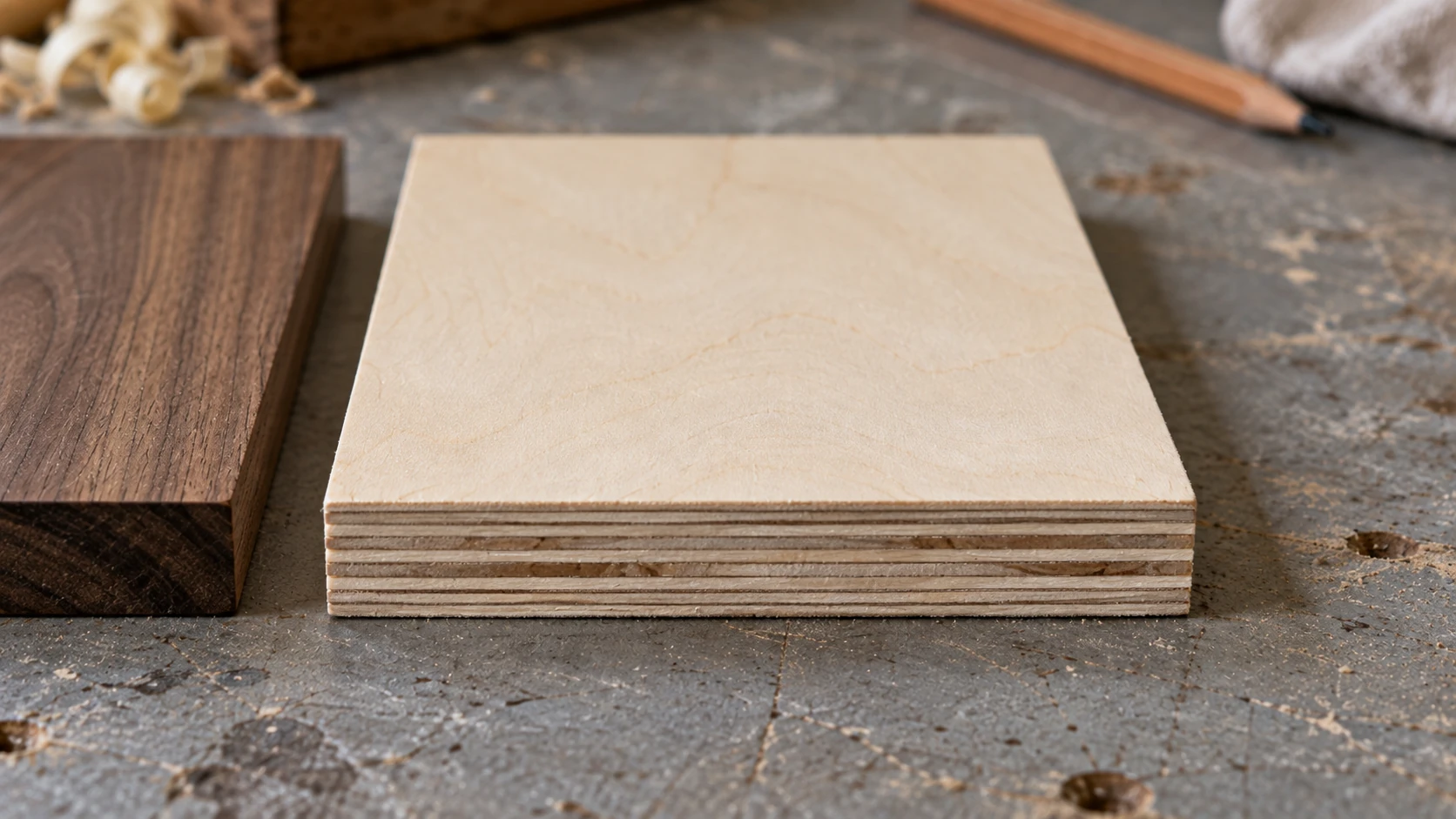
The edge reveals the plywood construction beneath its birch face. Check the actual sheet specification as well as its appearance when choosing laser stock.
5. Basswood
Extremely soft, light-colored, and fine-grained. Basswood is the carver's favorite for a reason: it cuts like butter. For laser work, it engraves cleanly with good contrast and cuts easily even on lower-power diode lasers.
Engraving contrast: Very good. Almost white wood with dark brown engrave.
Cutting: Very easy. Even small diode lasers cut 1/8" basswood without much trouble.
Smell: Mild, almost odorless.
Cost: Inexpensive. Available at most craft stores in thin sheets.
Best for: Beginners learning their laser, low-power diode laser users, ornaments, lightweight projects. Also excellent for CNC relief carving.
6. Alder
A Pacific Northwest favorite. Alder has a light reddish-brown color with subtle grain. It engraves with good contrast and has a consistent, uniform look across the surface. Red alder is the species most commonly used for laser work.
Engraving contrast: Good. Slightly less contrast than maple due to the darker starting color, but very consistent.
Cutting: Clean and predictable.
Smell: Mild, smoky. Some describe it as a campfire smell.
Cost: Moderate. Widely available on the West Coast, less common elsewhere.
Best for: Signs, plaques, awards. Alder's consistent appearance makes it popular for commercial laser shops producing repeatable products.
7. Oak (Red and White)
Oak has prominent, open grain that shows through in engravings. This gives engraved areas a textured look. On a sign or large graphic, the grain texture adds character. On fine text or detailed photos, the grain can interfere with readability.
Engraving contrast: Moderate. The grain texture breaks up solid engraved areas.
Cutting: Harder than most species. Requires more power and slower speed. Edges can char heavily.
Smell: Moderately strong. Red oak in particular has a noticeable vinegar-like smell when burned.
Cost: Moderate. One of the most widely available hardwoods.
Best for: Rustic signs, coasters, and projects where the grain texture is a feature. Not ideal for fine detail work or photo engravings.
8. Cedar (Western Red Cedar)
Cedar is soft, aromatic, and has a distinctive reddish color with contrasting light and dark grain bands. The grain pattern shows through in engravings, creating a rustic, organic look.
Engraving contrast: Variable. The alternating light and dark grain creates uneven engraving depth. Light areas burn deeper and darker than the dense dark-grain areas.
Cutting: Easy to cut. Very soft wood.
Smell: Pleasantly aromatic. Cedar smells great when cut, which is a genuine advantage if you're working in an enclosed space.
Cost: Moderate.
Best for: Outdoor signs (cedar is naturally rot-resistant), plaques with a rustic look, projects where the distinctive grain pattern adds character.
9. Pine
Pine is cheap and everywhere, which makes it tempting. But it's one of the trickier woods for laser engraving. The alternating soft and hard grain bands engrave at very different depths, creating an uneven, blotchy look. The high resin content produces more smoke, more flaming, and sticky residue on the surface.
Engraving contrast: Poor to moderate. Very inconsistent due to grain density variations.
Cutting: Resin causes flaming and sticky edges. Requires careful speed/power tuning.
Smell: Strong. Resinous, sometimes unpleasant in enclosed spaces.
Cost: Very cheap. Available everywhere.
Best for: Practice pieces and testing settings. For finished projects, most other species produce better results for similar effort.
Info
If you must use pine, look for boards with tight, even grain and minimal knots. Quarter-sawn pine (where the grain lines run vertically through the board) engraves more consistently than flat-sawn (wide, curved grain patterns).
10. Poplar
Light greenish-white color (some boards have purple/green streaks). Poplar is a domestc hardwood that's inexpensive and easy to work with. It engraves cleanly with decent contrast, though the greenish tint is unusual-looking on some projects.
Engraving contrast: Good on white areas, variable on green/purple streaked boards.
Cutting: Easy. Soft hardwood.
Smell: Mild, slightly sour. Not particularly pleasant but not offensive.
Cost: Inexpensive. Widely available at home centers.
Best for: Painted projects (poplar takes paint well, hiding the green color), practice pieces, and cost-conscious production runs where you'll be finishing the surface.
11. Bamboo
Technically a grass, not a wood, but it's widely used for laser projects. Bamboo has a light, consistent color with a tight grain-like structure. It engraves with excellent contrast and cuts cleanly.
Engraving contrast: Excellent. Light surface with very dark burn.
Cutting: Clean cuts, though the silica content dulls blades faster (not a factor for lasers).
Smell: Mild, slightly grassy.
Cost: Moderate. Available as boards, sheets, and pre-made blanks (coasters, cutting boards, utensils).
Best for: Coasters, cutting boards, kitchen items, and any project where the consistent, uniform look is desired. Bamboo blanks are popular for personalized gift production.
12. Leather (Bonus)
Not wood, but worth mentioning because it's one of the best laser engraving materials, period. Vegetable-tanned leather engraves with stunning contrast and a tooled-leather appearance that looks hand-done.
Engraving contrast: Outstanding. Dark burn on light leather.
Cutting: Cuts easily. Smells like a barbecue.
Smell: Distinctive. Not unpleasant if you like the smell of leather.
Cost: Varies widely. Veg-tanned leather scraps are affordable. Full hides are expensive.
Best for: Wallets, journal covers, patches, holsters, belts. Anything where the tooled-leather look adds value.
Warning
Never laser chrome-tanned or synthetic leather. Chrome-tanned leather releases toxic fumes including chlorine gas. Faux leather (PVC/vinyl) releases hydrochloric acid when lasered. Always verify that leather is vegetable-tanned before putting it in your laser.
Quick Comparison Table
| Species | Contrast | Cut Quality | Smell | Cost | Best Use |
|---|---|---|---|---|---|
| Maple | Excellent | Good | Mild | $$ | All-purpose, detailed work |
| Cherry | Very Good | Good | Pleasant | $$$ | Gift items, decorative |
| Walnut | Moderate (reversed) | Good | Mild | $$$$ | Premium, dark tone |
| Baltic Birch Ply | Good | Excellent | Mild | $ | Cut projects, ornaments |
| Basswood | Very Good | Easy | None | $ | Beginners, low-power lasers |
| Alder | Good | Good | Smoky | $$ | Signs, commercial production |
| Oak | Moderate (textured) | Hard | Strong | $$ | Rustic projects |
| Cedar | Variable | Easy | Great | $$ | Outdoor signs, rustic look |
| Pine | Poor | Messy | Strong | $ | Practice only |
| Poplar | Good | Easy | Mild | $ | Painted projects |
| Bamboo | Excellent | Good | Mild | $$ | Coasters, kitchen items |
Where to Buy
Local hardwood dealers typically carry maple, cherry, walnut, oak, and poplar in various thicknesses. You can pick the exact boards you want and inspect the grain.
Craft stores (Michaels, Hobby Lobby, Joann) stock basswood sheets, small birch plywood, and pre-cut blanks in various species.
Online suppliers like Ocooch Hardwoods, Woodcraft, and Rockler ship cut-to-size boards. Amazon and eBay have laser-specific material packs.
For Baltic birch plywood specifically, look for "laser-grade" or "craft-grade" Baltic birch. Many online sellers cut it to common laser bed sizes (12x20", 12x24") and ship flat.
Try It Yourself
Now that you know which species to use for what, pick one and run some test engravings. Our laser engraving settings for wood guide covers the speed and power settings for different effects, and the common mistakes guide helps you avoid the usual beginner pitfalls.
Happy making.
Ready to try these tools?
Sign up free, no credit card required. Free tools available immediately.
Start Free