

Deep Pour vs Coating Epoxy: Which Resin Do You Need?
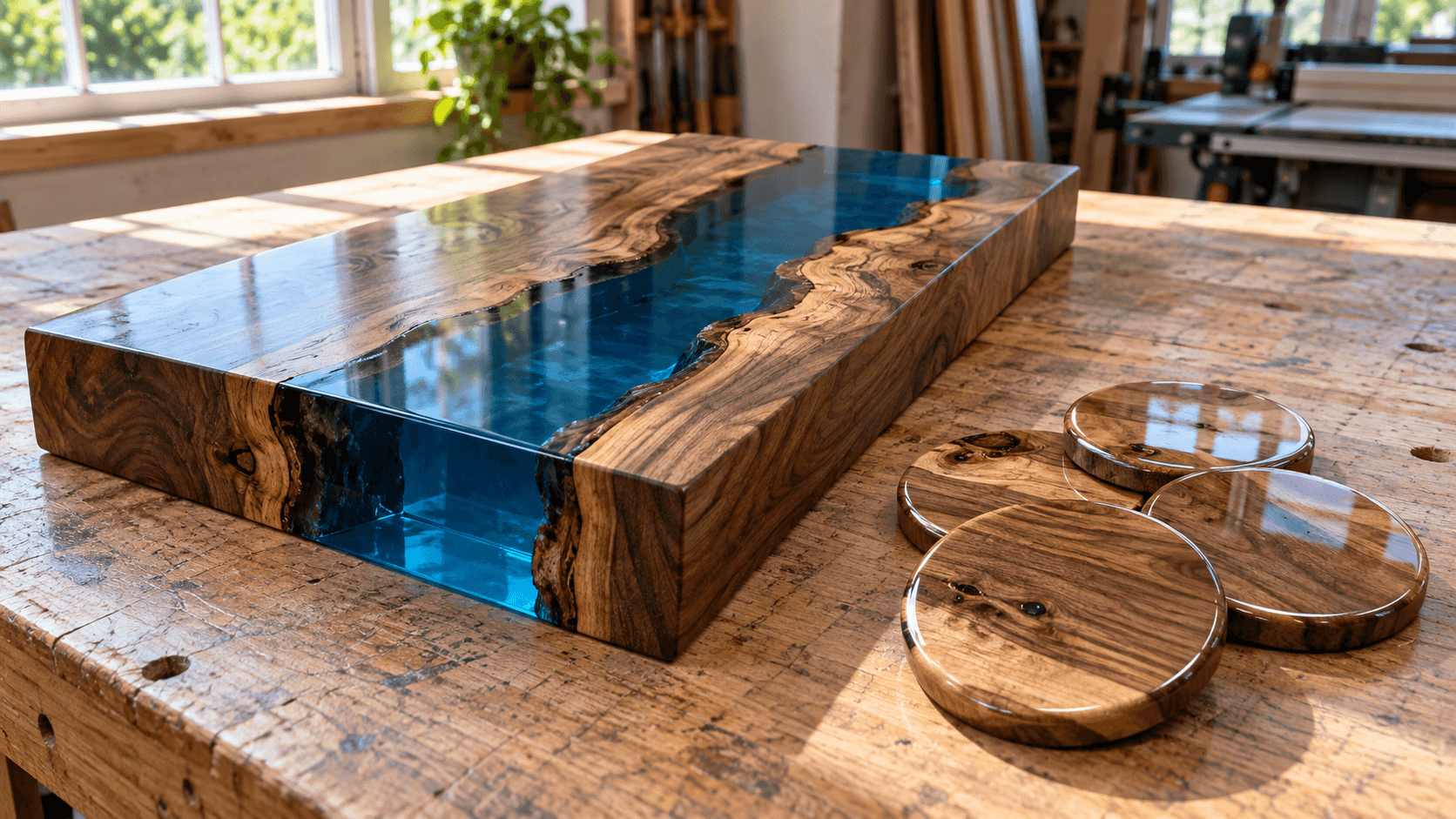
Epoxy is epoxy, right? Grab a kit, mix it, pour it. Then the river table you poured two inches deep with tabletop epoxy gets hot enough to smoke, cracks down the middle, and turns yellow before it's even cured.
Not all epoxy is the same, and the difference between the two main types matters a lot. Pick the one made for the job and pouring gets much easier. Pick the wrong one and no amount of technique will save it.
Tip
Short answer: Use coating (also called tabletop) epoxy for thin layers, like sealing a surface, coating coasters, or a glossy tabletop finish. Use deep pour (casting) epoxy for thick pours, like river tables, large voids, and castings. Always follow the maximum pour depth on the product you buy.
Why Thickness Matters So Much
Epoxy cures through a chemical reaction that gives off heat. In a thin layer, that heat escapes easily. In a thick pour, it builds up, and the heat speeds the reaction, which makes more heat.
When that runs away, you get a flash cure: the resin gets very hot, can crack, warp, yellow, bubble, or even smoke. Deep pour epoxy is formulated to react slowly, so the heat releases gradually through a thick pour.
Side by Side
| Coating / tabletop epoxy | Deep pour / casting epoxy | |
|---|---|---|
| Typical use | Thin coats and surface finishes | Thick pours and castings |
| Thickness | Thicker liquid | Thinner, more watery liquid |
| Pour depth per layer | Thin (check the label) | Much deeper (check the label) |
| Cure speed | Faster | Much slower, often days |
| Self-leveling on surfaces | Very good | Less suited to thin coats |
| Bubbles | Rise out of thin layers easily | Thin liquid lets bubbles escape slowly over time |
Every brand lists its own maximum pour depth and cure time. Those numbers vary a lot between products, so read the specific label rather than trusting a general rule.
Which One for Your Project
- Coasters, serving trays, sealed surfaces: coating epoxy.
- Glossy bar tops and tabletops: coating epoxy, in one or more thin flood coats.
- River tables and large voids: deep pour epoxy.
- Castings and paperweights: deep pour or casting resin.
- Filling laser-engraved or CNC-carved recesses: depends on depth. Shallow fills often work with coating epoxy in thin layers. Deeper fills need deep pour. Our resin inlays guide covers this.
- Small jewelry pieces: often UV resin or a dedicated jewelry resin. See resin jewelry for beginners.
Warning
Don't pour coating epoxy deeper than its label allows, and don't stack layers too quickly. Even thin layers can overheat if poured on top of a still-warm layer. Wear nitrile gloves and eye protection, and work with good ventilation. Uncured epoxy is a skin sensitizer, and allergies to it are often permanent.
Can You Use Deep Pour for a Thin Coat?
Sometimes, but it's rarely the best choice. Deep pour cures slowly, so a thin top coat stays soft and dust-catching for a long time, and it may not level or shine like a coating epoxy. For a glossy finish over a deep pour, many makers finish with a coat of tabletop epoxy once the pour has cured.
Temperature Matters for Both
Both types are sensitive to temperature. A cold workshop slows curing and can leave the surface cloudy or tacky. A hot one speeds it up and raises the flash-cure risk. Most manufacturers give a recommended room and resin temperature. Our common resin mistakes post covers cold-shop problems and other fixes.
Before You Buy
- Measure the deepest point of your pour.
- Check the product's maximum depth per pour against it.
- Calculate the volume you need, plus a little extra for spills and waste.
- Check the cure time, so you know how long the project will tie up your space.
For wood-and-resin ideas, see resin wood projects. And if you're not sure which product fits your project, describe the dimensions and use to Craft Chat, our AI maker assistant.
Match the epoxy to the depth, and most of resin's scariest failures simply don't happen.
Keep reading


Ready to try these tools?
Sign up free, no credit card required. Free tools available immediately.
Start Free