

How to Make Money with a 3D Printer
Somewhere around the third articulated dragon, the question shows up: could this printer actually pay for itself? You have the machine, you have the skills, and you keep seeing people claim they turned a spare bedroom into a print farm that covers the mortgage.
Some of those stories are real. Most of them skip the part where the person spent a year finding products people actually pay for, learned what a print really costs, and quietly threw away everything that didn't work. This guide is the skipped part.
Tip
Short answer: money in 3D printing comes from prints that solve a problem, carry someone's name, or serve a local business, priced off your real per-print cost. Printing the same free models as everyone else is a race to the bottom, and selling models whose license forbids it can end your shop entirely.
What Actually Sells
The instinct is to print what you enjoy printing and hope buyers show up. The better move is to start from the buyer's reason to pay. Four categories reliably have one.
| Category | Why people pay | The catch |
|---|---|---|
| Functional and practical prints | Solves a real problem right now | You have to find the problem first |
| Personalized items | It exists nowhere else | Every order needs design time |
| Cosplay and prop work | High skill barrier, high emotional stakes | Finishing work, not printing, is the job |
| Production runs for local businesses | They need fifty of a thing, not one | You need to go find them |
Functional prints are the quiet winner. Organizers for a specific game, brackets for a specific shelf system, adapters between two things that were never meant to meet, jigs for other makers. The value is in the fit, not the plastic. Our useful things to 3D print list is a good scan for the kinds of problems plastic solves well.
Personalized items trade on the same advantage every small maker has: nobody mass-produces a nameplate for one specific kid's desk. Name keychains, cake toppers, pet tags, custom cookie cutters. Margins are strong because comparison shopping is impossible for an item that didn't exist until the order came in.
Cosplay and props pay for skill, not machine time. A helmet is hours of sanding, filling, and painting after the printer stops. If you enjoy finishing work, this niche has customers who care more about quality than price.
Local production work is the most overlooked. A brewery that wants forty tap-handle toppers, a shop that needs display stands, a restaurant replacing broken fixture clips. Businesses pay for reliability and a real invoice, and they reorder. One good local client can out-earn a month of marketplace sales.
PRINT. CUT. CARVE.
- Multiple formats (SVG, DXF, PNG)
- Machine-tested designs
- Commercial licenses
Sponsored by PrintCutCarve.com
What Doesn't Sell: The Trinket Trap
Here is the uncomfortable filter: if any printer owner can download the model and print it tonight, it is not a product. It is a commodity with your electricity bill attached.
Generic flexi animals, phone stands, low-effort vases, the model everyone printed last month. These flood every marketplace within weeks of going viral, and the price floor drops to just above filament cost. You cannot win that race, and you would not want the prize.
The pattern behind everything in the "what sells" list is that something besides the printer creates the value: your design, your finishing skill, the personalization, the relationship with a local buyer. The printer is the how, never the what.
The Licensing Line
This one is not a suggestion. Assume every model you download is protected, and sell prints of it only when the license or the designer clearly permits commercial use. Many free models explicitly forbid it, and selling them anyway is a fast way to collect takedowns: designers do watch for it, and marketplaces like Etsy remove listings on infringement reports and can close shops over repeated ones.
Warning
Never sell prints of a model whose license forbids it. "It was a free download" is not permission, and neither is "I changed it a little." If the license does not clearly grant commercial rights, treat it as a no.
You have three clean paths:
- Design your own models. Slowest to start, strongest position forever. Nobody can undercut you on a design only you have, and you can also sell the files themselves.
- Buy commercial licenses. Many designers sell commercial tiers or memberships that include selling rights, usually per model or per month. Read the terms: some cap how many physical copies you may sell.
- Print licensed work for clients. When a business brings you their own design or logo, get written confirmation that they hold the rights before you print. If ownership is genuinely murky, that question belongs to a lawyer, not a forum thread.
Trademarked and copyrighted characters deserve their own warning. Printing a famous movie character and selling it can infringe copyright or trademark rights even if you modeled it yourself from scratch. The fastest-selling props are often the ones that can legally end your business.
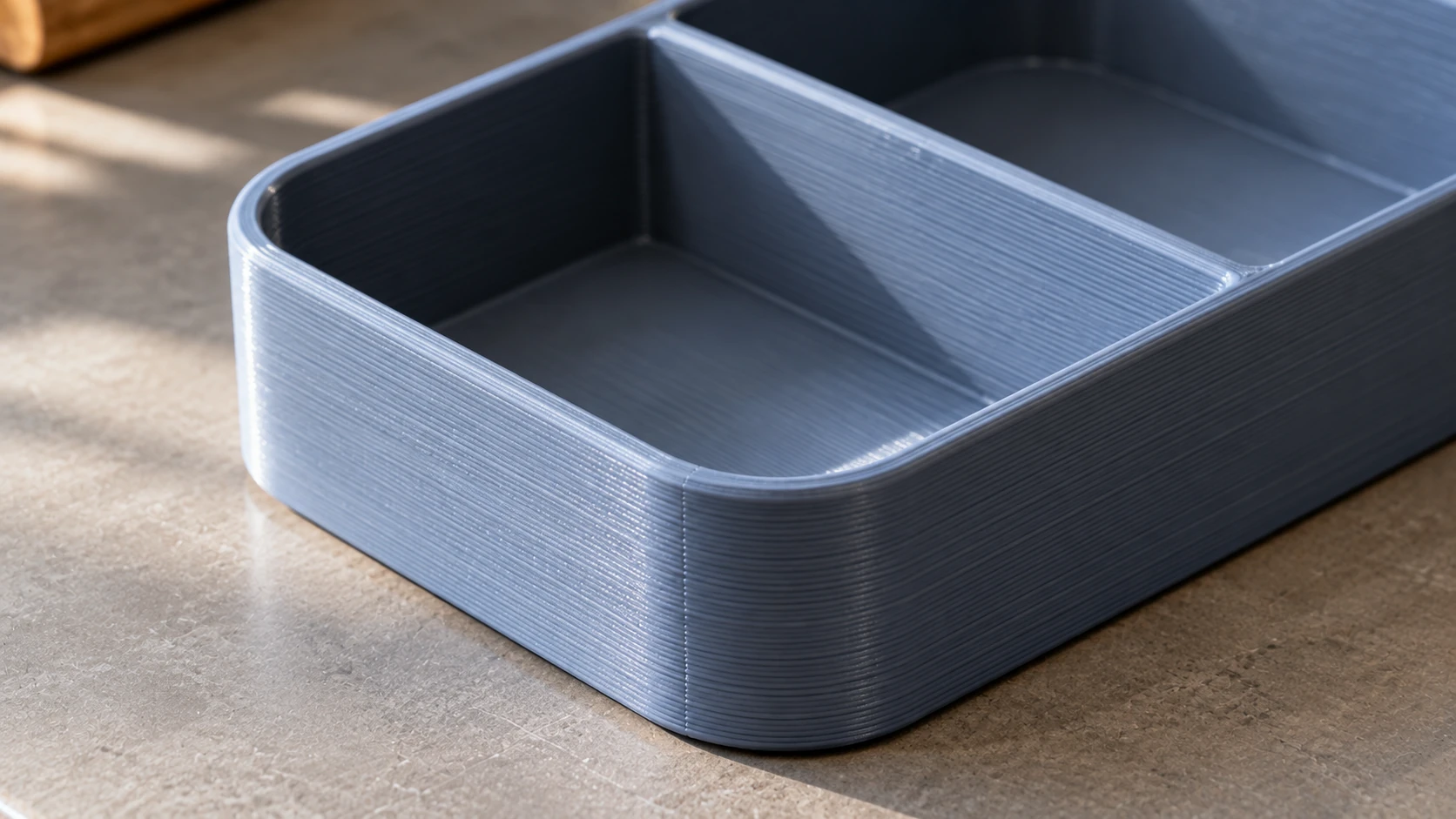
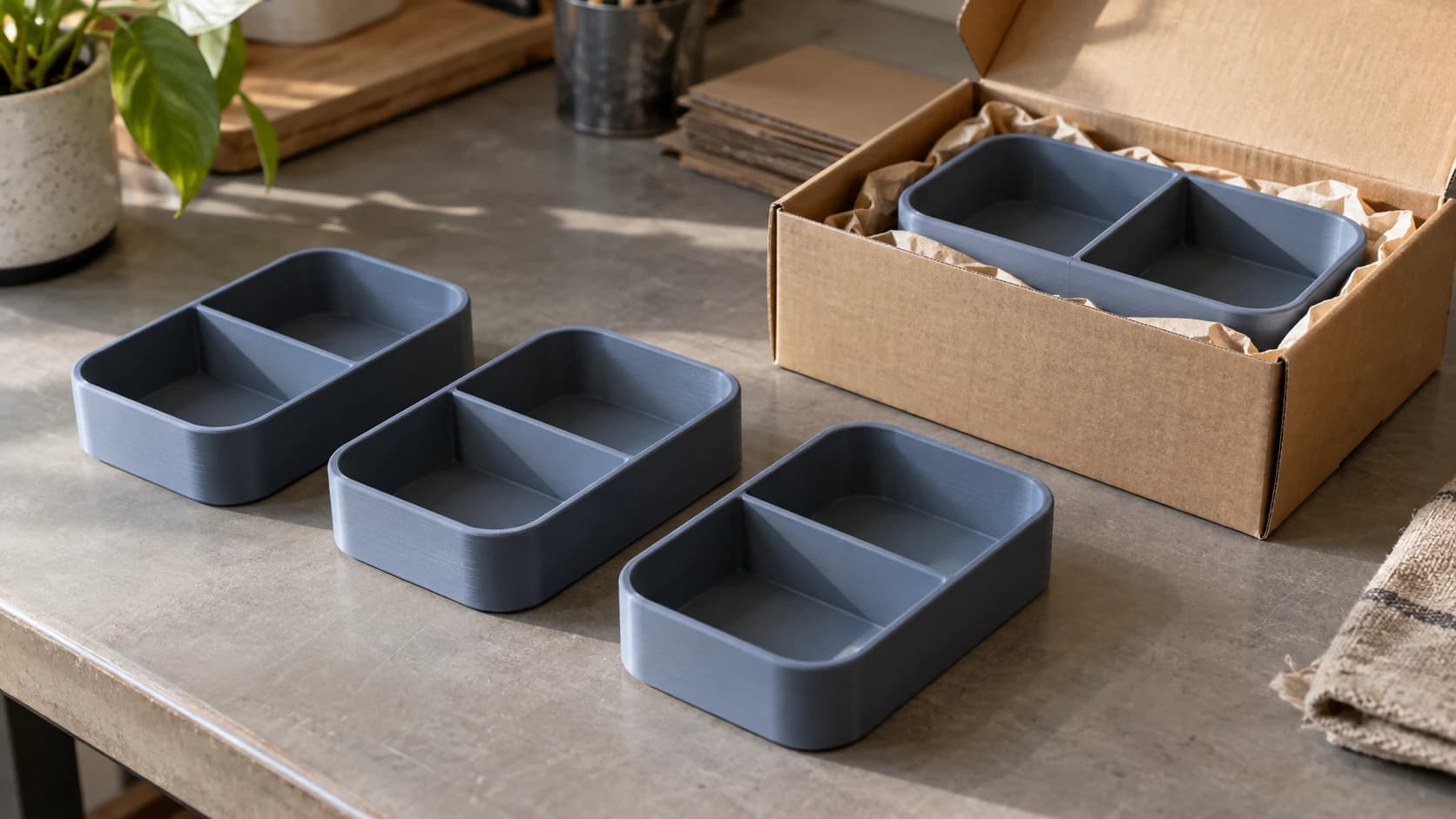
The same tray up close shows the finish a buyer would receive. Include inspection and cleanup time when costing the product, as well as the time spent printing it.
Know Your Real Cost Per Print
Most new sellers price by guessing at filament and calling it a day. Filament is usually the smallest number in the pile. Typical ranges look like this:
| Cost | Planning number | Notes |
|---|---|---|
| Filament | $15 to $30 per kg at current retail | A 100 g print uses roughly $1.50 to $3 of filament across that range |
| Electricity | A few cents per print hour for typical desktop machines | Average wattage times your local rate; enclosed and high-temp printers cost more |
| Printer depreciation | Sample assumption: $0.15 to $0.50 per print hour | Example: a $500 printer written off over 2,000 print hours is $0.25 an hour; substitute your machine's price and expected life |
| Failure allowance | Starting reserve of 5 to 15 percent, not a measured rate | Spaghetti, layer shifts, warped first layers; replace with your own scrap data fast |
| Your labor | The big one | Design, slicing, plate swaps, cleanup, support removal, packing |
Two of these get ignored constantly. Depreciation is real: nozzles wear, belts stretch, hotends die, and eventually the whole machine does. If your prices don't include the machine slowly consuming itself, your "profit" is partly you selling off your printer in installments.
The failure allowance is the other. Not every plate survives, and your real rate depends on your printer, your materials, and how dialed-in your profiles are. Start with a budget, track your actual waste for a month, then use that number, because the buyer of print #40 is also paying for the two that turned into abstract sculpture.
Run the math on one real product: material plus electricity plus depreciation plus a waste allowance plus your minutes at a wage you would accept from an employer. That number is your floor. Many popular products turn out to be underwater before you even add profit, and it is much cheaper to learn that on paper.
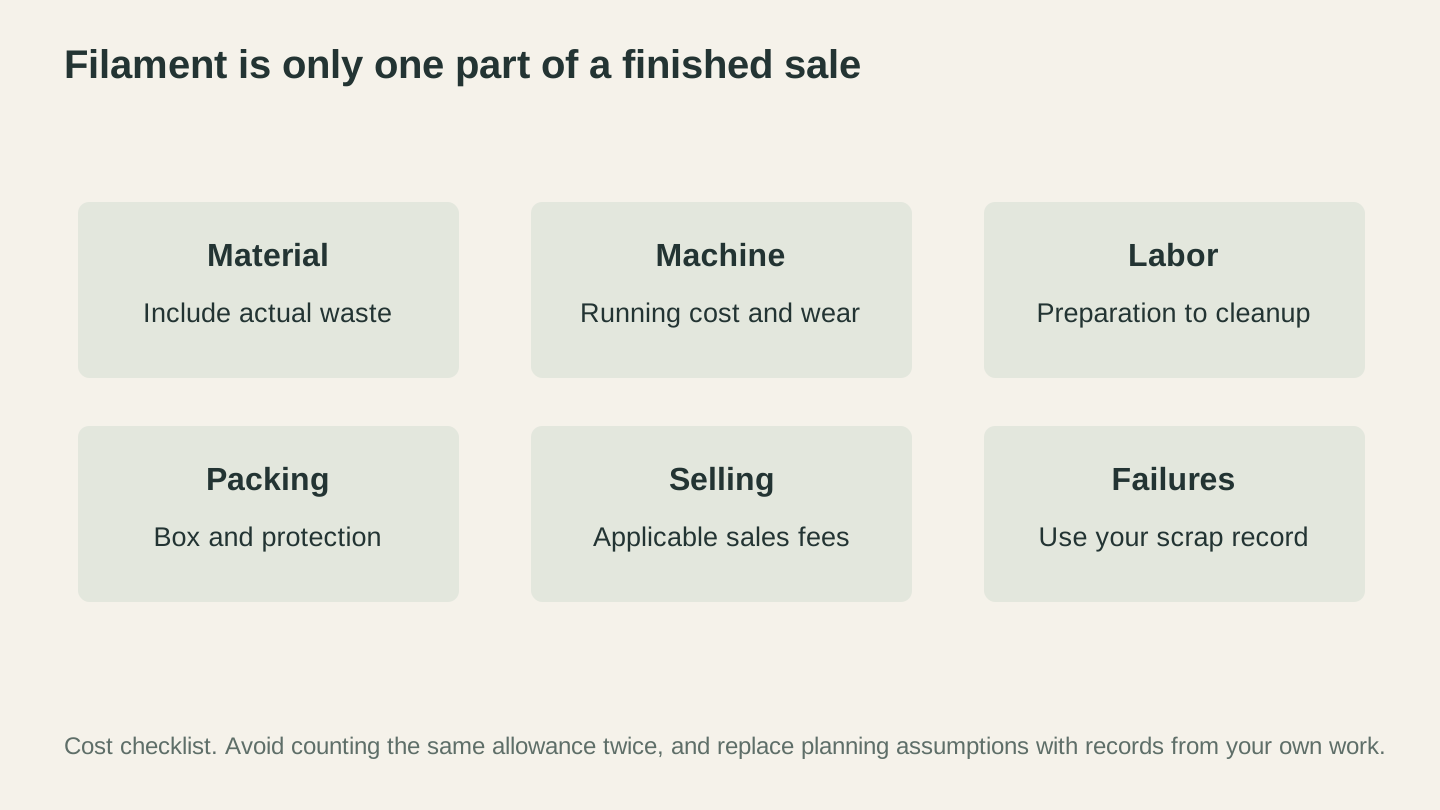
Use the complete cost of a sale. Record the work around the print, and replace initial waste assumptions with your own production history.
Pricing Above the Floor
Cost tells you the minimum. Value sets the price. A custom cable organizer that ends a daily annoyance is worth more than its 40 grams of plastic, and a personalized gift is priced against "what would a thoughtful gift cost," not against filament.
Resist the classic beginner move of undercutting everyone to get first sales. It attracts the worst customers, anchors your shop at a price you can't sustain, and drags the niche down for everyone including future you. Our pricing guide for handmade products walks through the full formula, including the wholesale math you will need the day a local shop asks for fifty.
Differentiation: Multicolor Art Nobody Else Has
Since the moat is never the printer, one practical way to build your own is multicolor artwork from images. Logos, pet portraits, landscape art, mascots: pieces that read as designed objects instead of printed trinkets, and that nobody can download because the source image is yours or your client's.
MosaicFlow does the conversion. Upload an image, and it splits the artwork into clean color regions you can merge and adjust, then builds a printable multicolor model. Uploads and previews do not charge credits. AI generation uses credits. Downloads require an active paid subscription or a current unlock for that design.
This pairs directly with the local-business category above. A cafe's logo as a multicolor wall piece or a set of counter displays is a product with exactly one possible supplier: you. The full workflow is in our multicolor 3D prints from images guide.
The Print Farm Reality
Every seller eventually stares at a second printer listing and thinks "double the machines, double the money." The honest version: a second printer doubles your capacity, not your demand. If printer one sits idle between orders, printer two just sits idle in stereo.
Scale when demand, not ambition, is the bottleneck: you are declining orders or quoting lead times that lose sales. And know what you are signing up for, because a print farm is a different job than printing:
- Your time shifts to logistics. Plate swaps, filament changes, QC, packing. The machines print; you run a tiny factory around them.
- Overhead gets real. Dedicated space, ventilation, circuits that can carry the load, and serious thought about fire safety. Safety guidance says not to run printers unattended, and a farm makes that hard, so plan supervision into your schedule and treat smoke detection and an emergency plan as extra safeguards, not substitutes.
- Failures multiply too. Six printers means something needs maintenance basically always. Reliability and repair skills matter more than print quality at this stage.
There is no prize for owning printers. There is one for selling what they make. Some of the healthiest 3D printing businesses run two machines hard instead of eight machines half-idle.
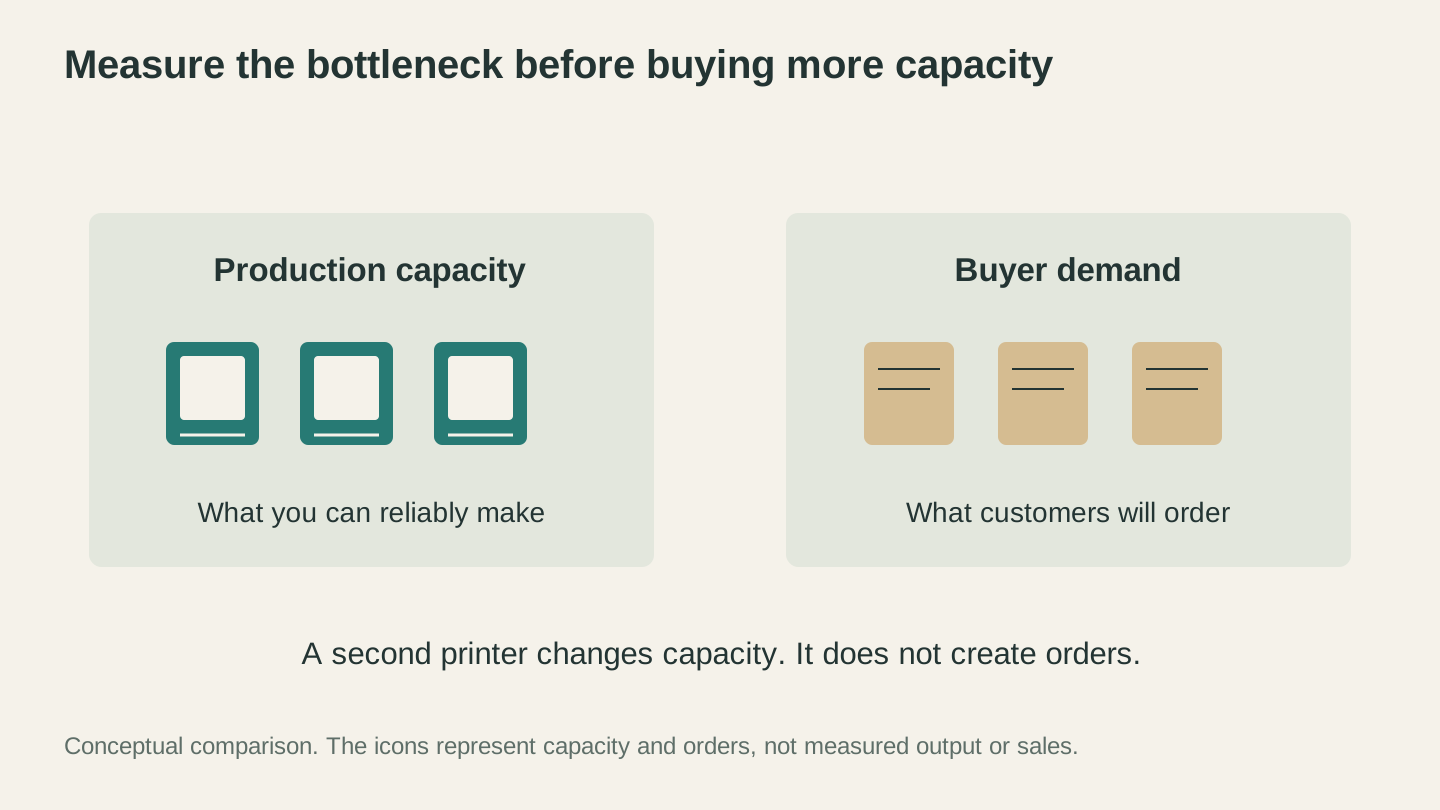
More machines can increase capacity, but orders determine whether that capacity is useful. Keep those two questions separate when deciding what to change.
Where to Sell
Handmade marketplaces like Etsy give you access to an existing buyer audience from day one, in exchange for fees and neighbors selling something similar. They are the natural home for personalized items and finished art, and the worst place for commodity prints. Strong photos and relevant keywords carry most of the weight there, alongside reviews and how well your listing converts.
Local businesses buy the production-run work: fixtures, displays, branded pieces, replacement parts for whatever keeps breaking. One sample in hand and a short conversation beats any online listing. These clients reorder and refer.
Craft fairs and markets let people pick the piece up, which sells layer-lined objects better than any photo. They are also the fastest market research you can buy: you watch, in real time, which item every third visitor reaches for.
Commission work finds you once any of the above builds a reputation. Cosplay clients and small businesses with a one-off problem pay well for "can you make this exist."
Wherever you list, the listing does the selling while you sleep. ListingLab writes it from a photo of your product: titles, descriptions, and search keywords, using your plan's chatbot messages rather than credits. When your only photo is on a cluttered workbench, it can also generate clean styled product photos for 1 credit each.
Start With One Product
Skip the shop with thirty listings. Pick one product from a category with a real reason to pay, confirm you have the right to sell it, run the cost math honestly, and price above your floor. List it or walk it into a local business, and let the response tell you what to do next.
The printer was never the business. What you point it at is. Turn an image into a piece nobody else can print with MosaicFlow, and let ListingLab write the listing that sells it.
Related Tools
Ready to try these tools?
Sign up free, no credit card required. Free tools available immediately.
Start Free