

How to Find Your First Customers as a Maker
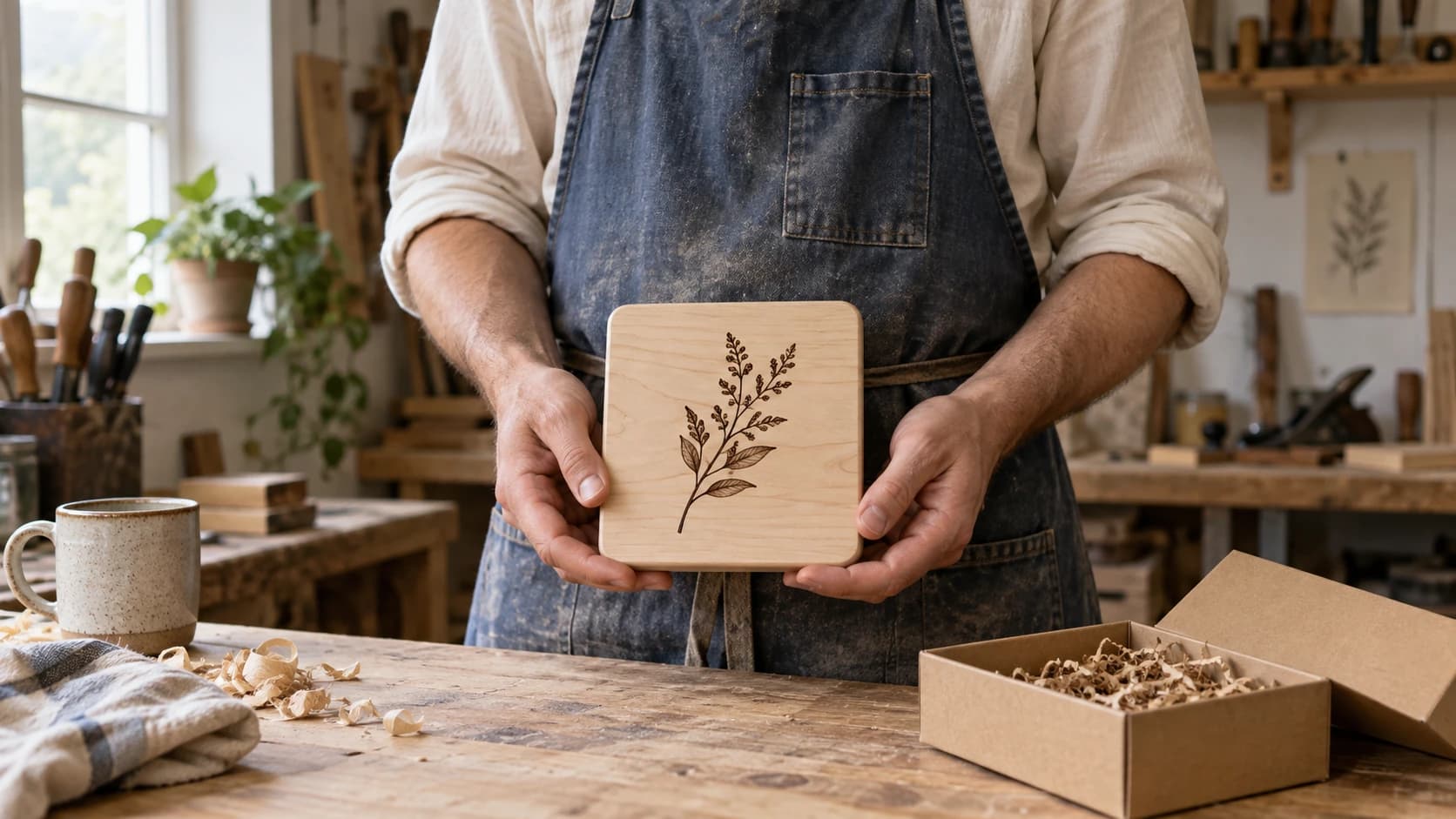
Everybody tells you your stuff is great. Your aunt wants a custom sign. Your coworker asked if you sell those laser engraved coasters. Your neighbor brought over a cutting board she broke and asked if you could "make her one of those fancy ones."
But "people say I should sell these" and "people actually buying these" are two completely different worlds. The gap between them is where most maker businesses stall out before they even start.
Here's the frustrating part: buyers want proof you're legit before they buy, but you can't look legit until you have buyers. No reviews, no sales history, no social proof. Just you, your equipment, and a pile of really nice products that nobody outside your immediate circle knows exist.
This guide is about crossing that gap. Not the theory of running a maker business. Not a five-year business plan. Just the specific, practical steps to go from zero customers to your first ten, twenty, fifty paying strangers. Once you have those, momentum takes over. Getting there is the hard part.
The Credibility Chicken-and-Egg Problem
Every new maker hits the same wall. You open an Etsy shop and it sits at zero sales. You post on Instagram and get likes from your friends but no inquiries from strangers. You think about a craft fair but worry nobody will stop at your booth.
PRINT. CUT. CARVE.
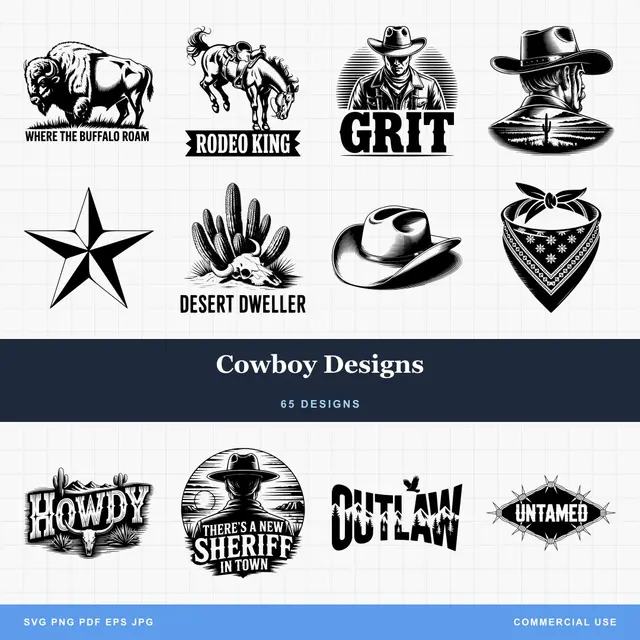
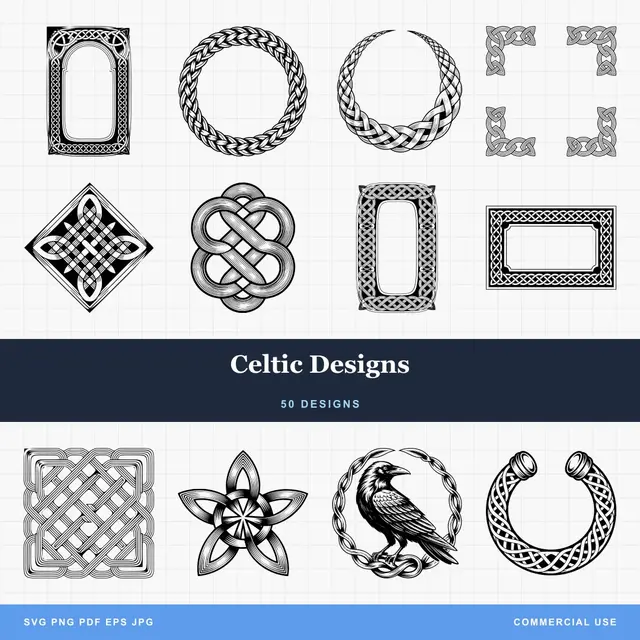
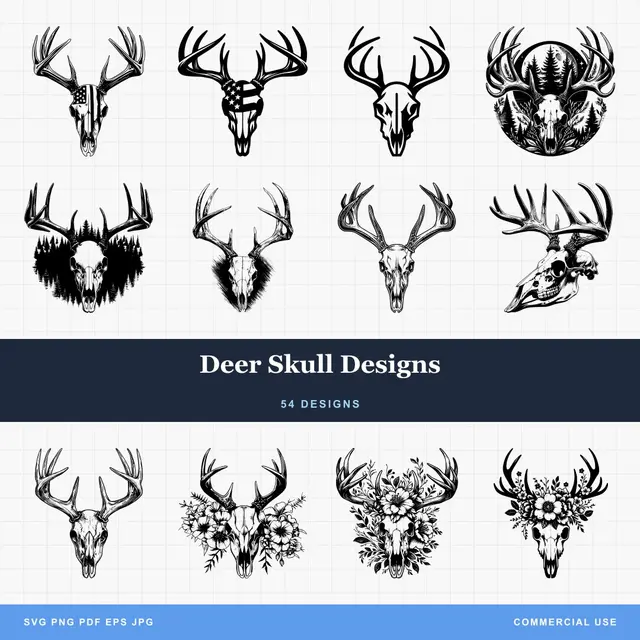
- Multiple formats (SVG, DXF, PNG)
- Machine-tested designs
- Commercial licenses
Sponsored by PrintCutCarve.com
The underlying problem isn't your product. It's that strangers need a reason to trust you, and trust comes from evidence you don't have yet. Reviews, sales numbers, a track record of happy customers. All things that require customers to build.
So how do you break the cycle?
You don't solve it all at once. You solve it by stacking small wins. Each sale creates a piece of evidence. A review. A photo of someone using your product. A word-of-mouth recommendation. The first ten sales are harder than the next hundred, and the next hundred are harder than the thousand after that. Every transaction makes the next one easier.
The strategies in this guide are ordered roughly by how quickly they can produce results. Some will get you sales this week. Others take months to build. Start with the fast ones, then layer in the slower strategies as you gain traction.
Start With People You Already Know (Yes, Really)
This feels uncomfortable. Nobody wants to be the person spamming their friends list with "Hey, buy my stuff!" But selling to people you know isn't spamming. It's the single most reliable way to get your first sales, and every successful small business started here.
The key is doing it in a way that doesn't make Thanksgiving dinner awkward.
The Soft Announcement
Post once on your personal social media. Not a sales pitch. An announcement. Something like: "I've been spending evenings in my workshop laser engraving custom cutting boards, and I'm officially taking orders. Here are a few I've done. DM me if you want one."
That's it. One post. No follow-ups. No tagging people. Let it sit and see who responds. People who are interested will reach out. People who aren't will scroll past without any pressure.
The responses will surprise you. People you haven't talked to in years will come out of the woodwork. "My sister is getting married and I've been looking for something like this." "I need a housewarming gift by next Friday, can you help?" These aren't pity purchases. These are people who have a real need and are thrilled to buy from someone they already trust.
The Gift-First Strategy
Give away three to five pieces. Not to people who would buy anyway, but to people who will use them visibly and talk about them. The friend who hosts dinner parties gets a set of coasters. The coworker who just bought a house gets a welcome sign. The parent volunteer at your kid's school gets a custom teacher appreciation gift.
These aren't lost sales. They're investments in word-of-mouth. When someone asks "where did you get that?", your name comes up in a conversation you're not even part of. That kind of organic recommendation is more powerful than any ad you could run.
Tip
When you give a piece away, include a business card. Nothing fancy. Your name, what you make, and a QR code linking to your shop or Instagram. Create one for free with the QR Code Generator. When the recipient's friend asks about it, the card does the selling for you.
Friends of Friends: The Second Circle
Your friends might not need a custom sign. But they probably know someone who does. The key is making it easy for them to recommend you.
Give your closest supporters a few extra business cards. Say "If anyone ever asks about custom gifts, feel free to pass my info along." You're not asking them to sell for you. You're giving them permission to share something they already think is cool.
This is low-effort, low-pressure, and surprisingly effective. Most of your first orders from strangers will come through someone you know, not through a listing they found online.
Local Channels: Get Your Products in Front of Real People
Online sales are the long game. Local sales are how you build momentum right now. When someone can pick up your product, feel the weight of it, run their thumb across the engraving, they don't need reviews or a sales history. The product sells itself.
Craft Fairs and Markets
Your first craft fair is probably the fastest path to multiple sales from strangers. A small local market with a $25 to $75 booth fee puts you in front of dozens or hundreds of potential customers in a single day.
Start small. Church bazaars, school fundraisers, neighborhood farmers markets. These events are forgiving, the booth fees are low, and the crowd is there to support local makers. You'll learn more from one Saturday morning market than from a month of tweaking your online listings.
For a complete walkthrough of finding events, setting up a booth, and making sales at fairs, our craft fair selling guide covers everything. For the purposes of finding your first customers, here's what matters most.
Bring a small, focused selection. Three to five product types. Your best sellers, your most photogenic pieces, and one or two conversation starters that draw people to your table. You don't need to display your entire catalog.
Collect contact information. Every person who buys from you, asks a question, or spends more than ten seconds at your booth is a potential repeat customer. Have a signup sheet for email, and hand out business cards with a QR code linking to your online shop. These people are ten times more likely to buy from you online than a random Etsy browser.
Take custom orders. "Do you make these in walnut?" is not a question. It's a sale waiting to happen. Write down the details, get their contact info, and follow up within 24 hours.
Farmers Markets (The Recurring Goldmine)
Craft fairs are one-off events. Farmers markets happen every week. If you can get a recurring spot at a local farmers market, you get something incredibly valuable: repeat exposure to the same community.
Week one, people walk past your booth and glance at your products. Week three, they stop and look more closely. Week five, they buy something. Week eight, they bring a friend. This is how local customer bases are built. Not with a single viral moment, but with consistent presence.
Most farmers markets charge $20 to $50 per week for vendor spots. Some do seasonal contracts. Check with your local market organizer about openings and application requirements. Many markets are specifically looking for non-food artisan vendors to diversify their offerings.
The beauty of a weekly presence is that you become "the sign person" or "the coaster person" at that market. Regulars start recognizing you. They bring friends specifically to see your booth. They ask what's new. You become part of their Saturday morning routine, and that kind of loyalty is almost impossible to build online.
Bring different products each week if you can. Regulars who see the same display every Saturday will eventually stop looking. Rotating your featured items keeps things fresh and gives people a reason to check in.
Consignment at Local Shops
Consignment means placing your products in an existing retail store, and the store takes a percentage (typically 30% to 50%) of each sale. You don't get full price, but you get something more valuable when you're starting out: shelf space in a store with existing foot traffic.
Look for:
- Local gift shops and boutiques
- Art galleries with retail sections
- Coffee shops with display areas
- Specialty stores that align with your products (a kitchen store for cutting boards, a home decor store for signs)
Walk in with two or three of your best pieces and ask if they carry local makers' work. Many small shop owners actively want unique handmade products because they differentiate the store from big-box retailers. Bring a one-page sheet with your product photos, pricing, and contact info.
Info
Consignment math: if a shop takes 40% and you sell a cutting board for $60, you get $36. That's less than selling direct, but those are sales you'd never have gotten otherwise. Once you have enough direct customers, you can phase out consignment. Until then, it's exposure you can't buy.
The Local Boutique Pitch
Some shops prefer to buy wholesale rather than consignment. Wholesale means they purchase your products outright at 50% of retail, then sell at full price. You get paid immediately instead of waiting for the item to sell.
This is a bigger commitment from the shop, so approach it once you have a few consignment relationships or craft fair sales under your belt. A shop owner who's seen your products sell at local events is much more likely to place a wholesale order.
When you pitch a boutique, bring samples and a simple price sheet. Know your minimum order quantity (even if it's small, like 6 pieces). Be professional, but don't overcomplicate it. Shop owners see dozens of pitches. The ones that stand out are well-made products with clear pricing and a maker who's easy to work with.
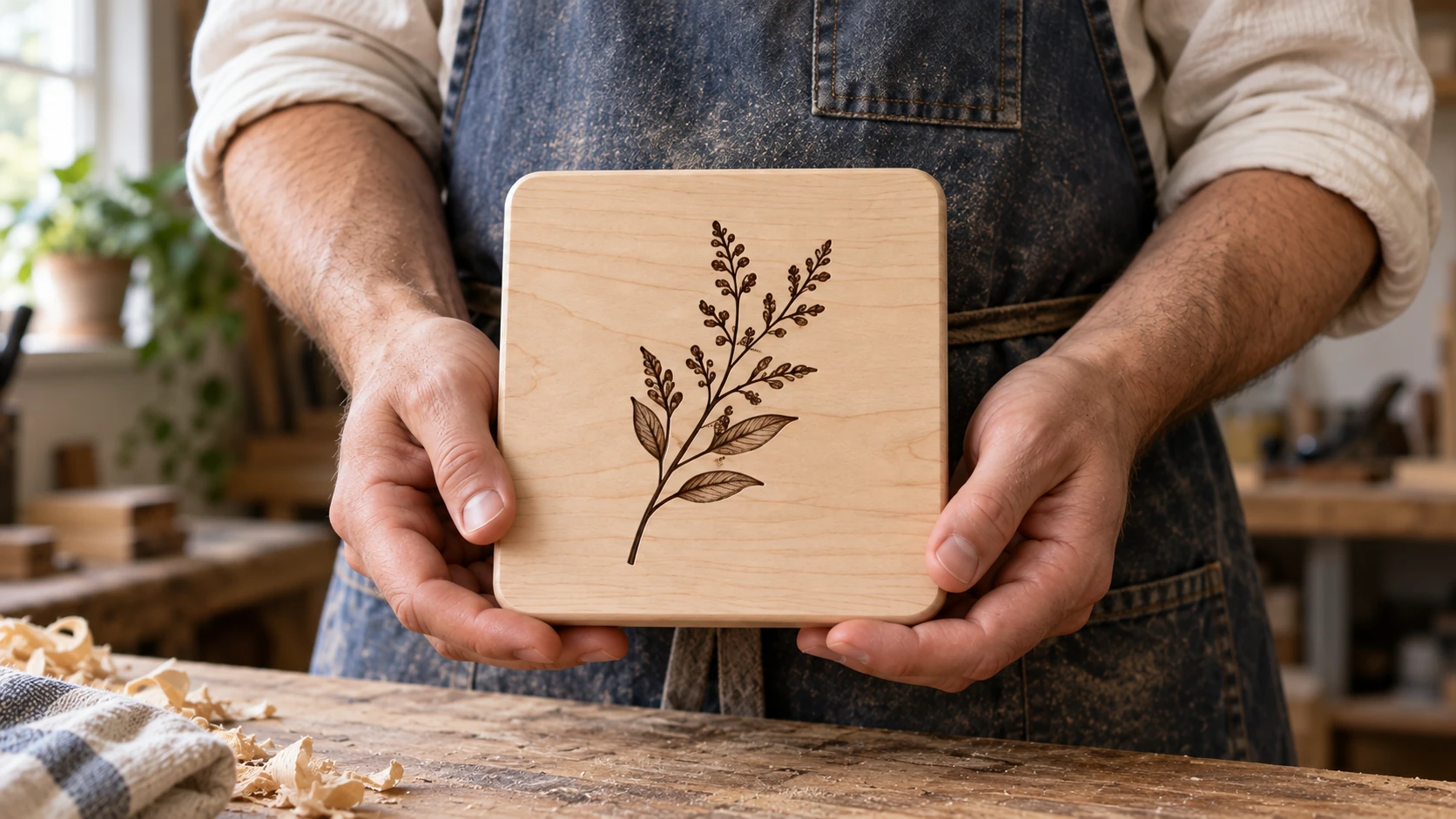
A sample makes the material, finish and size easier to discuss. This closer view keeps the same plaque, hands and workshop setting.
Online Channels: Building Your Digital Storefront
Local sales build confidence and cash flow. Online sales build scale. The combination of both is how most successful maker businesses operate.
Etsy: Your First Online Shop
Etsy is the simplest entry point for selling handmade products online. The audience is already there, already searching for handmade goods, and already comfortable paying maker prices. You don't need to drive traffic from scratch the way you would with your own website.
Our complete Etsy selling guide covers everything from product photography to SEO optimization. For your first-customer strategy, focus on these essentials.
List at least 15 to 20 products. More listings mean more chances to appear in search results. If you only have a few distinct products, create variations (different sizes, wood species, design options) as separate listings.
Optimize your titles and tags. Etsy's search algorithm determines who sees your products. A title like "Personalized Cutting Board, Custom Laser Engraved Maple, Wedding Gift, Housewarming Gift, Gift for Couple" hits multiple search terms. "Pretty Cutting Board" does not.
Get your first reviews fast. Ask your craft fair customers and friends-of-friends to order through Etsy (even if you hand-deliver). Those first five reviews are the tipping point. Listings with reviews convert dramatically better than listings with zero.
Using ListingLab to Build Listings Faster
Writing optimized product listings is tedious work, especially when you need 15 to 20 of them. ListingLab cuts the time dramatically. Upload a photo of your product, and the AI generates:
- Three title options optimized for search
- Three product descriptions with features and details
- 13 SEO keywords for tags
- Social media captions for Instagram, Facebook, and Pinterest
- Key selling points in bullet format
The text generation uses your chatbot messages (included with every plan), not credits. You can generate listings for your entire product line without worrying about costs.
ListingLab also generates AI product photos in 35+ styles for one credit each. Need a lifestyle shot for your listing without setting up a full photoshoot? Generate one. Need seasonal product photos for a holiday promotion? Same thing.
Tip
Generate listings for all your products in one sitting. Set aside an hour, upload each product photo, save the generated titles and descriptions, then create all your Etsy listings in a batch. It's far more efficient than writing one listing at a time over weeks.
Your Own Website (Not Yet, Probably)
A custom website is great eventually. But for your first customers, it's usually the wrong priority. Here's why.
Building a website takes time. Getting traffic to that website takes more time. An Etsy listing starts appearing in search results within days. A new website might take months to rank for anything on Google.
For most new makers, the sequence is: sell locally and on Etsy first, build a social media presence, then launch a website when you have enough traffic and repeat customers to justify it. Don't spend three months building a website when you could spend that time making products and selling them at markets.
The exception: if you already have a following (maybe from a blog, YouTube channel, or existing social media presence), launching your own site alongside Etsy makes sense because you already have traffic to send there.
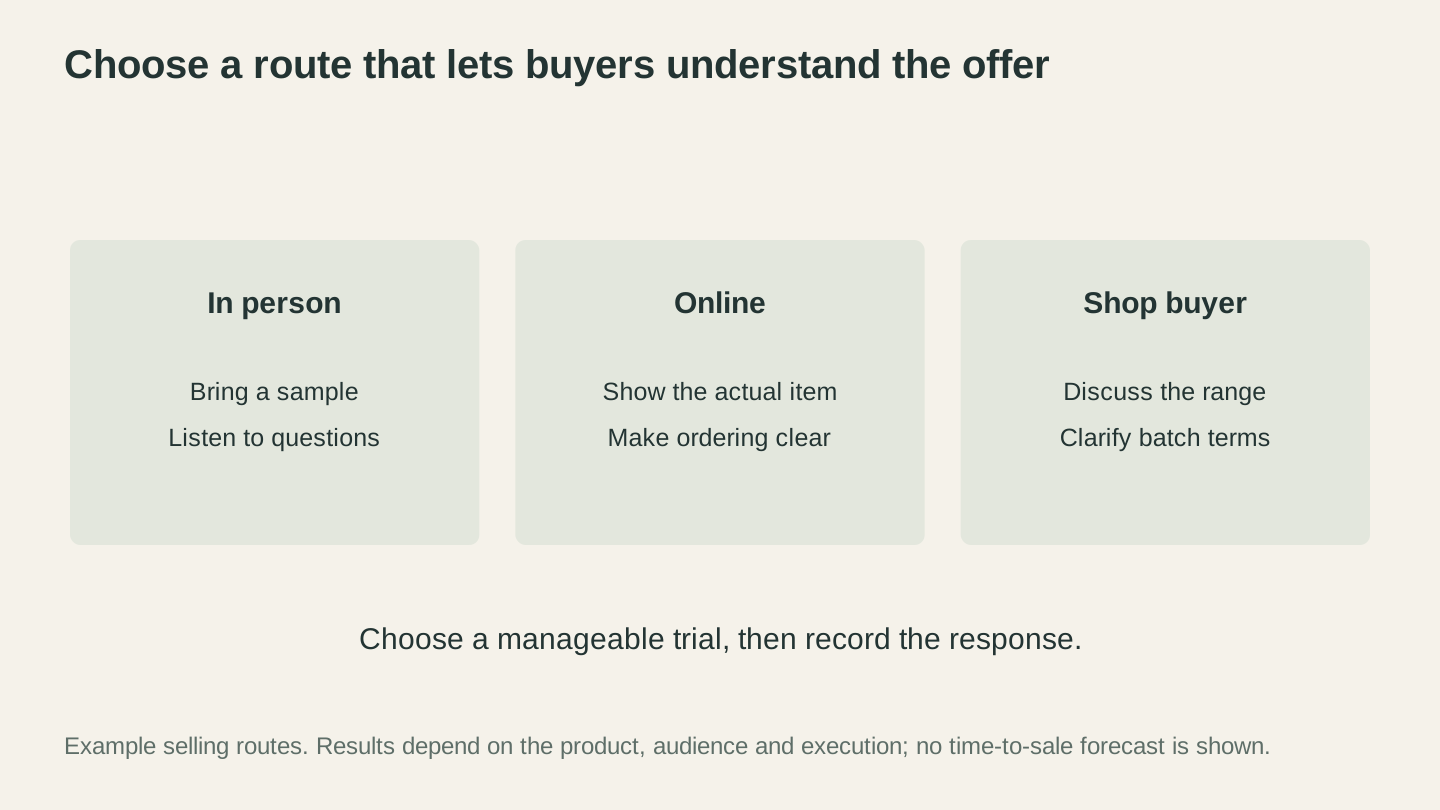
Choose a route that lets buyers understand your offer. These are alternatives to test, not a sequence or a forecast of sales.
Free and Low-Cost Marketing That Actually Works
You don't need a marketing budget to find your first customers. Some of the most effective strategies cost nothing except your time.
Instagram: Show Your Process
Instagram is the platform most makers start with, and for good reason. It rewards beautiful product photos, and its audience appreciates handmade goods.
For finding your first customers specifically, focus on Reels. Instagram's algorithm pushes Reels to people who don't follow you. A 15-second time-lapse of your laser engraving a design will reach far more potential customers than a static product photo.
Post three times per week: one process video, one product photo, one behind-the-scenes glimpse. That's sustainable and sufficient. Don't try to post every day. You'll burn out in two weeks.
Our social media marketing guide covers Instagram strategy in depth, including hashtag strategy, content calendars, and using ListingLab for captions.
Pinterest: The Sleeper Hit
Pinterest isn't social media. It's a visual search engine. People go to Pinterest specifically to find things to buy. A pin you create today can drive traffic to your Etsy shop for months or even years.
For makers, Pinterest is uniquely powerful because the audience overlap with Etsy buyers is enormous. Someone searching "custom laser engraved gifts" on Pinterest is one click away from your Etsy listing.
Create pins from your best product photos with text overlay describing the product. Write descriptions stuffed with search terms buyers use. Link each pin directly to the product page where someone can buy it. This takes 15 minutes per product and pays dividends indefinitely.
Facebook Groups: The Untapped Channel
Facebook groups are overlooked by most makers, and that's exactly why they work. Join groups where your potential customers hang out:
- Local buy/sell/trade groups
- Gift idea groups
- Home decor enthusiast groups
- Groups for specific interests (pet owners, wedding planning, new homeowners)
Don't join and immediately start posting your products. That gets you banned. Instead, participate genuinely. Answer questions, share tips, be helpful. When someone asks "anyone know where I can get a custom pet portrait?" you answer. When someone posts looking for unique gift ideas, you share yours.
The key is being a helpful member first and a seller second. Groups that see you as a spammer will boot you. Groups that see you as a knowledgeable maker will send you customers.
One approach that works well: post a "maker introduction" if the group allows it. Share a photo of your workspace, what you make, and that you're a local maker taking custom orders. Many groups have specific threads or days for small business promotion. Use those. Outside of those threads, keep it conversational and helpful. The sales will come naturally when people see your name pop up as someone who knows their stuff.
TikTok: Reach Without Followers
TikTok's algorithm doesn't care how many followers you have. It cares whether people watch your video to the end. A maker with 50 followers can get 100,000 views on the right video.
Process videos perform best. Film yourself making something. The sound of a laser engraver, the satisfying peel of masking tape, the moment a design is revealed. These are inherently watchable.
You don't need to be polished or funny. You need to be authentic and show something interesting being made. Hook viewers in the first two seconds with what they're about to see: "Watch this $5 piece of wood become a $60 cutting board."
For a full TikTok strategy including content ideas and posting cadence, check our social media marketing guide.
Local Facebook and Nextdoor
If you sell locally (and you should, at least initially), your local Facebook community page and Nextdoor are goldmines. These platforms are designed for local recommendations.
When someone posts "looking for a unique anniversary gift" or "anyone know a good local maker?", that's a direct invitation to introduce yourself and your work. Many neighborhoods actively support local businesses. Being the maker in your community is a powerful position.
Post a simple introduction when you join: what you make, where you're located, that you're available for custom orders. Include a photo of your best work. This single post can generate inquiries for weeks.
The Physical-to-Digital Bridge: QR Codes
Here's a problem every maker who sells in person faces: you meet someone, they love your work, they say "I'll check you out online." Then they go home, forget your name, and never look you up.
QR codes solve this. A quick scan takes someone directly to your Etsy shop, Instagram profile, or product care page. No typing, no remembering, no friction.
Put QR codes on:
- Business cards. This is the bare minimum. Every card should have one.
- Product tags. A QR code on the tag linking to care instructions or your shop page.
- Packaging inserts. A thank-you card with a QR code and "10% off your next order."
- Booth signage. At craft fairs, a QR code on your banner that links to your Instagram.
- Product itself. If appropriate, laser engrave a small QR code on the back linking to your website.
The free QR Code Generator creates codes that link wherever you need. Generate codes for your Etsy shop, Instagram, a specific product page, or a custom landing page with a coupon. Download as PNG for printing or SVG for laser engraving.
For more creative uses of QR codes in your maker business, check out our guide to QR codes for makers.
Word of Mouth: Your Most Powerful (and Slowest) Channel
Word of mouth is the most effective form of marketing. A recommendation from a friend converts at a dramatically higher rate than any ad, listing, or social media post. The problem is you can't buy it. You have to earn it, and that takes time.
Here's what accelerates word of mouth when you're starting out.
Exceed Expectations on Every Order
Your first customers are your marketing team. They'll tell people about you, but only if the experience was remarkable. "It was fine" doesn't generate conversation. "You won't believe the quality" does.
This means:
- Packaging that feels like opening a gift, not receiving a cardboard box
- Including a handwritten thank-you note (even just two sentences)
- Delivering faster than promised
- Following up a week later to ask if they love it
These small touches cost almost nothing but turn a one-time buyer into an advocate.
Ask for Reviews and Photos
Most happy customers are willing to leave a review. They just don't think about it unless you ask. Include a small card in your packaging: "Love your order? A review helps a small maker more than you know." Keep it brief and genuine.
Even better: ask if they'd share a photo of the product in their home. User-generated content is social proof gold. "Here's Sarah's custom sign looking great on her mantel" is more persuasive than any product photo you could take.
The Referral Nudge
You don't need a formal referral program. A simple "If you know anyone who might like something like this, I'd love the introduction" works. People want to help small businesses they like. They just need a prompt.
For your best customers, offer a small incentive. "Send a friend my way and you both get 10% off." Nothing complex. Just enough to move from "I should mention this person" to "Let me text you their info right now."
Leverage Gifting Seasons
The calendar is full of built-in reasons for people to buy handmade gifts. Mother's Day, Father's Day, Christmas, birthdays, weddings, housewarmings, teacher appreciation, baby showers. Each one is an opportunity to reach out to past customers and remind them you exist.
A simple email or text two to three weeks before a major gifting holiday works wonders. "Mother's Day is coming up. I'm making personalized cutting boards and custom signs. Order by May 5th for guaranteed delivery." You're not being pushy. You're solving a problem they haven't started thinking about yet.
The makers who time their marketing around the calendar consistently outsell the ones who post randomly and hope for the best.
Custom Orders: The First-Customer Growth Engine
Custom orders are intimidating for new makers. What if the customer wants something you've never made? What if they hate it? What if you quote the wrong price?
Here's the truth: custom orders are probably the fastest way to grow when you're just starting out. And the "risks" are manageable.
Why Custom Orders Are Ideal for New Makers
They come to you. When someone asks for a custom piece, they've already decided they want your work. You don't need to convince them to buy. You need to figure out the details.
Higher prices are expected. Buyers understand that custom work costs more than off-the-shelf products. You can (and should) charge a premium for custom pieces, and customers rarely push back because they know they're getting something one-of-a-kind.
They generate the best word of mouth. Nobody shows off a generic product they bought online. Everybody shows off the custom piece they had made specifically for them. Custom orders are word-of-mouth machines.
They teach you what to sell. The custom requests you get most often tell you exactly what products to add to your regular lineup. If three people ask for custom pet portraits in one month, that's a product category worth developing.
How to Handle Custom Orders Professionally
Scope the project clearly before you start. Get all the details in writing: dimensions, text, design preferences, materials, deadline. Send a written summary back to the customer confirming everything before you begin. This prevents the "that's not what I wanted" conversation.
Set a clear price upfront. Include a deposit (50% is standard for custom work) to confirm the order. This weeds out people who are just browsing and ensures you're not investing time and materials on a project that falls through.
Provide a proof or mockup before production. A digital preview, a pencil sketch, or even a photo of a similar finished piece. Getting approval before you cut, engrave, or print saves you from costly do-overs.
Deliver with a personal touch. Custom orders deserve extra attention in packaging and presentation. A handwritten note thanking them for trusting you with their vision goes a long way.
Where Custom Orders Come From
- Craft fair conversations ("Can you make this in a different size?")
- Social media DMs ("I love your work. Can you make something for my mom's birthday?")
- Word of mouth ("My friend got a custom sign from this person")
- Etsy custom order requests
- Local Facebook groups ("Looking for someone to make a custom gift")
Make it clear everywhere you have a presence that you accept custom orders. On your Etsy shop banner, your Instagram bio, your business cards, your craft fair signage. Many makers forget to explicitly state this, and potential custom orders go to someone who does.
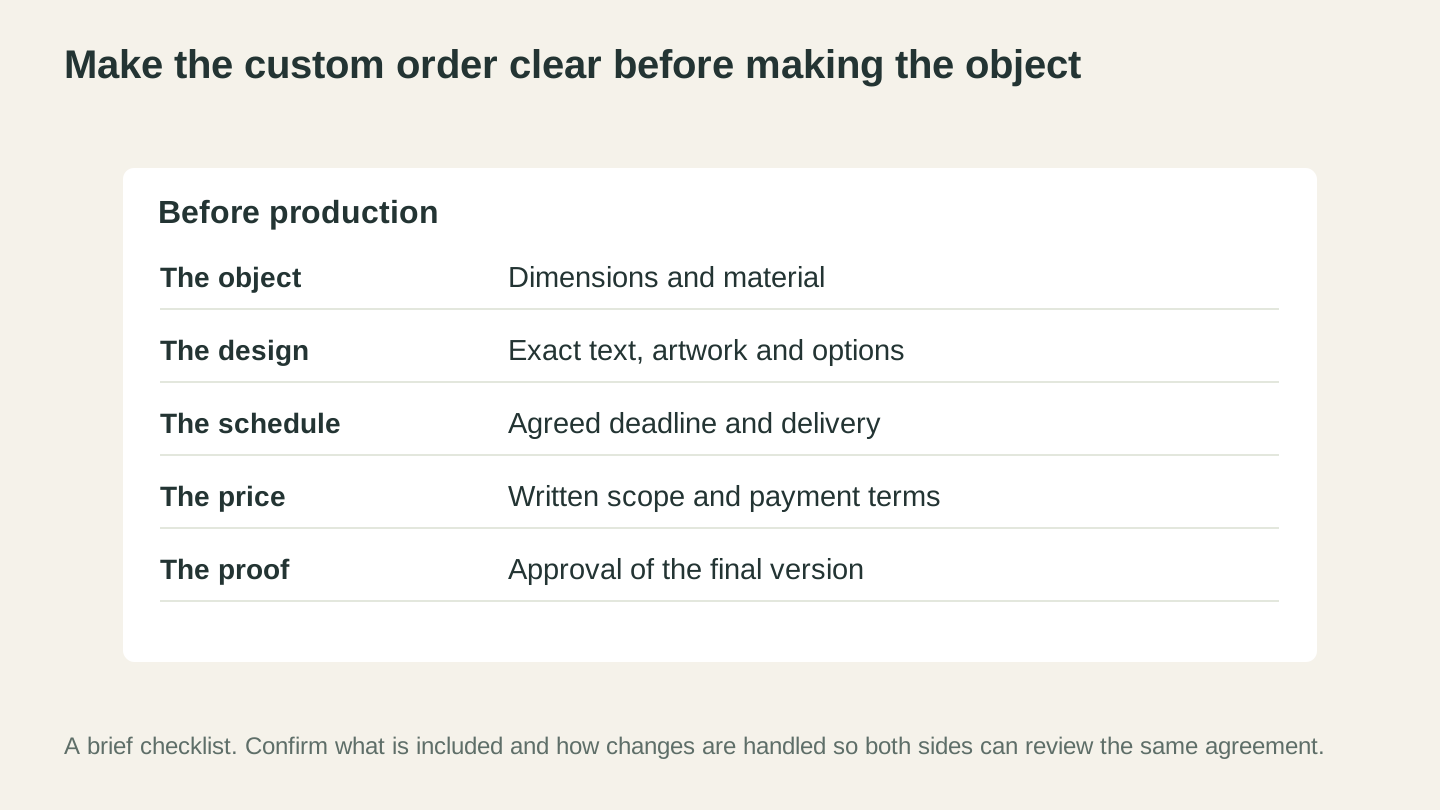
Confirm the object, exact design, timing and price before production. A written brief gives both sides the same details to review.
Pricing for First Sales: Don't Undercut Yourself
New makers almost universally price too low. The logic feels sound: "I'm new, I have no reviews, I should charge less to attract buyers." The logic is wrong.
Why Low Prices Hurt You
Low prices signal low quality. A cutting board priced at $15 makes buyers wonder what's wrong with it. The same cutting board at $55 feels like a premium handmade product. Price communicates value whether you intend it to or not.
You can't raise prices easily. If your early customers pay $20 for a product you should be charging $50 for, you'll face backlash when you adjust to real pricing. Your repeat customers will feel like they're getting ripped off at the new price, even though the old price was unsustainable.
You attract the wrong customers. Bargain hunters are loyal to the bargain, not to you. Raise your price by a dollar and they're gone. Customers who pay fair prices for handmade goods stick around because they value your work.
You'll burn out. Making products at a loss (or for pennies per hour) is not a hobby. It's a chore. Proper pricing lets you sustain the business and actually enjoy it.
The Right Approach to Pricing
Calculate your real costs: materials, labor (pay yourself at least $20 to $25 per hour), equipment wear, packaging, overhead. Add a profit margin. Double that for retail price. Then compare to similar products on Etsy to make sure you're in the right ballpark.
| Component | Example: Laser Engraved Coaster Set (4) |
|---|---|
| Materials (wood blanks, finish) | $6 |
| Packaging (box, tissue, card) | $3 |
| Labor (30 min at $25/hr) | $12.50 |
| Machine time and wear | $2 |
| Overhead (workspace, electricity, software) | $1.50 |
| Cost basis | $25 |
| Profit margin (30%) | $7.50 |
| Wholesale price | $32.50 |
| Retail price | $65 |
Does $65 for a set of four custom engraved coasters feel expensive? Check Etsy. Similar products sell for $40 to $80. You're right in the range. The makers selling at $15 are either losing money, undervaluing their time, or selling mass-produced imports.
For a deeper dive into pricing formulas and common mistakes, our Etsy selling guide covers the full pricing framework.
Warning
Never compete on price with mass-produced goods. You will lose. Your advantage is customization, quality, and the story behind your product. A buyer who wants the cheapest possible cutting board goes to Amazon. A buyer who wants a cutting board with their family name engraved on it by a real person comes to you. Those are different customers. Price for the second one.
Building a Repeat Customer Base
Finding new customers is five to seven times more expensive than keeping existing ones. Your first customers are the foundation of a repeat business if you treat them well.
The Post-Purchase Follow-Up
Reach out to every customer a week or two after they receive their order. A simple message: "Just wanted to check in and make sure you love your order. If anything's not perfect, I'm happy to make it right."
This does three things. It shows you care. It catches problems before they become bad reviews. And it opens the door for them to tell you how much they love it, which you can then ask to use as a testimonial.
Create Reasons to Come Back
Seasonal products. If someone bought a cutting board in March, they might want a personalized ornament in November. Send a simple message in October: "Holiday season is coming up. I'm taking custom ornament orders if you're interested."
Product lines that build. Coasters lead to cutting boards lead to serving trays lead to full kitchen sets. When someone buys one piece, let them know about complementary products.
Exclusive offers for past customers. "10% off for returning customers" or "early access to new designs" makes people feel valued and gives them a reason to buy again.
Keep a Customer List
This doesn't need to be complicated. A spreadsheet with name, email, what they bought, and when. When you launch a new product or run a holiday promotion, you have a list of people who already know and like your work.
An email list is better than a social media following for one critical reason: you own it. Instagram can change its algorithm tomorrow and cut your reach by 90%. Your email list stays yours.
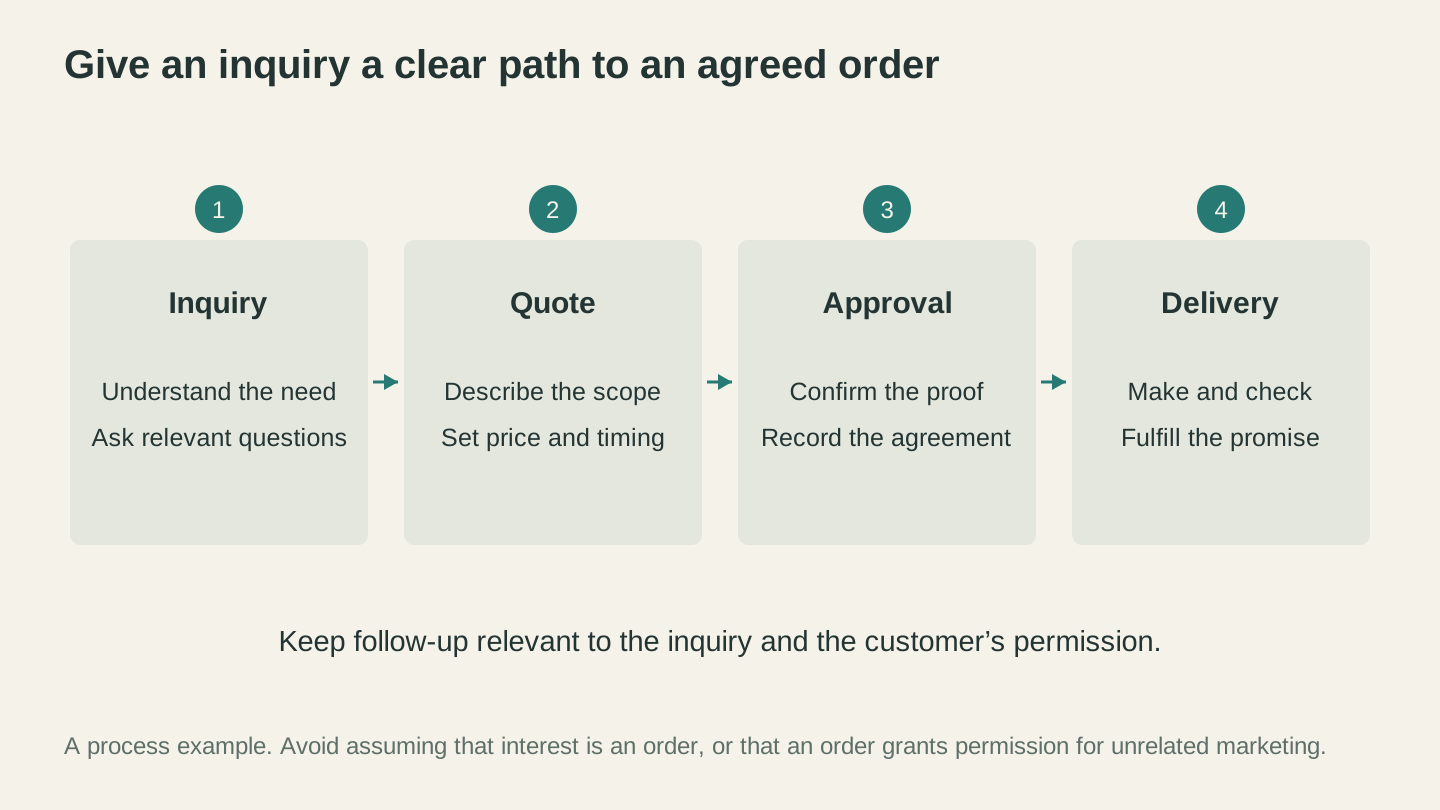
Give each inquiry a clear next step. Confirm agreement before making the order and keep later contact relevant to the customer’s permission.
A Timeline for Your First 50 Customers
Here's a realistic timeline for a maker who's starting from zero. Not everyone's path will look exactly like this, but it gives you a framework.
Month 1: Foundation (Target: 5-10 Sales)
| Week | Action |
|---|---|
| Week 1 | Make your announcement post. Give away 3 to 5 pieces strategically. Create business cards with QR codes using the QR Code Generator. |
| Week 2 | Set up your Etsy shop. Use ListingLab to generate 15 to 20 optimized listings in one sitting. Start posting on Instagram (3x/week). |
| Week 3 | Apply for your first craft fair or farmers market. Join 3 to 5 local Facebook groups and start participating. |
| Week 4 | Attend your first market event. Collect emails and hand out business cards. Follow up with every lead within 24 hours. |
Month 2: Momentum (Target: 10-15 Sales)
| Week | Action |
|---|---|
| Week 5-6 | Continue weekly market attendance if available. Visit 2 to 3 local shops about consignment. Ask your first customers for reviews on Etsy. |
| Week 7-8 | Experiment with Pinterest (create pins for your top 10 products). Post your first TikTok process video. Follow up with craft fair contacts about custom orders. |
Month 3: Scale (Target: 15-25 Sales)
By month three, you should have multiple channels producing inquiries. Some Etsy orders are coming in organically. Your craft fair booth is getting repeat visitors. Local shop consignment is generating passive sales. Social media is starting to drive direct messages.
This is the point where you shift from "how do I find customers?" to "how do I handle all these orders?" That's a much better problem to have.
Channel Comparison: Where to Focus Your Energy
Not every channel works equally well for every maker. Here's a comparison to help you prioritize.
| Channel | Time to First Sale | Cost | Best For | Effort Level |
|---|---|---|---|---|
| Friends and family | 1 to 3 days | Free | First 5 sales, getting reviews | Low |
| Craft fairs | 1 to 4 weeks | $25 to $300 per event | Cash flow, feedback, local presence | Medium |
| Farmers markets | 1 to 4 weeks | $20 to $50 per week | Recurring local exposure | Medium |
| Consignment shops | 2 to 6 weeks | Free (they take a cut) | Passive sales, local exposure | Low |
| Etsy | 2 to 8 weeks | $0.20 per listing + fees | Scalable online sales | Medium |
| 4 to 12 weeks | Free | Brand building, process showcase | Medium | |
| 4 to 16 weeks | Free | Long-term SEO traffic | Low | |
| Facebook groups | 1 to 4 weeks | Free | Local and niche customers | Low |
| TikTok | Variable (viral potential) | Free | Massive reach, brand awareness | Medium |
| Own website | 3 to 12 months | $10 to $30/month | Full control, no platform fees | High |
The fastest path to your first 10 sales: combine friends/family, one craft fair, and Etsy. The fastest path to sustainable income: add farmers markets, Instagram, and Pinterest on top of that.
Common First-Timer Mistakes
Waiting Until Everything Is Perfect
Your Etsy photos don't need to be magazine quality. Your business cards don't need to be letterpress printed. Your first craft fair booth doesn't need a custom banner. Good enough is good enough to start. You'll improve everything as you go.
The maker who lists 15 "good enough" products today will outsell the maker who spends three months perfecting 3 listings every time.
Trying Every Channel at Once
Pick two or three channels and do them well. A maker who sells at a weekly farmers market and maintains an active Etsy shop will find customers faster than a maker who has an Etsy shop, a Shopify store, an Instagram, a TikTok, a Pinterest, a Facebook page, a YouTube channel, and hasn't posted on any of them in three weeks.
Not Following Up
You meet someone at a craft fair who's interested in a custom order. You collect their info. Then you go home, get busy, and never follow up. That sale is gone.
Follow up within 24 hours. Always. A simple message: "Great meeting you today. Here's the info on the custom piece we discussed. Let me know if you'd like to move forward." That's all it takes.
This applies to online interactions too. Someone comments "How much?" on your Instagram post and you respond three days later? They already bought from someone else. Someone sends a DM asking about custom orders and you don't reply until the weekend? Gone. Speed matters, especially when buyers are comparing multiple makers.
Set up notifications for your sales channels. Check messages at least twice a day. The maker who responds in an hour wins the sale over the maker who responds in a day, even if the second maker's products are better.
Treating It Like a Hobby When You Want Business Results
If you want customers, you need to show up like a business. That means consistent posting, professional packaging, prompt communication, and reliable delivery. You don't need to incorporate or rent a warehouse. You need to be someone people can count on.
Ignoring Pricing Math
"I'll figure out pricing later" is how you end up losing money on every sale and wondering why this isn't fun anymore. Calculate your costs before your first sale. Price to make a profit from day one.
Comparing Yourself to Established Sellers
You'll look at makers with 10,000 Etsy sales and feel like you can never compete. Remember: they started at zero too. They had the same awkward first craft fair, the same empty Etsy shop, the same "am I crazy for doing this?" moment. What they did was start, learn, adjust, and keep going. That's the only difference between them and someone who never got their first sale.
Your first year is about learning, not about matching someone's tenth year. Focus on what you can control: product quality, customer service, consistent presence. The numbers will come.
Putting It All Together
Finding your first customers isn't one big move. It's a series of small, consistent actions that compound over time. The first sale comes from someone you know. The fifth comes from a craft fair. The tenth comes from Etsy. The twentieth comes from a word-of-mouth referral. The fiftieth comes from someone who found you on Pinterest six months after you pinned a product photo.
Each of these channels feeds the others. Your craft fair customers follow you on Instagram. Your Instagram followers find your Etsy shop. Your Etsy reviews give confidence to the person who found you through a friend. It all connects.
The makers who find customers are the ones who put their work in front of people consistently. Not perfectly. Consistently. Make great products, show up where people can find you, treat every customer like they matter (because they do), and the rest follows.
Start today. Pick one thing from this guide. Post the announcement. Apply for the market. Set up the Etsy shop. Give away the coasters. Just one thing. Tomorrow, do one more. The path from zero to your first paying customer is shorter than you think.
Use ListingLab to get your product listings written in minutes. Grab the free QR Code Generator to bridge your physical and digital presence. Then go make something beautiful and find the people who want to buy it.
Happy making.
Related Tools
Ready to try these tools?
Sign up free, no credit card required. Free tools available immediately.
Start Free